god i can never stop thinking about certain sculptures used in modern art and how they can be used to elicit the beautiful and terrible feeling of true and genuine horror in ways that a lot of horror movies can never do
like when you ask people “what is horror?” they’ll tend to give examples of monsters, of killers, of dark places, of sharp teeth and too many legs and lots and lots of blood. which is true, that can be used as horror! but i’d like to call that “the horror of being eaten/hurt/killed” or more succinctly “the horror of vulnerability”. it’s a horror that something, whether it’s a killer or a monster or some phenomenon, has the ability to cause us harm. we see large amounts of teeth and we think “that thing is going to tear us to pieces with those teeth” or we see spilled blood and we think “someone has been hurt, there’s a chance we can be hurt too by whatever spilled this blood”.
but what certain modern sculptures can do is elicit a very physical visceral reaction of a completely different kind of horror.
it’s “the horror that something is a thing that SHOULD not exist, and you are absolutely powerless to understand what it is, but it is existing in your space, right now, it is real and you cannot make it unreal no matter what you do”
or perhaps, in a shorter fashion, it’s “the horror of wrongness”
like one of the sculptures that made me feel this way is this sculpture here, named “Monekana” located in the American Art Museum in Washington D.C:
“okay,” you say, with a shrug. “it’s a horse made of wood? what’s so scary about that?”. but this is the lie of the photograph! a photograph of a sculpture rarely grasps the experience of standing next to a sculpture. you have to picture yourself walking into this room, practically devoid of people, and coming face to face with this sculpture that is very large and very real.
and your brain screams that “THIS IS WRONG. MAKE IT GO AWAY. THIS IS WRONG”, like at any moment you expect it to move, to twist its head, to follow you with eyes that aren’t simply there. it looks like a horse but it is no horse. you could almost argue that maybe it isn’t even an art piece at all, but it wandered in from god knows what kind of world and it’s blending in with everything else. maybe it’s fooling you. maybe it isn’t.
anyways, i’m not trying to say that this sculpture in particular is SUPPOSED to be scary, it may make other people feel nothing at all (or even positive feelings!), but what i’m trying to say is that feeling i had that day, when i saw this thing, when i felt this fearful instinct to stay away and not stare, it’s THAT feeling that i feel so many writers and makers of horror don’t completely understand. you don’t need teeth. you don’t need blood. you don’t need to make Spooky Scary Skeletons or chainsaw-wielding villains. all you need is to create something wrong in its existence, something to make parts of us fear the fact that we can’t entirely rationalize what we’re seeing.
The experience of sculpture absolutely gets lost in images. I’ve walked into museums and been like WOW THE FUCK even when I knew it was coming.
I love this subject, though. I love “implication horror.” You see something, and the realization of what it means, which often comes a few moments later, is where the real horror lies—not in how splattery or gratuitously shocking it is. The wrongness of a thing in fiction, when done well, is the best. I was watching Melancholia the other day, and what a terrifying example of wrongness horror.
Anyway this is such a great post thanks for putting the whole idea into words so well. ❤
This is how I feel about wind turbines (I tried to walk up to one once and felt the most inexplicable terror I’ve ever felt in my life), or most things that are ridiculously large, for that matter. Ships fascinate me but make me feel very uneasy. Certain buildings, especially if they look old-timey in any way kind of freak me out.
Examples: The Halifax shipyard building made me feel almost nauseous, and I have to drive past this cold storage building in Winnipeg every time I go to visit my boyfriend’s parents. I do not like it one bit.
Also, I got to see that sculpture of a giant newborn baby last year. That was very surreal in the way that is described here.
WHAT AMAZING ADDITIONS TO THIS POST, thank you! I didn’t know of Kalus Pinter’s work and now I REALLY want to see it for myself, goodness.
Honestly, I’m so glad so many people have responded and reblogged this post with examples and stories of their own!! It’s so cool to see just what people think and perceive as this horror of “wrongness”. I also see some people saying that this is essentially the uncanny valley effect, which is only an aspect of this kind of horror – the uncanny valley primarily deals with something we perceive that looks close to human and yet doesn’t quite make it there. It’s just one subset of a really uneasy sort of horror that can be found in so many forms, which may really honestly differ from person to person.
Overall, THIS HORROR IS WIDELY UNDERUSED IN FICTION and I’m so glad to see so many examples of it posted here!!
I feel this way about kangaroos. If you really look at a kangaroo for a minute it’s deeply unsettling, they’re bipedal and they have insane abs and they move wrong, it’s too human and I get that creeping horror that this thing exists. If I look at kangaroos too long I feel like I’m going insane
Louise Bourgeois’s spider sculptures did this to me, a bit. It was less the shape than the form–the lumpiness, the uneven shine–but mostly it was the scale. Most of these examples of horror don’t feel quite so wrong when they’re at a scale we can look “down” on. But when they overshadow us, or at least when they overshadow our general certainty of control, even for just a moment, the disorientation can slip suddenly into horror.
consider the Gelitin collective’s enormous pink rabbit left to rot in the Italian alps for the next 10 years
Eoin Mc Hugh – The Ground Itself is Kind, Black Butter, 2014
Kiki Smith’s lilith sculpture is more humanoid but i feel like it belongs on this post because walking into the stairwell in the met and seeing this fucking thing was one of the most unnerving experiences in my life
If “the horror of wrongness” makes your soul sing as it does mine, read literally anything by Robert Aickman. My favorite is “The Hospice”.
in terms of literature, my favorite example of the horror of wrongness is ‘declare’ by tim powers. if you want to be slightly creeped out by concentric circles for the rest of your life, read it. it’s… mostly a spy novel.
My dad is a musician at the Naples Philharmonic orchestra hall, and let me tell you, there is nothing more terrifying than being no older than 4, wandering out to the courtyard at your dad’s workplace, and feeling this horrific aura of cosmic judgement from the masked Phillip Jackson sculptures just looming there. Their height and limbs are just tall, twisted and elongated enough to not be human, and you can totally feel it in person.
You ever just start imagining a cute romance but then you’re like “well there’s gotta be more conflict to make the payoff all the more emotional” so you start thinking of bad things that might happen in order to heighten the good things you want to happen then flash forward three days later and you’re pacing in the basement listening to a male cover of I Can’t Make You Love Me as you simultaneously imagine the couple in the past breaking up due to all the tragedy that they’ve endured but also paralleling that with the scene where they get together again while everyone who knows them claps because this is the most investing love story in the world
sorry for the delay in answering – this one really stumped me. i think i know what you mean by magic, but it’s so hard to nail down. i find myself asking, magic for the reader to read or the writer to write?
and either way, it’s a hard thing to control. you have no way to know how your writing will touch a given reader. and it’s not like you can do some kind of blood sacrifice to summon your muse. they come and go as they please.
but, having more of a science background than arts, i think: so these are the uncontrolled variables, so what are the controlled ones? that is to say, what does magic feel like to me while i write it, and what parts of that practice are active and consistent?
i remember when i started writing, nothing felt magic because i was too focused on putting one word after the next in a logical sequence. it’s a lot like picking up any new hobby – you struggle at first, and it feels clunky and awkward. then, with most things, over time (even without marked improvement), you build muscle memory just by doing a thing over and over. playing video games, your fingers learn the keys and motions and timing to control your character. competing in a sport, your limbs and muscles learn their necessary movements. at a new job, you have to learn where all the files go and how to use the systems and the timing of everything.
to get to the magic, you have to build that muscle memory. you have to know what a good sentence feels like to write (because you’ll want to read it over and over). you have to find a physical space in which to write where you’re comfortable and feel your best. you have to find your writing rhythm, your focus, your voice. the only way to do that, though, is to put words on a page, over and over and over. even if they’re totally illogical words and they don’t make sentences or any sense at all, the act of taking something from your brain onto paper is all that matters. you can learn how to play a piano by putting your fingers on the keys and listening to what sounds good. you can learn to run a marathon by putting one foot forward repeatedly without a destination. with writing, with everything, you have to build the muscle memory.
and even after you’ve done that, sometimes the magic still isn’t there. but here are some things that help me find it:
doing something you’ve never done before. writing in a voice or style you’ve never attempted. stealing someone else’s aesthetic. combining two authors’ aesthetic. changing up the structure of the piece from what you would naturally do. write on a different size sheet of paper. write sitting on the floor in a corner of your house you’ve never sat in. make a character you would never want to know in person and try to get into their mind to understand them. go somewhere you would never otherwise go just to put it in a story.
be uncomfortable. sometimes i think things don’t feel like magic because they bore us. and one way to not be bored is to write something you’re so unfamiliar with it makes you uncomfortable to even consider. i’m a very inquisitive person, and when i find something about the world i don’t understand, i want to find a way to understand it. sometimes that’s by research. sometimes it’s by writing. a habit i’ve learned is to embrace all things that make me want to gag, physically or morally, to constantly push my mental and emotional limits on the page, no matter how hard it is or how much it hurts.
make a puzzle for yourself. i’m halfway between being a planner and winging everything, which basically means i make very loose plot points. this turns writing into a game. i have to figure out how to get each character from point A to B. if i’m not curious about my story, i lose interest in it. so i have to make it interesting enough for me to want to answer all the questions i’ve posed.
focus on objects. when in doubt, empower an object. this seems like a totally bizarre thing to do but it really, really works. give a character a material thing that means so much to them, that symbolizes something great, and give that object some kind of power over the character. let your character externalize all their emotions into that object so they have significance. you don’t have to put magic into words, but you can always put it into objects.
give every character a goal and a reason they want to achieve it. this way, you have two directions to move in: forward, toward the goal, and outward, toward the reason they want to achieve it. if you care enough about your characters and their plight, you’ll be able to escape your own head and hop into theirs, and they’ll drive the rest of the story for you.
BE WEIRD. magic is a function of creativity, and creativity is a means of breaking rules and expectations. force your mind to go against your own expectations. do this not only in a big picture sense but in your prose too. try to put words together in a way you’ve never seen them put together before. don’t worry so much about making sense. learn how to follow the rules you’re given or constraints you put on yourself, and then learn now to break them, or better, bend them to achieve what you intend.
i hope this helps. thank you for the birthday wishes and for posing such a fun question.
I’ve had the same editor since 1967. Many times he has said to me over the years or asked me, Why would you use a semicolon instead of a colon? And many times over the years I have said to him things like: I will never speak to you again. Forever. Goodbye. That is it. Thank you very much. And I leave. Then I read the piece and I think of his suggestions. I send him a telegram that says, OK, so you’re right. So what? Don’t ever mention this to me again. If you do, I will never speak to you again.
obvs there is something great about when a Big Scary turns into a Big Softie where Tiny Useless is concerned, but what i like better is:
Tiny Useless decides, with no prompting and for no apparent reason whatsoever, that Big Scary needs protecting. and if no one else will do it then this accidentally-gets-stepped-on, blows-away-in-a-stiff-breeze motherfucker is going to have to be the one to protect this living mountain of pain. you wanna get to this troll, you’re gonna have to go through this pixie. you try to come for this tibetan mastiff, this chihuahua’s gonna try to kick your ass first.
and the Big Scary is mostly just?? really confused???? there are at least twenty different reasons why this is fucking dumb. but also this feeble lil shit is the first person in the entire world to try and stand up for this person that absolutely does not need it. Big Scary continues to be huge and terrifying but now Tiny Useless has their undying loyalty and it will probably not end well for anyone.
i like seeing all of the ships this has been tagged with, but, i am going to be completely honest with you guys, when i wrote this i was thinking about little girls like my sister, who at the age of five had a strict ‘talk shit get hit’ policy about the incredible hulk
seeing a lot of folks with some weak-ass “but actually the tiny one is deadly and the big one is nice” tags and lemme tell ya
that is a different trope
do you think i picked the words Tiny Useless by accident. do you think there is no reason i called the Big Scary a mountain of pain?
not to get petty but this isn’t an idea about appearances being deceiving, or the amusement of reversing expectations, or the aesthetic.
this is about someone who can absolutely take whatever punishment the world throws at them, and probably throw plenty back, being told that their capacity for horror doesn’t mean they should have to endure it. someone who can’t defend themselves choosing to try to defend someone who can because to them there is no moral difference.
hogarth didn’t save the iron giant by punching a tank, my dudes. the iron giant didn’t have to be helpless to be worth protecting. you know what i mean?
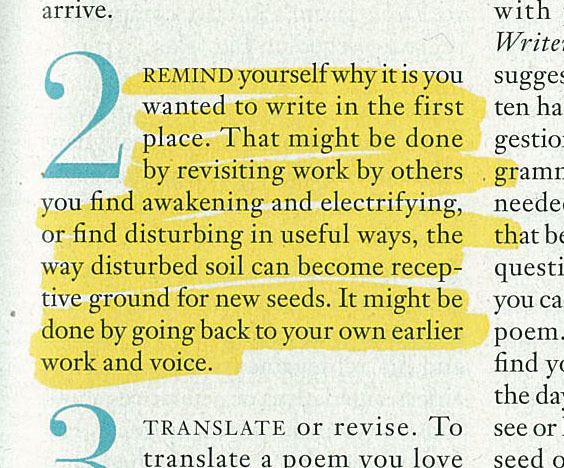
“Remind yourself why it is you wanted to write in the first place. That might be done by revisiting work by others you find awakening and electrifying, or find disturbing in useful ways, the way disturbed soil can become receptive ground for new seeds. It might be done by going back to your own earlier work and voice.”
– A lot of questions I receive revolve around editing and proofreading, so I decided to make an extensive guide to editing your own writing. I collaborated with some amazing friends on this post so this is dedicated to them as well as all of you. I hope you find it useful. Enjoy!
Know The Difference: Editing vs. Proofreading
Editing is about the content, proofreading is about the technical detail and accuracy. Once you know the difference and you separate the two into different tasks, going through and actually doing it will seem less daunting. Deciding which to tacking first depends on what you’re like when you edit, but if you struggling with focusing on actually improving the content because you get distracted by grammatical errors and spelling mistakes, then proofreading first may be a good idea.
Be Intentional With Your Vocabulary
Avoid adverbs
Be frugal with unique adjectives
Only use dialogue tags when absolutely necessary
Be mindful of overused words
Take the time to find the right words
The words you choose can make all the difference so pay special attention to them.
Just Keep Snipping
A basic rule to editing that people often forget it, if it doesn’t serve a purpose, you should cut it out. A short book that is amazing all the way through is better than a long book that is redundant. Don’t worry about leaving your readers in the dark or not having enough content. As you edit, you’ll find ways and places in which to input more information.
Flow & Rhythm
This is the part where you make sure the writing itself sounds how you want it to. It’s important to read your writing aloud during this stage. Some things to pay attention to regarding flow and rhythm:
sentence length/variation
sentence structure
syllables and how they fit together
how your writing sounds out loud
Eloquence
Say it once and say it clearly. Redundancy bores readers so quickly, so when putting information forward, be clear, concise, and don’t add fluff. You don’t need to write a whole paragraph about how a character feels in a situation. It’s important to give the reader just enough to read between the lines.
Grammar
Common Grammar Mistakes To Look For
Subject-verb agreement errors
Sentence Fragments
Missing Comma After Introductory Element
Misusing The Apostrophe With “Its”
No Comma In A Compound Sentence
Misplaced Or Dangling Modifier
Vague Pronoun Reference
Wrong Word Usage
Run-On Sentence
Superfluous Commas
Lack Of Parallel Structure
Sentence Sprawl
Comma Splice
Colon Mistakes
Split Infinitives
List from here x {Explains these further and more in depth}
Improper Use of Phrases
“could have” not “could of”
“My friends and I” not “me and my friends” {If you take away “my friends” or “I”, or one of the nouns in a sentence in general, the sentence should still make sense}
“I couldn’t care less” not “I could care less”. This should be a no-brainer.
etc.. I could go on.
Familiarize yourself with these common mistakes and avoid making them at all costs. It’s also helpful to have someone read over it and let you know when they find issues with phrases you used. Please be attentive to these mistakes because making them can destroy your credibility as a writer.
Utilize The Senses
If you’re describing something in your writing, you should be slipping in words and little details that appeal to the reader’s senses, When editing, look for opportunities to slip in how a place smells, how a food tastes, how something feels to the touch, etc. It’s unbelievable how much this enhances your story.
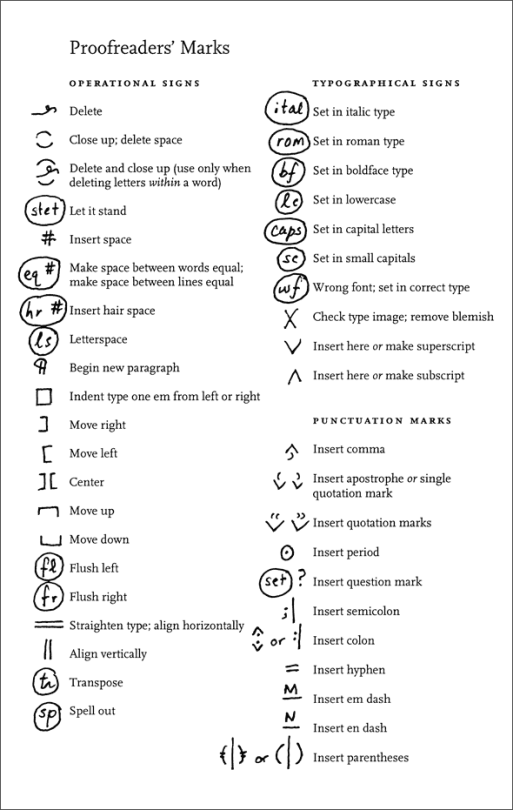
When proofreading and marking up your manuscript, it can save a lot of time and energy if you use marks instead of actually write out everything, so here is a little chart I found that may be useful to you:
Other Things To Look Out For
Make sure you know who is talking
Keep tense consistent
Vary the tone from scene to scene
Run-on sentences
Inconsistencies in story details
Plot holes
Causes and effects of events are explained
Facts and technical details {Make sure you’ve researched them well}
Deviations from established background (know your story really really well and make sure your reader does too)
General Tips
Go in assuming that your work is full of errors. Maybe it’s not, but it’s better to be prepared for the worst and solve the issues now rather than when it’s too late
DO NOT BE SENTIMENTAL. Yes, easier said than done, but it’s possible.
Make the text less recognizable to yourself in order to catch details you may not otherwise.
Print out your manuscript and physically write out the changes.
Read your writing out loud. Sometimes writing looks like it makes sense, but in reality sounds wrong.
Do it in short periods over time so that you don’t inevitably get lazy with paying attention to little details
Keep in mind that editing usually takes longer than actually writing the draft because it is less fluid and requires more thought and problem solving.
Don’t rely on spelling and/or grammar checking software; they’re not always correct and can easily misinterpret what you’re trying to get across.
Check for a single error at a time. It may be time consuming and tedious but it’s more effective than the alternative.
Give yourself time and read slowly through it multiple times
Split up large chunks of text to make it easier to handle. Don’t go through your whole manuscript page by page as if you were just reading it as a book. Go chapter by chapter or scene by scene or even sentence by sentence.
If something seems off, investigate it. Don’t take a chance and leave it be. If you’re stumped, highlight it and have someone else look over it.
Have a strategy. Maybe not at first, especially if you don’t extensively edit your work regularly, but with time you’ll find what works for you and what doesn’t. Create your own system and use it to save yourself some time and confusion.
I just want to add that I once proofread a classmate’s creative writing assignment and her character said “What in carnation?”
And she didn’t get it. She had no idea.
A very good list! Though I deliberately break a few of the grammar rules for style, because I want my writing to sound colloquial (me and my friends) and things like sentence fragments and run-ons do a lot for pacing and/or jokes. So … proofread within reason, yeah? Some books are going to be great if you follow these grammar rules, and some books will be less good afterwards.
I wholeheartedly support the rest of the advice, though.
Thanks to the marvels of modern technology, there are reams of time-lapsed YouTube vids of artists plying their craft, and every now and then I stumble across artist livestreams, where people can watch them as they work in real-time. For developing artists, I can only imagine how unbelievably helpful these are: you can get a pretty solid idea of how an experienced artist goes from concept sketch to finished product, with a click of a button. As a writer, I’d give my eyeteeth for a comparable resource.
Problem is, it’s really hard to show that process for a writer. There’s a post somewhere saying that the OP would like to offer livestreaming while they write, but it wouldn’t exactly be riveting material—just half an hour of a blinking cursor on a blank page. That post is both true and accurate, and it explains exactly why “in medias res” posts for writing are hard to come by.
But it also gave me an idea.
Like any writer, I have approximately one billion wips, all in various stages of completion, which I can use to illustrate how I get from idea to end. In other words, I’m gonna try to “livestream” my writing.
In one of the most interesting moments in his memoir, [jewelry thief Bill Mason] sees that architecture can be made to do what he wants it to do; it’s like watching a character in Star Wars learn to use the Force.
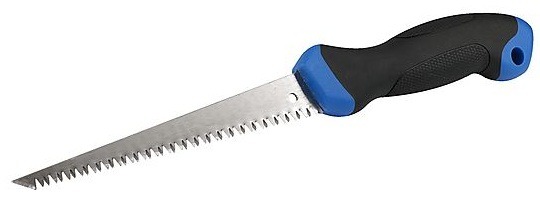
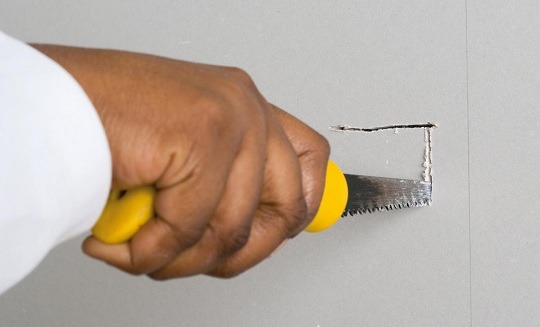
In a lengthy scene at a hotel in Cleveland that Mason would ultimately hit more than once in his career, he explains that his intended prize was locked inside a room whose door was too closely guarded for him to slip through. Then he realizes the obvious: he has been thinking the way the hotel wanted him to think—the way the architects had hoped he would behave—looking for doors and hallways when he could simply carve a new route where he wanted it. The ensuing realization delights him. “Elated at the idea that I could cut my own door right where I needed one,” he writes, Mason simply breaks into the hotel suite adjacent to the main office. There, he flings open the closet, pushes aside the hangers, and cuts his way from one room into the other using a drywall knife. In no time at all, he has cut his “own door” through to the manager’s office, where he takes whatever he wants—departing right back through the very “door” he himself made. It is architectural surgery, pure and simple.
Later, Mason actually mocks the idea that a person would remain reliant on doors, making fun of anyone who thinks burglars, in particular, would respect the limitations of architecture. “Surely if someone were to rob the place,” he writes in all italics, barbed with sarcasm, “they’d come in as respectable people would, through the door provided for the purpose. Maybe that explains why people will have four heavy-duty locks on a solid oak door that’s right next to a glass window.” People seem to think they should lock-pick or kick their way through solid doors rather than just take a ten-dollar drywall knife and carve whole new hallways into the world. Those people are mere slaves to architecture, spatial captives in a world someone else has designed for them.
Something about this is almost unsettlingly brilliant, as if it is nonburglars who have been misusing the built environment this whole time; as if it is nonburglars who have been unwilling to question the world’s most basic spatial assumptions, too scared to think past the tyranny of architecture’s long-held behavioral expectations.
To use architect Rem Koolhaas’s phrase, we have been voluntary prisoners of architecture all along, willingly coerced and browbeaten by its code of spatial conduct, accepting walls as walls and going only where the corridors lead us. Because doors are often the sturdiest and most fortified parts of the wall in front of you, they are a distraction and a trap. By comparison, the wall itself is often more like tissue paper, just drywall and some two-by-fours, without a lock or a chain in sight. Like clouds, apartment walls are mostly air; seen through a burglar’s eyes, they aren’t even there. Cut a hole through one and you’re in the next room in seconds.
The futility of tagging the person you reblogged something from, into your reblog, because you think they’ll like it…
On the plus side, I do like it. 😀 😀 😀
Seriously, limiting yourself to the architecture at hand is only if you’re trying to have things go unnoticed for as long as possible.
Otherwise, speaking from a more nefarious moment in my life, locks are only there to deter opportunists, and real thieves will let themselves in however they want.


 i'll apple your turnover