I’ve been living with the effects of complex trauma for a long time, but for many years, I didn’t know what it was. Off and on throughout my life, I’ve struggled with what I thought was anxiety and depression. Or rather, In addition to being traumatized, I was anxious and depressed.
Regardless of the difference, no condition should ever be minimized. If you are feeling anxious or depressed, it’s important and urgent to find the right support for you. No one gets a prize for “worst” depression, anxiety, trauma or any other combination of terrible things to deal with, and no one should suffer alone. With that in mind, there is a difference between what someone who has Complex PTSD feels and what someone with generalized anxiety or mild to moderate depression feels.
For someone dealing with complex trauma, the anxiety they feel does not come from some mysterious unknown source or obsessing about what could happen. For many, the anxiety they feel is not rational. General anxiety can often be calmed with grounding techniques and reminders of what is real and true. Mindfulness techniques can help. Even when they feel disconnected, anxious people can often acknowledge they are loved and supported by others.
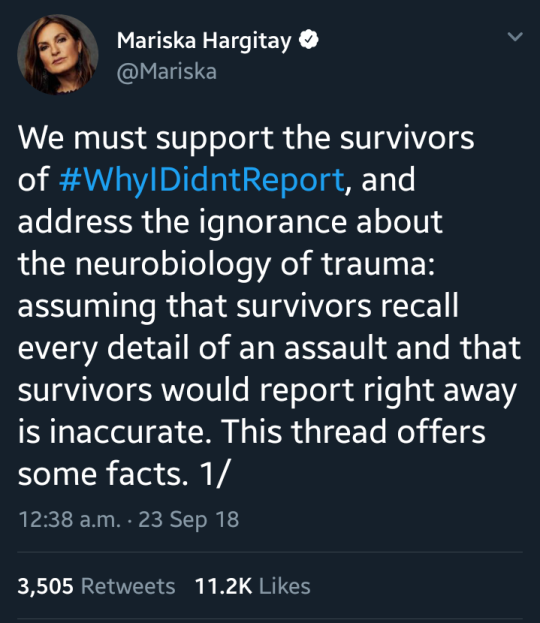
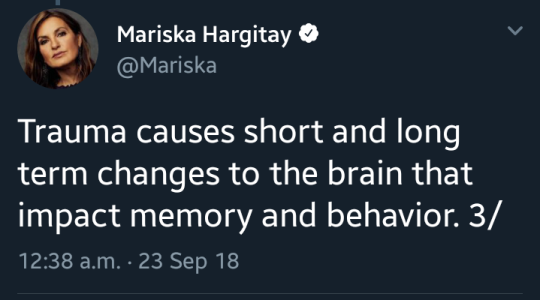
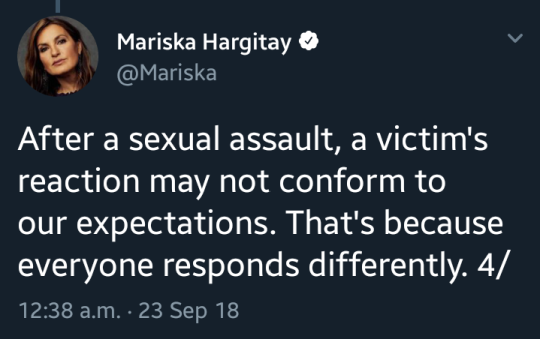
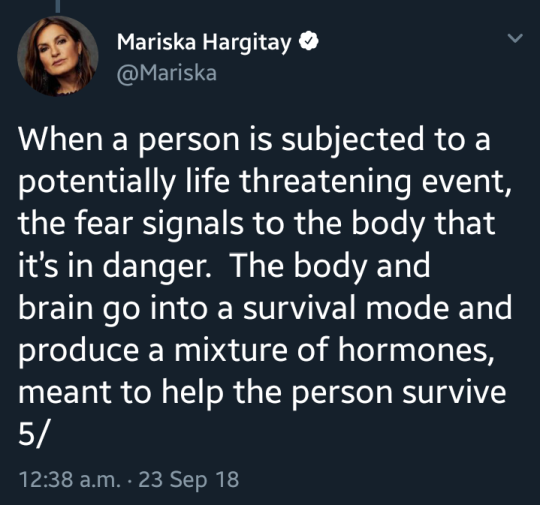
For those who have experienced trauma, anxiety comes from an automatic physiological response to what has actually, already happened. The brain and body have already lived through “worst case scenario” situations, know what it feels like and are hell-bent on never going back there again. The fight/flight/ freeze response goes into overdrive. It’s like living with a fire alarm that goes off at random intervals 24 hours a day. It is extremely difficult for the rational brain to be convinced “that won’t happen,” because it already knows that it has happened, and it was horrific.
Those living with generalized anxiety often live in fear of the future. Those with complex trauma fear the future becauseof the past.
The remedy for both anxiety and trauma is to pull one’s awareness back into the present. For a traumatized person who has experienced abuse, there are a variety of factors that make this difficult. First and foremost, a traumatized person must be living in a situation which is 100 percent safe before they can even begin to process the tsunami of anger, grief and despair that has been locked inside of them, causing their hypervigilance and other anxious symptoms. That usually means no one who abused them or enabled abuse in the past can be allowed to take up space in their life. It also means eliminating any other people who mirror the same abusive or enabling patterns.
Unfortunately for many, creating a 100 percent abuser-free environment is not possible, even for those who set up good boundaries and are wary of the signs. That means that being present in the moment for a complex trauma survivor is not fail-proof, especially in a stressful event. They can be triggered into an emotional flashback by anything in their present environment.
It is possible (and likely) that someone suffering from the effects of complex trauma is also feeling anxious and depressed, but there is a difference to the root cause. Many effective strategies that treat anxiety and depression don’t work for trauma survivors. Meditation and mindfulness techniques that make one more aware of their environment sometimes can produce an opposite effect on a trauma survivor. Trauma survivors often don’t need more awareness. They need to feel safe and secure in spite of what their awareness is telling them.
At the first sign of anxiety or depression, traumatized people will spiral into toxic shame. Depending on the wounding messages they received from their abusers, they will not only feel the effects of anxiety and depression, but also a deep shame for being “defective” or “not good enough.” Many survivors were emotionally and/or physically abandoned, and have a deep rooted knowledge of the fact that they were insufficiently loved. They live with a constant reminder that their brains and bodies were deprived of a basic human right. Even present-day situations where they are receiving love from a safe person can trigger the awareness and subsequent grief of knowing how unloved they were by comparison.
Anxiety and depression are considered commonplace, but I suspect many of those who consider themselves anxious or depressed are actually experiencing the fallout of trauma. Most therapists are not well trained to handle trauma, especially the complex kind that stems from prolonged exposure to abuse. Unless they are specially certified, they might have had a few hours in graduate school on Cluster B personality disorders, and even fewer hours on helping their survivors. Many survivors of complex trauma are often misdiagnosed as having borderline personality disorder (BPD) or bipolar disorder. Anyone who has sought treatment for generalized anxiety or depression owes themselves a deeper look at whether trauma plays a role.
If you can explain to me how I am fetishizing queerness by being queer, I will take your words into consideration.
Nonie has the sheer audacity to call you incoherent.
Yet does not use an apostrophe, space-key or question mark where it is clearly needed.
I assume- and it’s an assumption made on little evidence other than personal experience- that they’re typing poorly because they’ve got the shakes because they’re very upset that someone pointed out that their behaviour is unacceptable.
Trauma responses are Like That, and the majority of antishippers, especially those who are angry enough to send me detailed fantasies about post-mortem rape torture, tend to be dealing with trauma.
They’re dealing with it badly, but I try to cut them a little, little bit of slack in that regards.
That’s actually heartbreaking.
It’s a very common kind of reaction to the abusive manipulation that dominates antishipping “discourse.”
People with severe trauma are collected and preyed upon by a small group of aggressors, usually sex-negative radical feminists, and turned into a self destructive police force.
They are then praised for harming themselves, as long as they also harm others.
It’s actually one of the many ways that anitshipping discourse models itself, consciously or not, after cult dynamics which claim that it is noble to suffer as long as you make your enemy suffer too in the name of righteousness.
You also see this kind of thing a lot in extremist Christian sects, for example.
You make the right choice in trying to leave situations that are harmful for you. That is one of the healthiest coping mechanisms out there.
But it’s also something that has to be learned. At least in the context of abuse. If you grew up in a situation where abuse was unavoidable, you rapidly lose the “flight” stress response, and it takes conscious effort to regain it. Instead you rely very heavily on your other fear responses (fight and friend, usually, and sometimes freeze). This makes you extremely valuable as a tool for future abusers, as your “friend” response will tend to make you more accessible to them, and your “fight” response will tend to make you a useful attack dog against others.
Now, of course, I imagine the great majority of antis aren’t trying to indoctrinate themselves into an abusive cult dynamic. They’re victims here, too. They deserve an escape from the shithole they’re stuck in, and if they ever want to leave it all behind, I support them wholeheartedly.
But just because they don’t know better doesn’t make it acceptable for them to do the things they insist on doing.
An incisive, lucid and important analysis.
Now, of course, I imagine the great majority of antis aren’t trying to indoctrinate themselves into an abusive cult dynamic. They’re victims here, too. They deserve an escape from the shithole they’re stuck in, and if they ever want to leave it all behind, I support them wholeheartedly.
word. I will welcome them with arms wide open, just as I would any trauma survivor.
@
fangasmagorical, if you have time and interest, could you talk a bit about the “friend” response? I’ve never heard of it before, and I think it may be something I do. I think I and others could benefit from your thoughts.
“Friend,” also called, “fawn,” is one of the primary ways human beings react to fear. It’s like fight or flight, but there are other ways people respond to fear, especially people dealing with trauma.
Fawn types seek safety by merging with the wishes, needs and demands of others. They act as if they unconsciously believe that the price of admission to any relationship is the forfeiture of all their needs, rights, preferences and boundaries. –Pete Walker, Psychotherapist
Trying to talk your way out of a stressful situation. Rather than Fight, Run, or Freeze on the spot, we decide to reason or rationalize the situation. This can be anything from flattering the abuser, cringing in obedience, attempting to please and seek favor, offering alternatives; doing whatever we have to do to save ourselves by talking our way out. –Surviving My Past, abuse support group
It basically involves trying to turn the thing that made you afraid into an ally, or getting help from existing allies to face the threat. It’s part of why humans are so super social.
Unfortunately, in people who have been traumatized or abused, this natural response to fear can become overactive. You may have heard that people who are abused once are more likely to find themselves in abusive situations later in life?
This is because the friend/fawn reaction is very easily taken advantage of, and abusers know it (albeit often a subconscious knowledge). People who are overly likely to respond to fear by ignoring their own needs in favour of pleasing others are much more attractive to abusers, including cults.
While it’s called a fear response, friend/fawn is a response to stress of all kinds. You don’t necessarily have to be afraid of the person you’re appealing to, just experiencing stress that you’ve learned can be reduced by appealing to others, especially to authorities.
The way you see this work in the context of antishipping, since that’s the discussion at hand, tends to be a little bit like this.
Victim: I saw something that set off my PTSD, and now I am in a stress induced panic and I don’t know what to do!
Manipulator: Don’t worry, if you just listen to me, I will tell you what to do and you will be fine.
Victim: Okay! I completely believe you, because you are offering me safety from my trauma, and by subconscious mind perceives this as you literally saving my life.
Manipulator: Great, so since I saved your life taught you how to repress your fear, you should do anything you can to please and appeal to me.
“Manipulator” here refers not only to the handful of “ringleaders” in antishipping circles, but also to the social group of antishippers as a whole.
Social pressure is one of the most important reasons the friend response exists, and the larger or more aggressive a social group is, the more likely people will fall in line with it just for that feeling of safety.
This is also why major political movements that rely on fear-mongering are so effective: they create a stress response in the populace, and then say, “come with me and we will eliminate your stressor.”
This is so true though. I’ll never forget the shock and almost trauma of being bluntly told by my therapist that it isn’t wrong for people to like things I think are misogynistic and predatory. It took a longer time to understand that people who consume media I hate are not a direct threat to my well-being. It’s not at all an age thing either, I didn’t receive access to proper care and a safe environment till my late twenties and was therefore extremely volatile and reactionary. Less now but it’s a work in progress.
The fawn response makes so much sense. I’m mad confrontational but also takes a long time to call out the bad behaviour or wrong arguments of anyone who is nice to me or sides with me because it feels like ingratitude and I’m afraid of them turning on me.
I appreciate OP’s empathy towards triggered people so much. Regardless of whether you’re right or not, a hyper-aroused brain is an awful thing, like an earthquake in your head, shakes, mutism, nausea, inability to disengage. At no point are you more convinced that the ferocity of your emotional response matches reality than when you’re triggered.
Absolutely true. During the throes of a flashback, I’ve done and said some truly fucked up things to try to get away from the stimulus.
One of the more horrifying things that abusers manipulating victims in this way do, is ensure that their victims are in a state of hyperarousal as often as possible. This makes their victims more reliant on the abuser for guidance, and much more vicious to their targets if their abuser tells them to fight someone.
This cocktail is something that antishippers do to each other constantly, even without any organized leadership, because it’s what they’ve been taught. At this point they are a self policing group, and the law they enforce is “be constantly on the edge of stress overload.”
But you can’t live in a state of constant hyperarousal. If the over taxing of your adrenals and sympathetic nervous system don’t kill you, the sharp decrease in impulse control and altered concept of self preservation will.
Constantly exposing yourself to triggering material to gain the approval of a group that is abusing you is self destructive.
Unfortunately, I’m not trained to help people escape the fear conditioning of group abuse, and if I was, it would certainly be unethical for me to do so online and outside a clinical capacity.
But I know enough about the problem to know that sometimes the people who come in this blog looking for a fight will see discussions like this, and that can be the start to realizing that the “help” they’ve been getting is dangerous, and that there are alternatives.
!!!!!!!!!!!!!!!!!!!!!!!!!!!!!!! This just keeps getting more important and relevant.
Interestingly enough, online clinical work is becoming more and more accessible for trained workers to offer to clients, and is, in fact no longer an inherently unethical practice. There’s still a lot of grey area that clinicians are working out how to make as beneficial as possible, but the combined rise of internet’s own cultural linguistic quirks and telemedicine means that more and more clinicians are able to offer some level of support to people seeking this kind of work online. I’m pretty excited about it actually, and figure I’ll probably make some arrangements for people to be able to hit me up if they like in about *checks watch* four years.
Oh, well, I had no idea about the shift in practice on that front, but that’s great news!


 i'll apple your turnover