Secondhand embarrassment stems from self-hatred – you’ve been punished or have punished yourself for behaviors the other person is exhibiting, and you have to a greater or lesser extent accepted that that punishment was correct and deserved. This means that other people deserve the same kind of corrective action and it bothers you when it’s not enforced.
Fighting secondhand embarrassment therefore involves interrogating your own past. What did you do that this person is reminding you of? What happened to you as a result? Did you actually deserve it? What motivations did the other people involved have for correcting your behavior, and were they justified in doing so?
If you are able to develop empathy for your past self – an understanding that either you couldn’t have known better or that the correction you got from others was disproportionate or entirely unnecessary – you will be better able to direct that empathy at others. The root of all shame is your own shame and the root of all sympathy is the ability to forgive yourself.
you’re absolutely right- I am extremely self-aware. Maybe I was always that way to some extent, but I’ve become more and more that way over time through intentional practice. Self-monitoring is such a key part of coping and mental health. There are a couple of specific things I like to do when self-monitoring negative mood:
1. I play the “is this a BIG deal?” game. The game is pretty obvious: I decide whether whatever’s going on is a big deal, a medium deal, or a small deal. If it’s a small deal, that doesn’t mean it doesn’t matter or I can’t be upset. It’s a great way to validate: “yes, it’s a small deal, but it’s still a deal.” and then refocus my thoughts elsewhere. If it’s a medium deal or a big deal, then I can still validate and ask myself if there’s anything I can do about it right now. If yes, then I try to do it. If no, then I decide whether I should try to refocus or whether I need some time to decompress. So many things are a small deal, and keeping that in mind helps me not let those things overwhelm me.
2. I ask myself “what would I do if I was in a good mood?” Like many people, my instinct during a bad mood is to cater to that mood. The problem is that it can become a self-fulfilling cycle: the things I want to do during a bad mood often just perpetuate the bad mood, while the things I want to do during a good mood can perpetuate the good mood. So by checking to see what I would do if everything was the same, except that I was in a good mood, I can make sure I’m making the best choice for myself in that situation.
Honestly I think one of the most empowering things you can do for yourself is to separate your negative qualities from your identity.
Instead of saying “I’m lazy,” saying “I’ve made a habit of not doing work unless it’s absolutely necessary.” Instead of saying “I’m a bad friend,” saying “I haven’t communicated as much as I should with the people I care about.”
By being specific about your problems, and by framing it as an action that you are consciously either working on or ignoring rather than an unchangeable part of who you are, you allow yourself to accept your mistakes and work constructively on them instead of pretending they didn’t happen or wallowing in blaming yourself.
Taken from Adult Children of Emotionally Immature Parents by Lindsay C. Gibson, Psy.D. A summary of the tips the book hands you on how to recognize emotionally healthy people.
They’re realistic and reliable
They work with reality rather than fighting it. They see problems and try to fix them, instead of overreacting with a fixation on how things should be.
They can feel and think at the same time. The ability to think even when upset makes an emotionally mature person someone you can reason with. They don’t lose their ability to see another perspective just because they aren’t getting what they want.
Their consistency makes them reliable. Because they have an integrated sense of self, they usually won’t surprise you with unexpected inconsistencies.
They don’t take everything personally. They can laugh at themselves and their foibles. They’re realistic enough to not feel unloved just because you made a mistake.
They’re respectful and reciprocal
They respect your boundaries. They’re looking for connection and closeness, not intrusion, control or enmeshment. They respect your individuality and that others have the final say on what their motivations are. They may tell you how they feel about what you did, but they don’t pretend to know you better than you know yourself.
They give back. They don’t like taking advantage of people, nor do they like the feeling of being used.
They are flexible and compromise well. Because collaborative, mature people don’t have an agenda to win at all costs, you won’t feel like you’re being taken advantage of. Compromise doesn’t mean mutual sacrifice; it means a mutual balancing of desires. They care about how you feel and don’t want to leave you feeling unsatisfied.
They’re even-tempered. They don’t sulk or pout for long periods of time or make you walk on eggshells.
When angered, they will usually tell you what’s wrong and ask you to do things differently. They’re willing to take the initiative to bring conflict to a close.
They are willing to be influenced. They don’t feel threatened when other people see things differently, nor are they afraid of seeming weak if they don’t know something. They may not agree, but they’ll try to understand your point of view.
They’re truthful. They understand why you’re upset if they lie or give you a false impression.
They apologize and make amends. They want to be responsible for their own behavior and are willing to apologize when needed.
They’re responsive
Their empathy makes you feel safe. Along with self-awareness, empathy is the soul of emotional intelligence.
They make you feel seen and understood. Their behavior reflects their desire to really get to know you, rather than looking for you to mirror them. They aren’t afraid of your emotions and don’t tell you that you should be feeling some other way.
They like to comfort and be comforted. They are sympathetic and know how crucial friendly support can be.
They reflect on their actions and try to change. They clearly understand how people affect each other emotionally. They take you seriously if you tell them about a behavior of theirs that makes you uncomfortable. They’ll remain aware of the issue and demonstrate follow-through in their attempts to change.
They can laugh and be playful. Laughter is a form of egalitarian play between people and reflects an ability to relinquish control and follow someone else’s lead.
They’re enjoyable to be around. They aren’t always happy, but for the most part they seem able to generate their own good feelings and enjoy life.
something that has really worked for me in terms of self improvement is trying to form a single habit at a time. i’ve self-sabotaged countless of times trying to turn my life around in a single night, like, writing down a schedule where i’m going to wake up early, do yoga, cook my own food, work six hours and then write for another two, etc, etc, and like, that does help form a coherent picture of what you want your life to look like, it helps visualizing the path before you, but it just like… the Disorders get in the way, and even with a quote unquote healthy brain it’s not something anyone can just achieve overnight. so like, for example, last year i started forming the habit of reading for half an hour before i go to bed instead of scrolling my phone, and this year i added journaling, too. i just started forming the habit of not scrolling tumblr as soon as i wake up and i’m saving a lot of time in my mornings.
and like, it wasn’t something that i immediately got used to, i was so upset the first time i forgot to write about my day or sometimes i end up googling useless stuff instead of reading a book, but now it seems more natural than not to do these things.
i think my point is, and maybe this is obvious but it truly has been a reality check and a revelation for me, is that focusing on a single, small thing is so much more helpful than beating yourself over not being able to suddenly become a healthy person with healthy habits. forming habits takes time, adopting healthy routines takes time, and trying to do it all at once is incredibly discouraging, but little things add up.
I first read about a technique like this in a Rookie article, How to Structure Your Days If You’re Depressed. After reading it I decided I wanted to try it, and made it my goal to wash my face every day before bed. It wasn’t easy at first, and I still miss some days, but I can already tell it’s helping me and I feel more capable and more in control of my life. Plus my face looks a lot better, so I’m starting to feel more self-confident. Anyways basically I just mean to say that this is really solid advice I wish I’d known about earlier and I hope if you’re reading this and have trouble structuring your days that you give it a shot!
You feel like shit is a website set up to help you get out of that funk/improve things just enough to not feel horrible and miserable all the time. It’s amazing.
Whether you struggle with mental health problems all the time or whether this is a new/temporary state for you, this guide is an easy and judgement-free self-care tool.
PLEASE TRY IT OUT! Really! You just click through the questions to answer and follow simple instructions that in the end, ideally, will help you to feel more comfortable and stable on a daily basis.
Good luck! Have fun!
Wow this self-care took is incredible.
I’m feeling ok right now and am about to settle into bed (but this was scheduled hence the early morning post) but I flipped through it for awhile just to see what it is like and holy crap it’s like a choose-your-own-adventure of self-care activities that not only aims to engage you in positive feel good behaviors but also tries to match its suggestions to your level of energy/ability/can even.
I think I am going to use this definitely when I am having a bad time but maybe also try to incorporate it into my life on at least a weekly if not a daily or semi-daily basis.
This is super super awesome!
Adding this to my resource list.
I LOVE this. Love this.
I use this on a daily basis and I LOVE it! it’s kept me from forgetting to take my meds and being all pissy the next day lol.
This is absolutely fantastic! I haven’t tried out every option on there but I went through it once as a test and was super impressed.
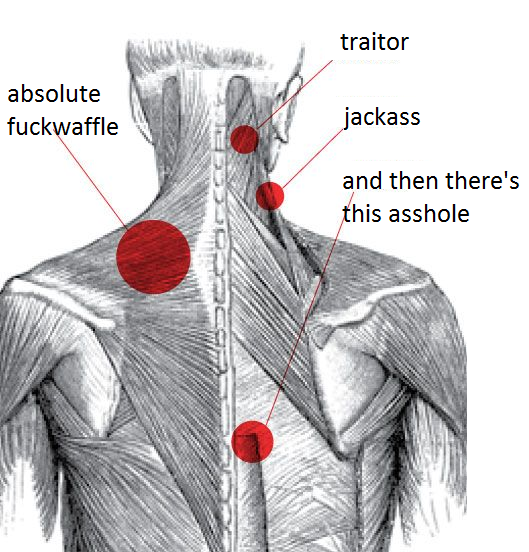
For Traitor: neck retraction exercise. While lying in bed with your head flat against the mattress, give yourself the biggest double chin you can. Repeat 10 times.
For Jackass: stop hiking your shoulders up to your ears. This is pretty much a stress thing, it’s human instinct to protect our neck when we’re under stress so that predators can’t get at it. Easiest way to do that is be elevating the shoulders, so. Periodically take not of where your shoulders are at.
Absolute Fuckwaffle: stretch out your chest. The rhomboids on the back work to keep our shoulder blades back, so when we’re hunched forward they are constantly straining to do their job. Unfortunately it’s not as simple as telling you to stand up straight, since our pectorals get chronically tight and prevent us from doing so. Step one: pectoral stretches. Hold for at least 20 seconds.
Asshole: Superman exercises. Like the rhomboids, the ESGs are straining against the slump. Stretching the chest will help them, too, but then you e got to strengthen your back. Do 20 of those per day.
So this is a pretty complicated subject, but here are the basics
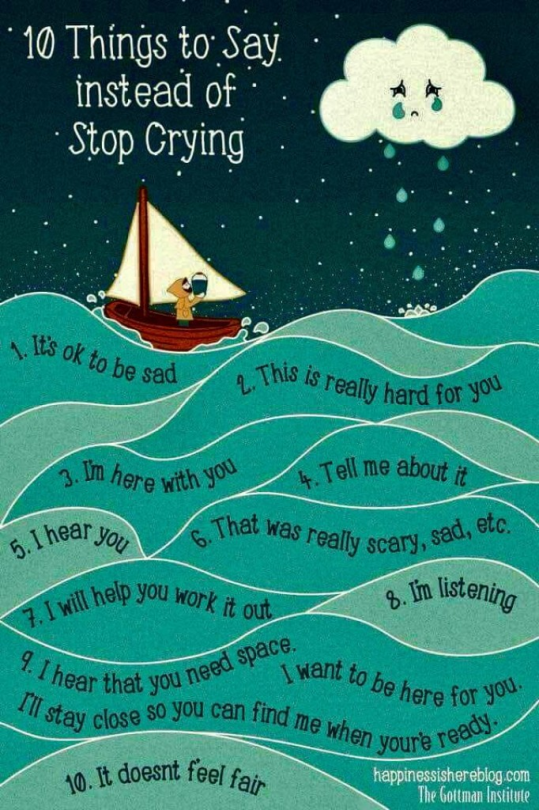
Don’t judge yourself for having emotions. Remind yourself it’s ok to feel whatever you are feeling. It doesn’t make you broken or a bad person, and there is nothing to be guilty or ashamed of. Try to just accept the emotion without being sad or angry that you are experiencing it
Assess the situation. The first step is to identify what emotions you are feeling. (This may be help if you are stuck). The second is to figure out what thoughts or events (if any) triggered it. For example you might feel angry because you were treated poorly, or sad because you were thinking about all the ways you believe you have failed. Worksheets such as this one may help you with this and the following steps
Make a plan to address any issues now, or if the emotions are too intense, make a point to come back to this later. For example, if you are stressed about the amount of work you have due, your action could be to make a plan for what work to do each day, email your professor about an extension, and to identify and challenge the assumption that turning in a project late makes you a failure. DBT & CBT tools can help you identify and work through the process of doing this
Do something sensory. Focusing on your senses can be a very effective way to get out of your head, and allow your emotions to fade naturally. You could simply observe what’s around you (such as listing things you can see or hear), or you could create a pleasant experience by putting on a favorite song, using scents you enjoy, doing something with your hands, or some combination of these things.
Remind yourself of things you have a positive association with You could remind yourself of a favorite memory, think of something you are grateful for today, read a message from a loved one, look at a photograph that you like, or imagine you are in your favorite place. Make sure you aren’t doing this to force yourself not the feel the emotion, but rather focusing your attention on something pleasant and being open to however your emotions change. It is important you follow steps 2 & 3 if you choose to go this route. However, if you are facing a thought you have all the time and you have already worked through those steps in a similar situation you may be able to go straight here.

 i'll apple your turnover