SHORT STORY/ONE-SHOT/ONE CHAPTER/COMICS 101 CRASH COURSE RAPIDPUNCHES’ STYLE
I’m NOT an expert but I have some working experience I can share. You need experience to become great. Here is my set of instructions, tips, and notes towards making a 12-page comic.
My method is to work backwards. Personally I work “backwards” because the end is the only wholly necessary page or set of panels in the story. Everything in between is open to editing and hacking as the most important moments are emphasized and chosen.
I even plan/draw the end page first. The end is the last page a reader sees- so spend your freshest energies on making it as epic, memorable, poignant, and beautiful as #$%^&.
If you draw the pages from 1 to 12 sequentially you run the risk of fresh to burnt out- an uneven distribution of drawing skill. (treat the first page and the 2-page splash as you would the last).
Roughly… the steps to making your comic is
WRITE
PLAN THUMBNAILS
DRAW
…BEGIN THE WRITING (DO NOT SKIP NO MATTER WHAT) like this, in this order:
How does it end?
Does the protag succeed or fail?
What is the turning point of their story?
What the protag do that led them there?
Where does it start?
Who is this protag?
EXAMPLE:
Guy gets mauled by a bear.
This is a fail on the guy’s half.
The bear must eat something or he’ll starve to death.
It’s the guy’s fault the bear can’t find other food. He caused the avalanche that buried all the cabins.
The guy is yodeling in an avalanche zone.
The guy is some guy.
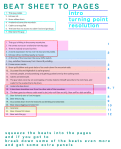
CREATING “THE BEAT SHEET” Take the above stuff and reorder it to make sense.
This guy yodels.
Echoes roll.
Snow slides down.
Avalanche buries the mountain.
Cabins are engulfed.
This bear has no access to cabin food and garbage.
Bear eats this guy.
Expand. Blow up important beats for emphasis. Keep less important beats brief.
This guy is hiking in the snowy mountains.
He comes across an avalanche warning sign.
There is nobody around but him.
A dumb expression forms over his face and he yodels.
Echoes roll but nothing nearby is moved.
At the top of the mountain the snow drifts twitch.
Guy, satisfied, hikes away from there still yodeling.
Frozen snow cracks.
Snow puffs billow and great slabs of ice crash down the mountain side.
Guy sees this and hightails it to safer ground.
Animals, people, are all panicking and getting pushed over by the rushing snow.
Cabins are destroyed.
The guy takes cover by an outcropping of rocks, fastens himself securely to the rock face, and waits for the avalanche to die down.
Avalanche dies down.
A lone bear shambles over from the other side of the mountain.
The bear goes to where a cabin used to be (only roof tiles are left). Bear sniffs a dish satellite.
Bear forlornly eats a food wrapper.
Bear tries to dig.
Guy comes down from the rocks he as climbing and sees bear.
Bear stops digging and sees him.
Guy runs.
Bear chases him down.
Bear eats the guy.
BEAT SHEET COMPLETED!!!
After the beat sheet, write up all the sound effects and speech bubbles and conversation/dialogue you want to be in your comic.
Since comics are a visual medium, highest priority is given to the beats. If a story can’t be told with the art without the dialogue– you messed up and it’s time to rethink your life choices.
Try to keep all your text chunks as short as a tweet. Professionally you don’t want more than 25 words per speech bubble and no more than 250 words per page.
Next is translating the beats to pages…
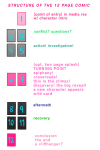
STRUCTURE OVERVIEW:
[1] point of entry, in media res, hero intro
[2][3] conflict. establish conflict, setting, and mood by the third page. [4][5] rising action/false resolution to conflict/investigation
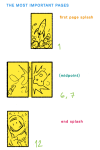
[6][7] turning point/plot twist/epiphany (this one epic image, to page spread is pivotal, spend a lot of effort into creating this)
[8][9] aftermath/“darkness before dawn”/struggle [10][11] recovery/“rise and conquer”/“fall”
[12] resolution/final end/cliffhanger
[front cover][interior] [interior][back cover]
——————–
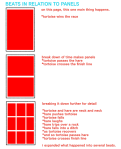
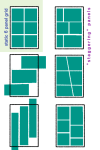
My maximum per page is nine panels but I’ve seen pages that have way more. I like to have about 3 to 4 panels per row or less but I’ve seen the “rules” broken before. Advanced comic book artists manipulate time with the number of panels and the size of each panel.
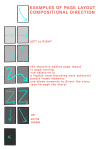
remember, DIAGONALS!!! open up an issue of batman, superman, spider man, deadpool or whatever youre reading theyre everywhere.
———-
…DRAW IN THIS ORDER:
Page 12,
Page 6 and 7 (this is typically one large image that takes up the space of two pages),
Page 1,
and then the rest.
ONLY “DEVIATION” ALLOWED:
Page 12 and 1*
Page 6 and 7,
and then the rest.
*Draw the first and last page as a spread in situations where the beginning of the story mirrors the end of the story.
Cover is dead last.
———-
(If at the very end you find out you need more pages and it’s absolutely unavoidable and totally necessary you have to add them in fours. Try to stick to 12 pages for this crash course.)
——————–
FURTHER NOTES:
Plan and draw the pages in spreads (the twos) since this is how it will appear in print and when you submit them to an editor for review guess what, the pages with an exception to the first and last will be reviewed as spreads.
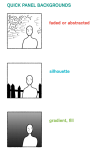
You at most only need one establishing panel of the setting and environment (scene) per page.
Forget “true to life” perspective outside of the establishing panel). Practice diagonal composition of objects and subjects within panels. For dynamism.
You don’t have to present the text all in one go (one paragraph or bubble). You can and should break up paragraphs, sentences, and if you need to single out words– to make smaller, more easily managed bubbles to scatter through the panel.
Less important moments have smaller panels and or lesser detail. More details (or more word bubbles) slow down time. More drawn detail also creates a concentration of values (it’s darker and sometimes combines together as one shape or mass)
Know your light sources. Control the blacks. Control the values.
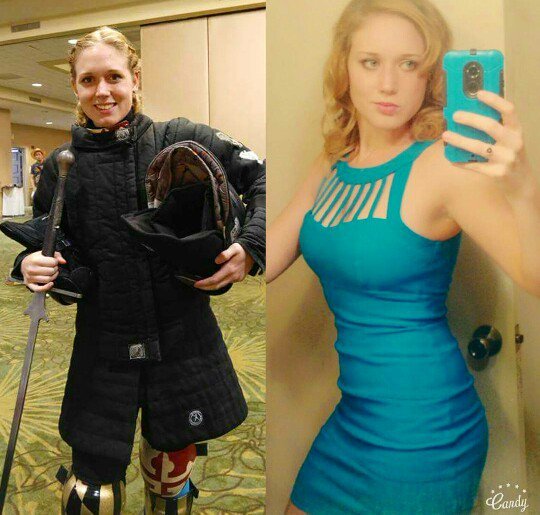
while you were living under gender roles, i studied the blade
Men are on average more muscular than women and can wield heavier weapons more easily, so it’s a practical advantage for the woman to prefer the rapier and the man to prefer the longsword. Gender roles? I’d rather win than try to “rebel for rebellion’s sake” and lose.
surprise both swords were used in totally different time periods for totally different purposes and this is a joke post no one cares
Not to mention long sword vs. rapier. The rapier has more speed and precision then the long sword. The long sword is crazy heavy for a hand held weapon and would quickly die.
Several Of The Above Points Are Shit-Wrong And I’m Going To Tell You Why: A Point By Point Dissection By Me
Point 1: “Both swords were used in totally different time periods for totally different purposes.”
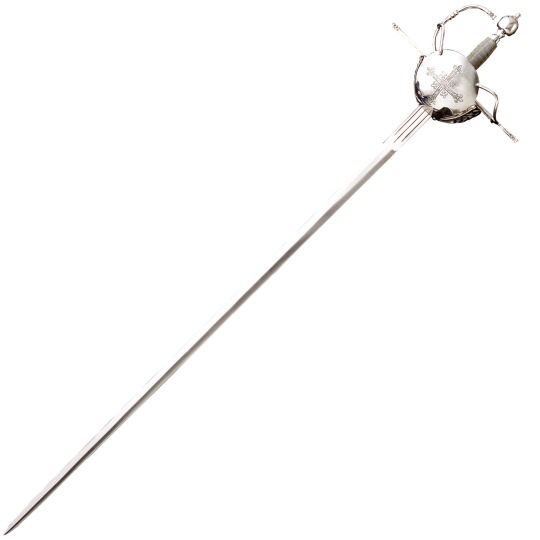
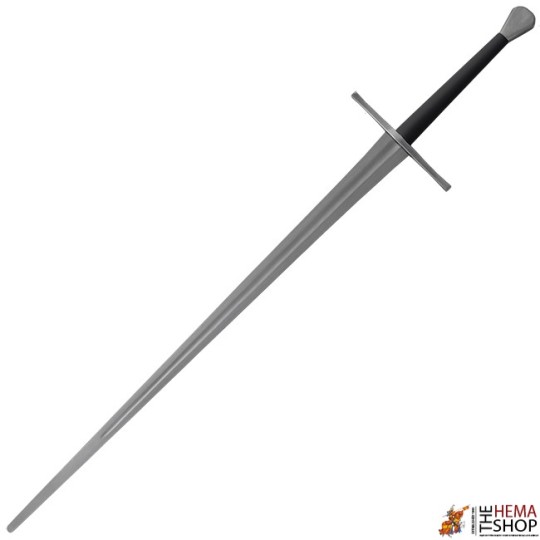
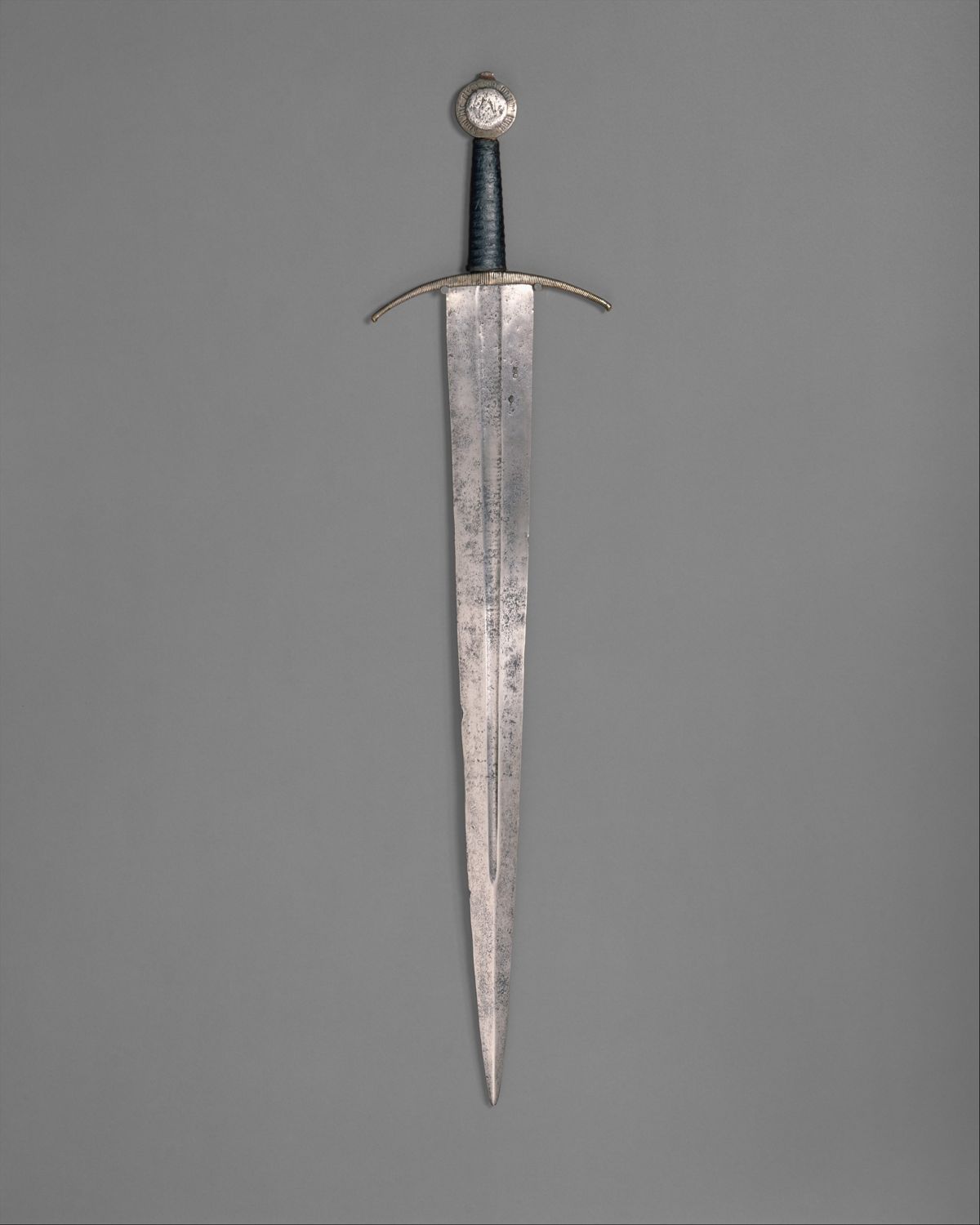
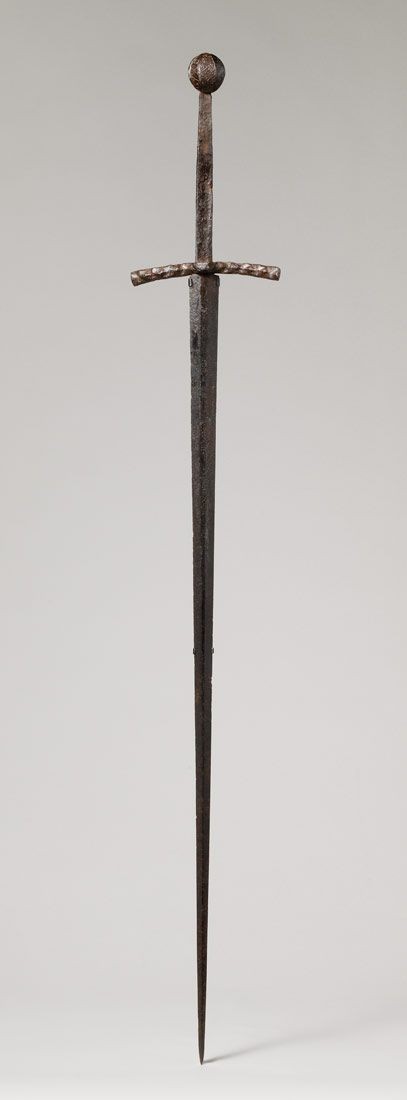
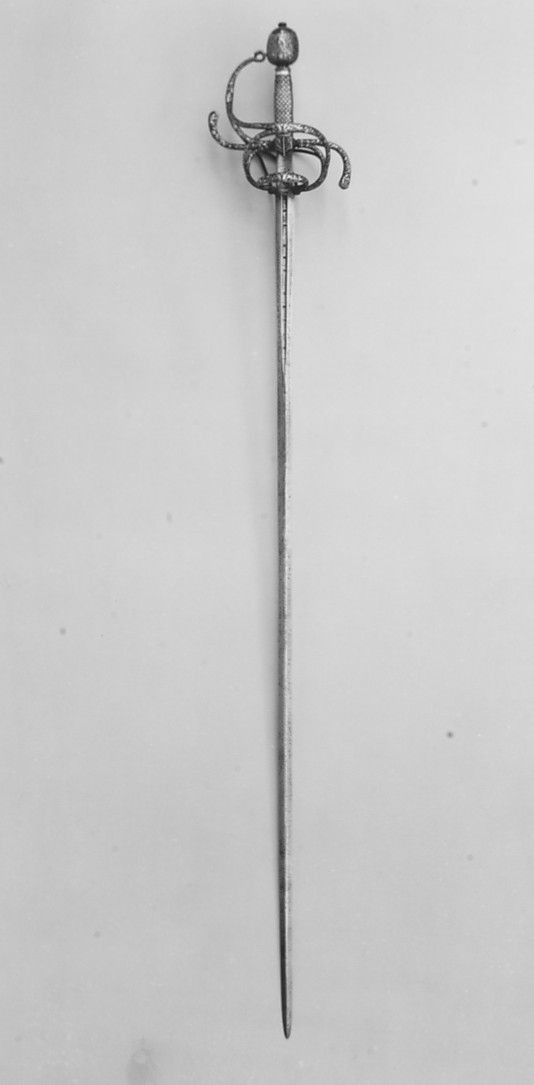
Partially right. A rapier is indeed suited to a different fighting style than a longsword. The slender, blade with a highly developed tip makes the rapier an amazing thrusting weapon, designed to pierce through the holes in chainmail or the seams between plates. They can be used to cut, but their primary focus is to thrust. A longsword, however, has a much thicker and heavier blade as well as a longer hilt that gives it the ability to be wielded in one OR two hands (it’s often referred to as a ‘hand-and-a-half’ sword because of this) enabling it the leverage and strength to cut (or bash, but that’s far less ideal as it could damage the blade) far more easily.
Rapier:
Longsword:
HOWEVER, there was at the very least a large period of overlap in the uses of longswords and rapiers. The difference in their utility (besides cutting vs thrusting, the longsword was largely a military weapon and the rapier was largely a civilian weapon and for dueling) saw to it that they could coexist. The longsword as we know it has been found to date back at least to the 14th century, if not earlier and was used in sporting duels and tournaments up until the 16th if not the 17th century (though its military use ended long before its sport use did). The rapier was first created (or at least first recognized by scholars as being created) around 1500 in Spain. Even if we take only the centuries during which they saw the most use (longsword = 14th-16th cent. and rapier = 16th-17th cent.) there was still a whole century of overlap.
Point 2: Rapiers are lighter than Longswords (and also the point that longswords are “crazy heavy for a hand-held weapon”).
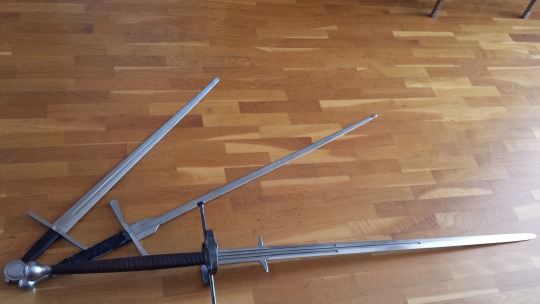
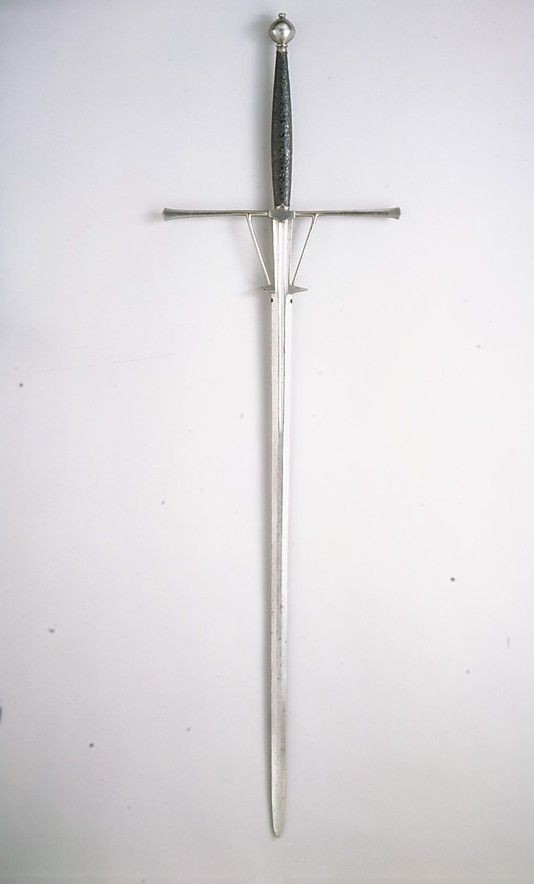
This is wrong. Rapiers are, on average, around 2-ish lbs (1kg). Longswords are also, on average, around 2-ish lbs (1kg). This is for your STANDARD LONGSWORD, a hand-and-a-half sword that can comfortably be wielded in either one or two hands. Of course, both can reach higher or lower weights, but the top of the weight range for them tends to be around 4 lbs. The heavy fuckers you’re probably referring to are true 2-handed swords, such as the montante or the zweihander. Even then, they don’t get too much above 7 or 8 lbs. You know what weighs around 7 or 8 lbs usually? Most newborn babies.
(in order top to bottom: a 1-handed sword, a longsword, a montante)
For reference, other hand-held weapons? Shotguns run between 5 and 8 or more lbs. An M60 machine gun? Around 23 lbs. Handguns are between 2-4 lbs.
So yes, a longsword is heavy…when you’re comparing it to, like, a knife or to not wielding anything.
That’s a video-game-ism so that 1) you don’t feel like shit when you get wrecked by an opponent wielding a fuck-off huge sword and 2) they don’t have to program in proper form, technique, and handling of said sword.
Point 4: “Women can’t wield longswords.”
Really now?
(Have some more videos because tumblr won’t let me embed any more.)
Longswords just aren’t that heavy. They really are not. A good one balances in the hand and feels almost effortless to hold. They are a real pleasure to handle and I think everyone should get the chance to do so at least once just to understand what I mean.
Shitty wallhangers are fuckoff heavy, but that’s because they are made from crappy materials, are not properly shaped/tapered, are too thick, are poorly balanced so they feel even heavier than they are, and were never actually intended to be *used*.
Now, within the modern field of western martial arts women are often pushed towards rapier and subtly discouraged from longsword. The weight and strength issue is raised, and there is concern from their male opponents about women getting hurt–rapier thrusts tend to land softer because the blade flexes, while longsword cuts tend to leave more bruising and risk more damage, especially in organizations that have very different rules for rapier and longsword.
But as a woman who was pushed into rapier and smallsword for a decade before discovering that longsword was her true passion, I am glad to see people disputing this gender divide.
I present to you a – probably quite incomplete, I’m sure I’m missing a lot of speech sounds – reference list and a bit of a guideline for the different ways one can describe the sounds your characters make whilst writing smut. I’ll definitely be referring to it, because I sometimes get stuck on exactly how to describe a particular noise. (aka, “he can’t groan again, he just groaned last paragraph”)
Combine a descriptor and a sound for best effect – for example, “needy moan,” “pleased hum,” or “sudden scream.” You can even use two: “low, rough grunt,” “sweet little cry,” “desperate, filthy noise,” as long as you don’t repeat a word that means the same thing, unless you really want to emphasize it. Avoiding repetition is pretty key here. You don’t usually want to say “hushed, quiet gasp” except on rare occasions when it’s very important how soft the sound was.
Use your own common sense, as well; some sounds and descriptors don’t generally work well together. “Deliberate shriek” probably wouldn’t work well, and neither would “languid grunt,” but again, this is all very situational – play around! Have fun.
Feel free to add to my lists, use for your reference or pass them around. It would be fun to see a randomized generator made, too, I’m just too lazy to do it myself. 😉
Do you design a lot of characters living in not-modern eras and you’re tired of combing through google for the perfect outfit references? Well I got good news for you kiddo, this website has you covered! Originally @modmad made a post about it, but her link stopped working and I managed to fix it, so here’s a new post. Basically, this is a costume rental website for plays and stage shows and what not, they have outfits for several different decades from medieval to the 1980s. LOOK AT THIS SELECTION:
OPEN ANY CATEGORY AND OH LORDY–
There’s a lot of really specific stuff in here, I design a lot of 1930s characters for my ask blog and with more chapters on the way for the game it belongs to I’m gonna be designing more, and this website is going to be an invaluable reference. I hope this can be useful to my other fellow artists as well! 🙂
So if you’re a dm like me, you probably want to be relatively skilled in some typical fantasy accents for your game to make things feel that much more real. So i’ve decided to throw together a little master post of “how to” videos on some various accents. This is mostly for my own reference, but if you’d like to save this for yourself too, go right ahead. Feel free to add on to this, as well!
Games often overestimate how much a sword or an axe weighs, and the assumption that many people make is that this lump of steel in your hand is a great burden, although this assumption has been working is way out.
The simple fact of the matter is, medieval weapons are quite light.
The medieval Arming Sword, the single most common sword of the middle ages. One handed, ext to carry, you wouldn’t expect this one to be that heavy, and it isn’t. Arming Swords tend to weigh between 3 and 4 pounds / 1⅓ and 1.8kg, that’s it! This particular example weighs 3 lbs. 11 oz / 1.6kg.
The Longsword, a much longer weapon than the Arming Sword, as the name implies, and obviously much heavier. But it’s not.
Standard Longswords, especially later period ones designed more for thrusting (like the one pictured above,) can be shockingly light. They can weigh in the same range as arming swords, although they can weigh more as well.
Longswords tend to sit between 3 and 5 pounds /
1⅓ and 2.25kg, and this example is 3 lbs. 7oz. / 1.5kg meaning it weighs less than the Arming Sword pictured before!
The Rapier, a famously light and nimble weapon that is also clouded in a fog of incorrect assumptions. The rapier is a long weapon. This example measures 45 inches in the blade and isn’t even among the longest I’ve seen.
Including all that weight from the steel basket around your hand, and it starts to add up. Rapiers can however be quite light, so including the extremes of the spectrum you end up with a range of between 2.5 pounds and 5 pounds / 1.1 and
2.25kg. This particular example is on the lighter side, weighing 2 lbs. 13 oz / 1.3kg.
The Zweihander, the famous greatsword, surely this is a much heavier weapons! Well of course it’s heavier than the others, the entire thing is five and a half feet tall, however they are deceptively light.
Zweihander weigh, on average, 6 pounds / 2.7kg. That’s it, only 6 pounds. Some on the heavier side weigh about 7lbs / 3.1kg, but they rarely exceed that. This example weighs 6 lbs. 2 oz. / 2.8kg.
Moving away from swords, axes will surely be heavier, won’t they? Think again.
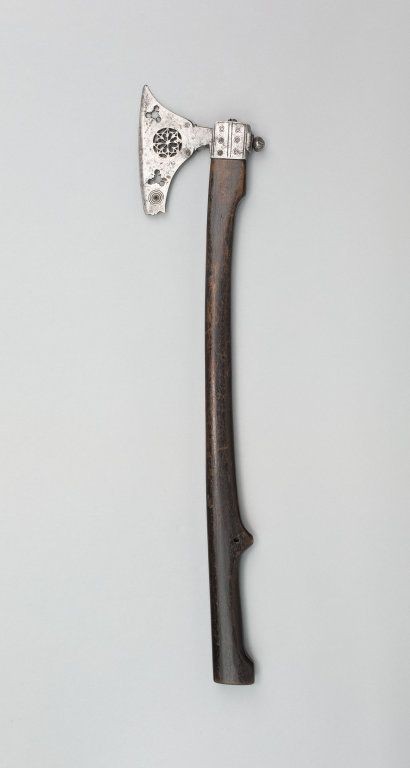
There is an important distinction between battle axes and wood cutting axes. Battle Axe heads tend to be thin, very thin, good for cutting flesh and bone, and easier to wield. Wood cutting heads are wider so as to be more robust, and split wood open more efficiently, and let’s not even talk about splitting mauls.
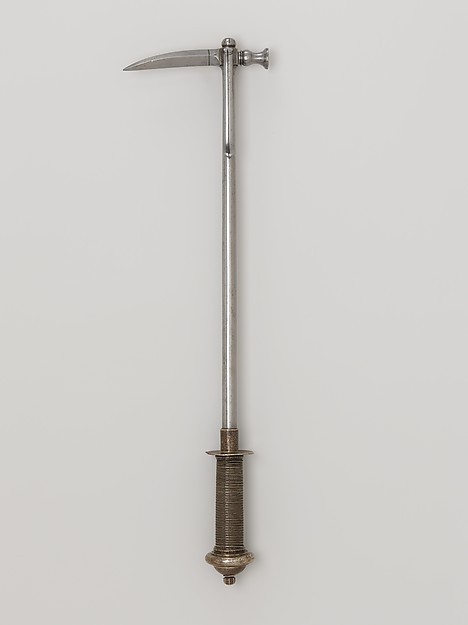
As such, one handed battle aces like this tend only to weigh between 1 and 4 pounds / 0.45 and 1.8kg. They can be very very light! The example is 1 lb. 7 oz. / 0.65kg.
Warhammer even tend to stick to that same range, between 1 and 4 pounds / 0.45 and 1.80. This example is 2 lbs. 8 oz / 1.15kg.
It’s only once you reach polearms that you begin getting heavier weights. The weights of a polearm is greatly changed by the length of it’s shaft, which can vary greatly, so these numbers will be somewhat more flexible.
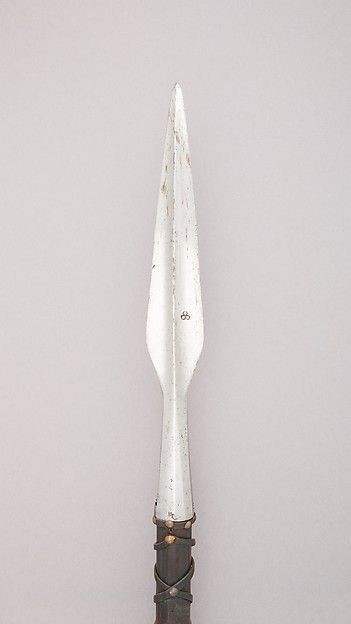
Spears tend to be the lightest polearms, often weighing between 3 and 6 pounds / 1.⅓ and 2.7kg, with this example coming in at 4 lbs. even / 1.8kg.
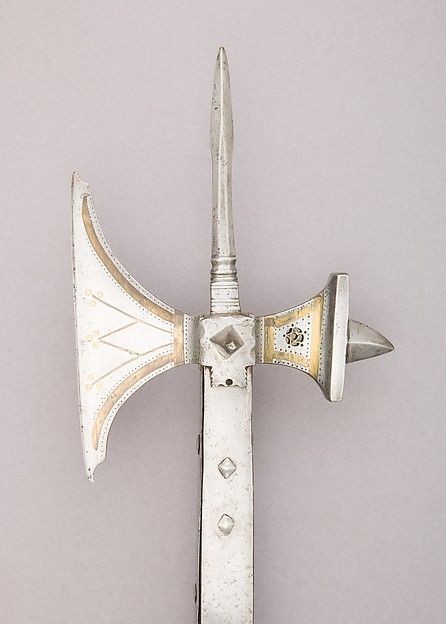
Poleaxes, tending to be on the shorter end of polearms, also tend to be lighter. Interestingly, the examples I’ve seen are quite consistent, and all weigh between 6 and 7 pounds / 2.7 and 3.175kg, though greater variation is possible. This example weighs 6 lbs. 9 oz / 3kg.
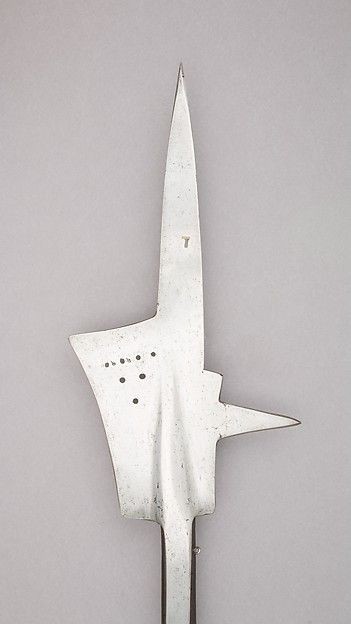
Halberds tend to be even heavier, though examples in museums tend to have hafts that are too short simply for storage and display purposes.
As such, the weights tend to be somewhat off, however we know from period sources and good modern reproductions that properly sized balberds tend to be about 8 pounds. This museum piece fits the “too light” mould, and weighs 5 lbs. 10 oz / 2.5kg.
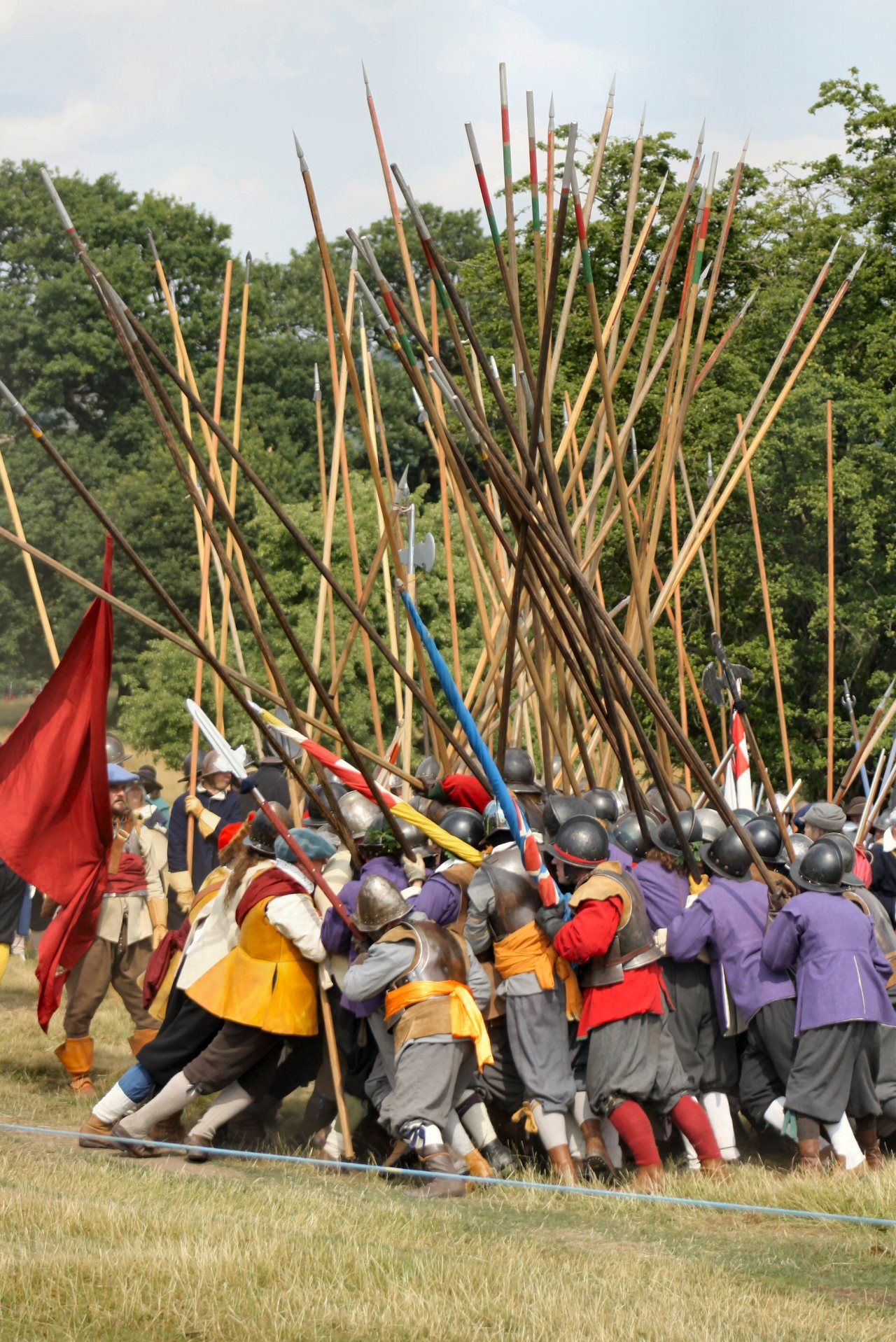
For the purposes of giving you (the reader) a proper appreciation of what the pike is, I elected to not use a museum photo for this one, so you can see their full scale.
The pike is a massive weapon, and these piles being used by reenactors in this photo are quite short. On the shorter end, they measured over 10 feet / 3m in length, and on the lookout get end occasionally hit 30 feet / 9.1m !
These could be the heaviest melee weapons typically used in medieval/renaissance warfare, and even these only weigh between 5 and 13 pounds / 2.25 and 5.9kg.
With your heaviest weapons only weighing 13 pounds at their most extreme, this paints a good picture of how light these hand weapons tended to be. Something for RPG and video game developers to keep in mind in the future.
something people writing post-apocalyptic fiction always seem to forget is how extremely easy basic 20th century technology is to achieve if you have a high school education (or the equivalent books from an abandoned library), a few tools (of the type that take 20 years to rust away even if left out in the elements), and the kind of metal scrap you can strip out of a trashed building.
if you want an 18th century tech level, you really need to somehow explain the total failure of humanity as a whole to rebuild their basic tech infrastructure in the decade after your apocalypse event.
i am not a scientist or an engineer, i’m just a house husband with about the level of tech know-how it takes to troubleshoot a lawn mower engine, but i could set up a series of wind turbines and storage batteries for a survivor compound with a few weeks of trial and error out of the stuff my neighbors could loot from the wreckage of the menards out on highway 3. hell, chances are the menards has a couple roof turbines in stock right now. or you could retrofit some from ceiling fans; electric motors and electric generators are the same thing, basically.
radio is garage-tinkering level tech too. so are electric/mechanical medical devices like ventilators and blood pressure cuffs. internal combustion’s trickiest engineering challenge is maintaining your seals without a good source of replacement parts, so after a few years you’re going to be experimenting with o-rings cut out of hot water bottles, but fuel is nbd. you can use alcohol. you can make bio diesel in your back yard. you can use left-over cooking oil, ffs.
what i’m saying is, we really have to stop doing the thing where after the meteor/zombies/alien invasion/whatever everyone is suddenly doing ‘little house on the prairie’ cosplay. unless every bit of metal or every bit of knowlege is somehow erased, folks are going to get set back to 1950 at the most. and you need to account somehow for stopping them from rebuilding the modern world, because that’s going to be a lot of people’s main life goal from the moment the apocalypse lets them have a minute to breathe.
nobody who remembers flush toilets will ever be content with living the medieval life, is what i’m saying. let’s stop writing the No Tech World scenario.
Also, like, you can loot a Bunnings – or even a camping goods store – and get your hands on a couple of portable solar panels.
Not that I’ve given this a lot of thought, but come the apocalypse, I know exactly which sections of the local hardware superstore to hit for necessary supplies, from generators to solar lights to fruit and veg seedlings.
Naturally, I’m not just going to do that, I’m going to make a big long post about reproduction armor and armor in art.
I’ll be including pictures like this, most of which I’ve posted before. They’re by an Italian armorer named Augusto Boer Bront that runs the XIVth and XVth Century European Armor Facebook groups.
The above photo talks about how the aventail of a bascinet should sit on the wearer’s face. When it comes to bascinets, this mistake is a frequently made one, and a good pair of reproductions can be seen below, in the forms of the armor worn by Ian LaSpina (left) and Reese (right, I don’t know his last name,) both of whom have YouTube channels (I’ve linked them, you should check them out if you’re interested.)
This photo is a good example of how an aventail should fit though.
Ian LaSpina’s kit is an early XVth century English kit, sporting the classic heavily enclosed English style with a standard houndskull bascinet and hourglass shaped gauntlets (also lacking a textile covering for the breastplate) marking it as belonging to the 1400′s to 1410′s.
Another common mistake is the fit of a breastplate. You can see quite clearly on Ian’s kit above that the breastplate sits right on his natural waistline, giving way to the “paunce of plates” or metal skirt that covers the rest of his torso. This setup allows for freedom of movement. If breastplates stopped at the hip, like many reproductions and artistic renditions do, then the wearer wouldn’t be able to bend.
You can also see how the breastplate is domed. A breastplate must be domes like that, to encourage weapons and projectiles to glance. If it were flat, weapons could strike at right angles, imparting the entirety of their force and rendering the armor significantly less effective.
A few more things can be gleaned from this picture of Ian in an older version, less complete of his kit. The shape of his helmet, and the fact that his visor covers the vervelles. Vervelles are the points on the bascinet were the aventail is laced on. On a side-hinging bascinet, the visor should cover them, as pictured above. Bascinet shape is also very important, as expressed in the above diagram.
Moving on from Ian LaSpina, we can take a moment to appreciate the armor of one of the biggest names in the community: Dr. Tobias Capwell.
It’s absolutely stunning, isn’t it? Dr. Capwell’s armor is also English, like Ian’s, however his is later, about 1440. It’s blackened entirely, with gold trimming, and it is beautiful.
Here is Dr. Capwell wearing a reproduction set of the famous Avant harness, pictured below. This is the absolute epitome of what Milanese style armor in the late XVth century was like. The helmet is not contemporary with the suit, so it was omitted from the reconstruction.
Now, because I was asked to post pictures of people in armor, I’ll throw in this photo from “The Great Tournament of Schaffhausen” in Switzerland. The man on the left is wearing a classic suit of German Gothic armor, to his right you have Dr. Capwell in what looks like his English 1440 suit, pre-blackening, and the two gentlemen on the right appear to be in Milanese style Italian kits. It’s hard to say what the woman in the back is wearing, but it looks like it could be Gothic or Italian.
I’ve now included so many pictures of people in full plate that I would feel remiss not including at least one photo of someone in something else. So, here is Tom Biliter in a set of German Gothic armor (probably late XVth century,) but rather than a standard cuirass, he is wearing what’s known as a brigandine. A brigandine is a series of small overlapping plates riveted to a textile backing.
Here are a couple of pictures of Ian LaSpina wearing a reproduction of the Churburg S18 armet. This armet is from the armories of Churburg castle in Northern Italy, and dates to about 1410.
One final thing I’d like to touch on in this titan of a post: the applications of these principles in the design of fantasy armors.
Often when you see fantasy armor designs, they are quite ridiculous. They are large, have vast openings, don’t fit right, and so on. Now, the physics of these fantasy world are generally the same as ours, therefore the same principles of armor making should apply.
“But OP,” I hear you cry, “I want my armor to look fantastic and cool. How an I do that if I have to abide by dumb physics?”
Well first off, I’m not saying you have to abide by physics, but if you want to, you could do something like this.
The Sovereign armor. This armor was 3D printed by Melissa Ng, and designed with help from a name you’ll recognize by now: Ian LaSpina.
It’s super cool, very fantasy looking, but still applies all of the basic principles of how armor fits, allowing Melissa to move around properly, so the armor doesn’t restrict her.
So, this has been my armor post. If you’ve stuck around this long, good on you. I hope I’ve said something new to you, or at least shown you an armor you’ve never seen before. Cheers!










 i'll apple your turnover