This is how the system of white supremacy operates. The media is used 2 create stereotypes like blk on blk crime.They need black men to fill jail cells for the Prison Indstrial complex
You know what? I’m tired of this. I do not know what exactly they are waiting for. I mean our government comes up with “reasons” to invade other countries, such as Syria, like their government is allegedly violating human rights or something like that. but… I mean for other countries, they do not even have to go deep to bomb the fuck out of this place, they can just look at our media. And this has been happening to people of color since the media has existed.
I’ll never forget this
👇🏾
Did a research project on this in undergrad and the results are extremely alarming because it’s not just in imagery, it’s in language used even in the law making process and within our own communities in a completely different way than expected.
Yuuuup talk about this in our media culture and society class where the exact same Katrina sample was used. White supremacy runs far too wide and too deep to be denied that it exists
In a new book, “White Fragility,”
DiAngelo attempts to explicate the phenomenon of white people’s
paper-thin skin. She argues that our largely segregated society is set
up to insulate whites from racial discomfort, so that they fall to
pieces at the first application of stress—such as, for instance, when
someone suggests that “flesh-toned” may not be an appropriate name for a
beige crayon. Unused to unpleasantness (more than unused to it—racial
hierarchies tell white people that they are entitled to peace and
deference), they lack the “racial stamina” to engage in difficult
conversations. This leads them to respond to “racial triggers”—the show
“Dear White People,” the term “wypipo”—with “emotions such as anger,
fear and guilt,” DiAngelo writes, “and behaviors such as argumentation,
silence, and withdrawal from the stress-inducing situation.”
Update: From Jenny Han’s Opinion piece on New York Times
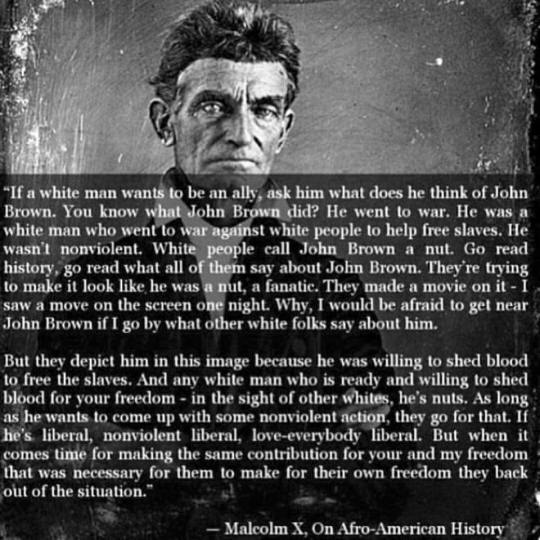
If you speak in an angry way about what has happened to our people and what is happening to our people, what does he call it? Emotionalism. Pick up on that. Here the man has got a rope around his neck and because he screams, you know, the cracker that’s putting the rope around his neck accuses him of being emotional. You’re supposed to have the rope around your neck and holler politely, you know. You’re supposed to watch your diction, not shout and wake other people up— this is how you’re supposed to holler. You’re supposed to be respectable and responsible when you holler against what they’re doing to you. And you’ve got a lot of Afro-Americans who fall for that. They say, “No, you can’t do it like that, you’ve got to be responsible, you’ve got to be respectable.” And you’ll always be a slave as long as you’re trying to be responsible and respectable in the eyesight of your master; you’ll remain a slave. When you’re in the eyesight of your master, you’ve got to let him know you’re irresponsible and you’ll blow his irresponsible head off.
And again you’ve got another trap that he maneuvers you into. If you begin to talk about what he did to you, he’ll say that’s hate, you’re teaching hate. Pick up on that. He won’t say he didn’t do it, because he can’t. But he’ll accuse you of teaching hate just because you begin to spell out what he did to you. Which is an intellectual trap—because he knows we don’t want to be accused of hate.
And the average Black American who has been real brain-washed, he never wants to be accused of being emotional. Watch them, watch the real bourgeois Black Americans. He never wants to show any sign of emotion. He won’t even tap his feet. You can have some of that real soul music, and he’ll sit there, you know, like it doesn’t move him.
And then you go a step farther, they get you again on this violence. They have another trap wherein they make it look criminal if any of us, who has a rope around his neck or one is being put around his neck—if you do anything to stop the man from putting that rope around your neck, that’s violence. And again this bourgeois Negro, who’s trying to be polite and respectable and all, he never wants to be identified with violence. So he lets them do anything to him, and he sits there submitting to it nonviolently, just so he can keep his image of responsibility. He dies with a responsible image, he dies with a polite image, but he dies. The man who is irresponsible and impolite, he keeps his life. That responsible Negro, he’ll die every day, but if the irresponsible one dies he takes some of those with him who were trying to make him die.
This shit is real familiar, isn’t it? So for all the white people who wanna roll up on me and other folk who they have deemed “SJ bloggers” and try and attack out humanity like we have no clue what tactics they’re using…please realize this: Malcom X done seent yo ass before you were even born. And if you don’t think this is basic knowledge to us, think again.
I’ve said it before and I’ll always say it. IF YOU COME AT ME, I WILL TAKE YOU WITH ME. And this shit is so old your fucking grandma was being racist in the same way before your dumb cracker ass was born.
Listen, in the build-up to the Civil War, one of the most powerful political forces in the United States was a trend toward moderation that advocated for a moderate amount of slavery, and they saw the abolitionists who wanted zero slavery to be “just as bad” as the planters and fire-eaters who wanted slavery everywhere. This is the “house divided” that Lincoln was talking about; a movement that “rejected extremism on both sides” so that we would have medium slavery.
As it is, so it ever was.
Reading what people wrote about slavery back then had a big impact on me. It was all too familiar how it was justified.
And liberals are perpetually trying to justify this stance with, “Oh, that was just the way things were back then, don’tcha know,”
and I’m just staring at them like
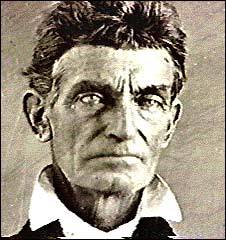
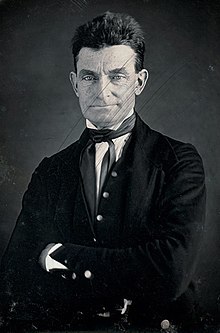
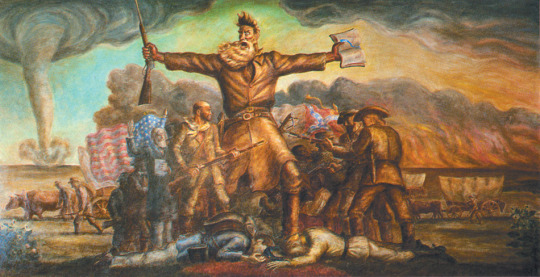
“John Brown having none of your shit” needs to be used more often as a reaction image on this site.
Every single depiction of the man looked like a meme template, even
Worth keeping in mind: when John Kelly said the civil war was started over a “lack of compromise,” he’s trying not to admit, “the South refused to compromise on the idea that slavery should be legal everywhere.”
The abolitionists were not a strong, solid majority. They were the extremists, the people saying “burn it all down” was better than a partial fix. And most white people (y’know, the only people who could vote) were content with “we could have SOME slavery, just… there should be limits.”
The South refused to accept limits. That’s the “lack of compromise” that kicked off the Civil War.
When some asshole Nazi wannabe tells you “look, both sides have some valid opinions; we should have more compromise,” know that what he really means is, “YOU should compromise; I should have the right to be as vicious as I want to anyone I wish.” And the people actually advocating for compromise? Again, they mean, “the bigots have been a big part of our history and we need to keep making them feel welcome. Their targets need to accept the gains they’ve gotten, and shut up about actually getting equality.”
So fuck compromise. Compromise only works when you’re starting from equal positions.
If ever there was a paragraph that described Canadian-Brand Racist Jackassetry, THIS IS VERY IT.
‘When you believe niceness disproves the presence of racism, it’s easy to start believing bigotry is rare, and that the label racist should be applied only to mean-spirited, intentional acts of discrimination. The problem with this framework–besides being a gross misunderstanding of how racism operates in systems and structures enabled by nice people–is that it obligates me to be nice in return, rather than truthful. I am expected to come closer to racists. Be nicer to them. Coddle them.’
“All white people benefit from racism,” is a statement of fact, not an accusation. It’s similar to, “All rich people have money.” As white people, we can use what we have to help people, we can just sit on it and reap the benefits (passively hurting people who don’t have what we have) or we can actively use it to hurt people, but that’s up to us.
I’ve thought about whether one could explain white privilege to white people (such as myself) by using the Catholic concept of original sin. As with original sin, you didn’t personally ask for white privilege; you were born into it willy-nilly; there is no way to rid yourself of it (Catholic doctrine holds that original sin can only be washed away via God’s grace, usually bestowed via baptism). Though you may have done nothing to attain it, you still have it, and it’s still your responsibility to fight it. If that doesn’t seem ‘fair,’ well, it’s nowhere near as unfair as racism is.
But then I think that although this analogy is striking, it reinforces the very problem that the OP is addressing, which is that to point out the existence of white privilege (or systemic racism, which is what sustains white privilege) to a white person often results in their becoming so personally offended by your supposed “accusation” of their own moral impurity that they reject the entire concept and therefore the reality of systemic racism.
And then I wonder if part of what creates white fragility in the first place is that white people are, consciously or unconsciously, conceiving of racism in theological rather than social terms, as if it is a sin that one must expiate as opposed to a problem that one must help to solve. Because this seems to me to be one of the barriers to addressing systemic racism (as opposed to interpersonal racism): getting white people such as myself to understand that the problem with racism is not that it stains our personal souls, but that it harms other people–and that the goal of fighting racism is not moral purity for us, but less harm done to people of color.
Browsing the Shuri tag on tumblr is the most fascinating thing for me, because I have watched virtually all of the black female characters I love either be ignored or despised.
So, watching the rare rise of a character like Shuri and seeing how fandom interacts and imagines a black girl it actually deems “lovable”?
…It is as fascinating as it is revealing. The righteous anger at even the smallest hints that she could experience love or desire. I even read a post from someone who claimed to be triggered at the possibility that Shuri could be crass or cuss.
Checking that tag provides a nice little window into how society interrogates and limits a young black girl even when deemed acceptable/beloved as originally presented in-character. …And it’s nothing new.
Some background on where my head on this is…
Back in the 1980′s there were two popular young black characters on TV whose popularity among white audiences and the qualities they zeroed in on, remind me a lot of how white fandom tends to package it’s “love and protection” of Shuri. Those characters are Arnold and Webster on the TV shows Different Strokes and Webster.
In those shows, the black characters’ main traits were sassiness, cleverness, cuteness, and quippiness. They had catchphrases that white audiences loved, they were intelligent and often they put white characters in their place or taught them something, but in the end, they were ultimately under the care and control of white families and certain boundaries were never crossed.
It always safe.
This “safety” was embodied by the neutering of the breadth and depth of emotion and experiences these characters got to have on their shows. Everything was limited to a child-like context. It was a method of whiteness protecting itself from these characters, but framed as protecting these black kids (sound familiar?). It’s a stellar example of the often passive-aggressive “polite” racism of whiteness, a common thread made so by their need to avoid getting that racist label; to keep that veneer of benevolence, even from acknowledgement within their own selves.
It was such an important factor in these characters’ popularity, whether subconsciously or with that intent, that two actors with dwarfism portrayed these characters. Thus, these characters never aged. They were forever dolls under the subordinate care of whiteness. Limited to funny quips, sweet hugs, a forever cute exterior, and safe sass. These shows never had to deal with the full complexities wrapped up in inevitable growth and maturity. There was no puberty, no real anger nor desire, just faux anger, canned audience laughter reactions, and childlike crushes.
“What you talkin’ bout, Willis?” was the “WHAT ARE THOSE?!” of that day and age.
In a nutshell, they never had to deal with these characters’ growth into full experiences humanity has to offer. So, I’m saying that the condition of white fandom’s rare love and embrace of a black girl is to not be fully human.
So many posts and comments about Shuri reflect a strange preemptive insistence that anything that strains beyond a child-like view of her somehow diminishes her. When it actuality that child-like view just provides a safe context for them to envision her.
Shuri is most popularly seen as a giddy, clever teen, who smiles a lot and roasts her brother. …But she’s more than that. She’s next in line for the throne and thus has been trained to rule the most advanced country on the planet(!). She is responsible for the design of the entire technological infrastructure of Wakanda. Do not mistake a fun-loving personality or being a typical sibling for a lack of maturity or responsibility, when the situation calls for it.
Mind you, all of this was demonstrated in Black Panther. She guided Ross to shoot down weapons carriers (with people inside, driving them) while on the battlefield herself, fighting for her life. She had enough presence of mind to take the other suit for her own use, since she believed her brother dead.
I do believe this character being portrayed by actress who is small-framed, styled semi-androgynously out-of-character, and dark-skinned, are qualities that I believe make it easier for fandom to keep her “safe” in their eyes. …Keep her childlike and emotionally neutered. Since all of these qualities in the same person, have been rare to non-existent representation-wise in mainstream pop culture up to now.
The conditions for their love, which will turn sour on a dime (I’m already seeing signs of that in the tag) is that she remains that meme they fell in love with.
Remain the wide-eyed innocent doll they perceive with jokey/assist/~*friend*~ interactions with the rest of the MCU. They want to see her talk to Tony, Bruce, and Peter, but don’t be too mean or too smart! ~*They are equals. :))))*~
This passive-aggressive preciousness with which especially white female fandom handles Shuri, the insistent eye-twitchy flinch of her being “A CHILD!” is not “love”, it’s protecting themselves from the emotional distance they would feel, if she were a woman.
I can predict how fandom’s “love” will shift as the character of Shuri evolves and grows over time, given Wanda who also started as a teen in her first appearance in the MCU, and it won’t be pretty.
…But I hope that with some active self-interrogation, perhaps more people will question the real place their so-called protective limits come from.
“American women, without exception, are socialized to be racist, classist and sexist, in varying degrees, and … labeling ourselves feminists does not change the fact that we must consciously work to rid ourselves of the legacy of negative socialization.”






 i'll apple your turnover