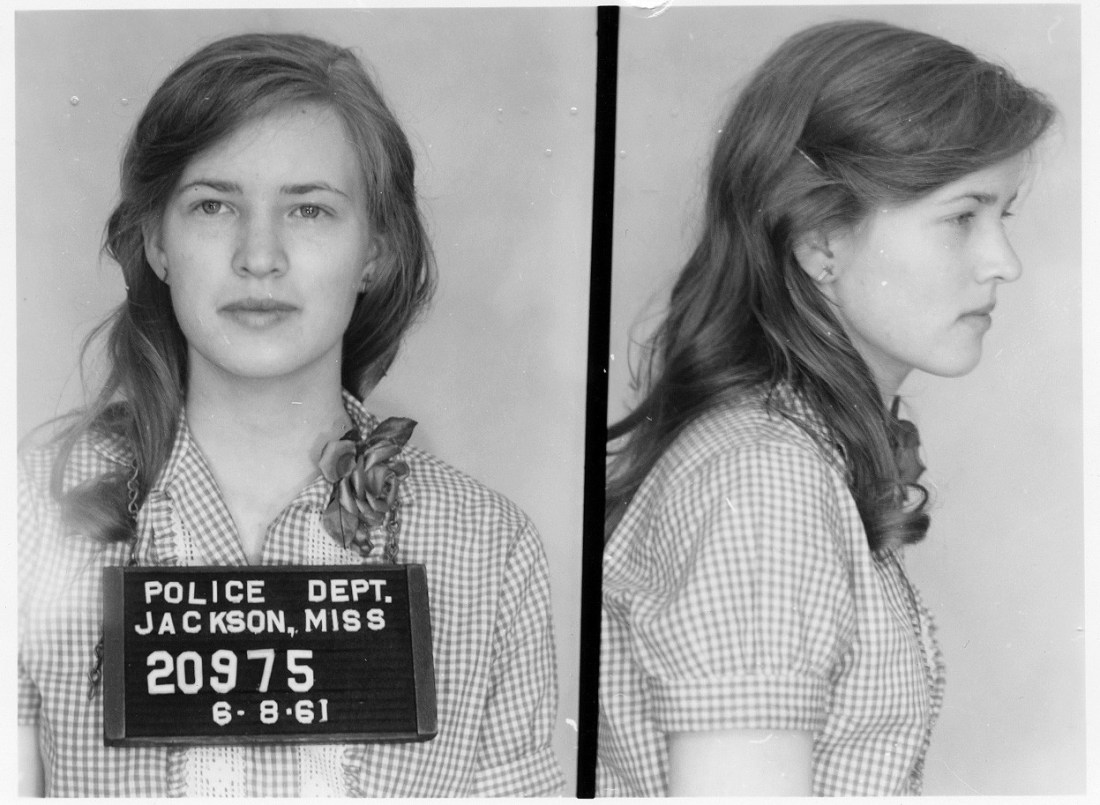
Mugshot of a teenage girl arrested for protesting segregation, Mississippi, 1961.
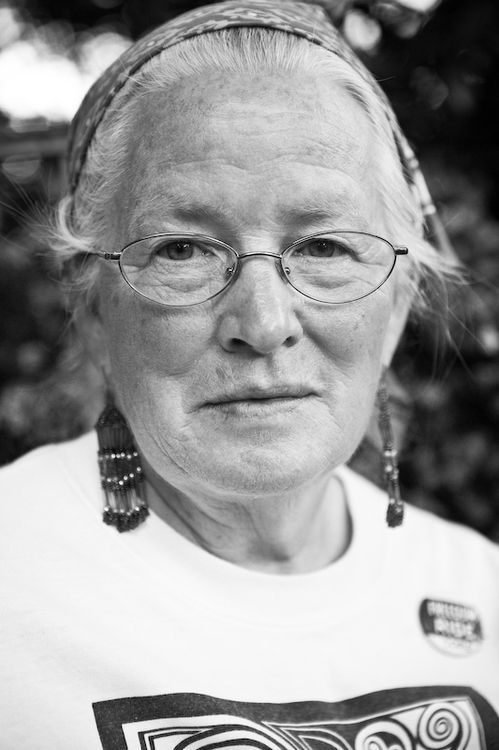
Her name is Joan Trumpauer Mulholland. Her family disowned her for her activism. After her first arrest, she was tested for mental illness, because Virginia law enforcement couldn’t think of any other reason why a white Virginian girl would want to fight for civil rights.
She also created the Joan Trumpauer Mullholland Foundation. Most recently, she was interviewed on Samatha Bee’s Full Frontal on February 15 for their segment on Black History Month.
Don’t reduce civil rights heroes to “teenage girl”.
Her great-grandparents were slave owners in Georgia, and after the United States Civil War, they became sharecroppers. Trumpauer later recalled an occasion that forever changed her perspective, when visiting her family in Georgia during summer. Joan and her childhood friend Mary, dared each other to walk into “n*gger” town, which was located on the other side of the train tracks. Mulholland stated her eyes were opened by the experience: “No one said anything to me, but the way they shrunk back and became invisible, showed me that they believed that they weren’t as good as me. At the age of 10, Joan Trumpauer began to recognize the economic divide between the races. At that moment she vowed to herself that if she could do anything, to help be a part of the Civil Rights Movement and change the world, she would.
In the spring of 1960, Mulholland participated in her first of many sit-ins. Being a white, southern woman, her civil rights activism was not understood. She was branded as mentally ill and was taken in for testing after her first arrest. Out of fear of shakedowns, Mulholland wore a skirt with a deep, ruffled hem where she would hide paper that she had crumpled until it was soft and then folded neatly. With this paper, Mulholland was able to write a diary about her experiences that still exists today. In this diary, she explains what they were given to eat, and how they sang almost all night long. She even mentioned the segregation in the jail cells and stated, “I think all the girls in here are gems but I feel more in common with the Negro girls & wish I was locked in with them instead of these atheist Yankees.
Soon after Mulholland’s release, Charlayne Hunter-Gault and Hamilton E. Holmes became the first African American students to enroll at the University of Georgia. Mulholland thought, “Now if whites were going to riot when black students were going to white schools, what were they going to do if a white student went to a black school?” She then became the first white student to enroll in Tougaloo College in Jackson, where she met Medgar Evers, Dr. Martin Luther King Jr., Reverend Ed King, and Anne Moody.
She received many letters scolding or threatening her while she was attending Tougaloo. Her parents later tried to reconcile with their daughter, and they tried to bribe her with a trip to Europe. She accepted their offer and went with them during summer vacation. Shortly after they returned, however, she went straight back to Tougaloo College.
She ultimately retired after teaching English as a Second Language for 40 years and started the Joan Trumpauer Mulholland Foundation, dedicated to educating the youth about the Civil Rights Movement and how to become activists in their own communities.
I watched a YouTube video once (by a guy who’s name escapes me) about the importance of making sure the stories of white activists are told. His point was that it’s not about lavishing praise on them just because they were white and “woke”, it’s about letting other white allies see that others have come before them who were willing to sacrifice and do the hard work. This way they can see themselves in someone and realize that destroying inequality isn’t a fringe interest or just an “us vs. them” issue. It has to be ALL OF US.
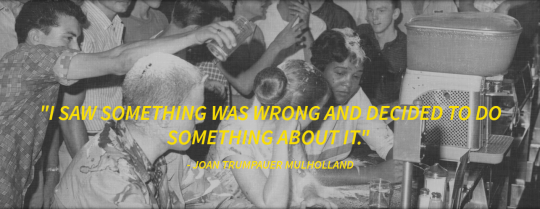
I thought I recognized Joan’s name…and the black woman in that picture of the Woolworth’s sit-in with her face turned to the camera, covered in food. That’s Anne Moody, who wrote probably my favorite autobiography ever (and fave book in general, let’s be honest) about her life and her work during the Civil rights movement. The book is called Coming of Age in Mississippi.
Anne and Joan, along with other Tougaloo students staged the sit in at the counter under the direction of the NAACP. Three black students, Anne, Memphis, and Pearlena started the sit-in at the counter. Newsmen arrived pretty quickly, and although some of the white people at the counter expressed sympathy for the movement, things devolved from there. A drunk protestor that Moody recognized from another sit in pulled a knife. The three protestors started to pray and then “all hell broke loose.”
A man threw Memphis from his seat and slapped Anne across the face. Another man threw her into the counter. Memphis was bleeding from the head, and men were kicking him in the head. A plainclothes police officer eventually arrested both Memphis and his attacker.
Pearlena and Anne got back on their stools, while some white Tougaloo teachers asked if they wanted to leave before things got violent again. Joan Trumpauer joined them at the counter at that point, making the protest integrated.
The crowd started chanting “Communists! Comunists!” at the three women until an old man in the crowd ordered men to take the women off the stools. They grabbed the “white n*gger” first–Joan and ripped her off of the stool, even as Anne was grabbed by two high school boys and dragged 30 feet by her hair. They let her go, and she and the others raced back to the counter, joined by Lois Chaffee, a white Tougaloo staff member.
That’s when the crowd started smearing them with food. They were joined by John Slater, the head of their NAACP chapter. He was hit in the face by someone wearing brass knuckles. And them someone literally threw salt into the wound.
The protestors were joined by others; the school chaplain, a CORE field worker, a Jackson State student, and a black high school boy. The mob started spray painting the protestors with nasty words.
The protestors–Anne and Joan among them, sat there for three hours, enduring the increasingly abusive assaults from the crowd, who had thrown food, paint and anything they could get their hands on at them. The store manager begged everyone to leave, but the crowd would not leave until the students did.
The president of Tougaloo, Dr. Beittel, ran in to tell them that 90 cops were waiting outside and had watched the whole thing through the windows, but had not stopped it. Beittel asked the police chief to escort the students out, but he refused to enter the store. Beittel lead the protestors out, while the cops formed a single line to block the crowds outside the store from getting at the students.
That did not stop the crowd from throwing things at them. However, they were picked up and taken safely to the NAACP headquarters.
“After the sit-in, all I could think of was how sick Mississippi whites were. They believed so much in the segregated Southern way of life, they would kill to preserve it. I sat there in the NAACP office and thought of how many times they had killed when this way of life was threatened. I knew that the killing had just begun. “Many more will die before it is over with,” I thought. Before the sit-in, I had always hated the whites in Mississippi. Now I knew it was impossible for me to hate sickness. The whites had a disease, an incurable disease in its final stage. What were our chances against such a disease?“ – Anne Moody
Please remember this. All Anne and Joan and the others did was sit at a lunch counter…and look at how the whites treated them. Never forget. And don’t let racists forget either.
I just realized that the specific reason the 80s and 90s anti-racism preaching in the media failed is because it was entirely focused on emotions and bullying and self esteem, and now everyone thinks the only thing that racism affects is people’s feelings.
but in reality, personal emotions about one’s self are the FINAL, smallest, most individual, personal step in what racism does. it ALSO does so much astronomically more than that, and anyone who’s experienced it knows that on some level. it’s institutional; it’s woven inextricably into the fabric of not only our country, but our global system, too. and people are utterly blind to that.
popular culture still suggests that racism is wrong JUST because saying racist stuff hurts people’s feelings, and not because it’s a cultural attitude that informs every level of how our society operates; there is little awareness that racism is about ACTIONS, actions with no conscious intent behind them, not beliefs, which are intangible.
and now that the alt-right has popularized the idea that feelings are objectively stupid, there’s no longer ANY reason not to say racist things. because who cares about hurting other people’s FEELINGS? that’s the very last, smallest, most individual, personal thing you can possibly care about! 🙄
that’s why people are convinced nowadays that a public figure with wide-reaching influence can say racist things unapologetically without “being” racist. because to them, “being racist” isn’t the same as ACTING RACIST. It’s some internal belief—some character flaw—that only crazy people have, and if you’re ironic enough about it, there’s suddenly no harm in being openly racist for laughs.
when the truth is, ACTIONS MEAN MORE THAN BELIEFS. virulent racists are createdandenabledby an almost unfathomably massive system of laws and conventions and tradition and lies that people tell themselves and each other. on a global scale.
people think racism is a thing people believe but somehow NOT a thing people DO.
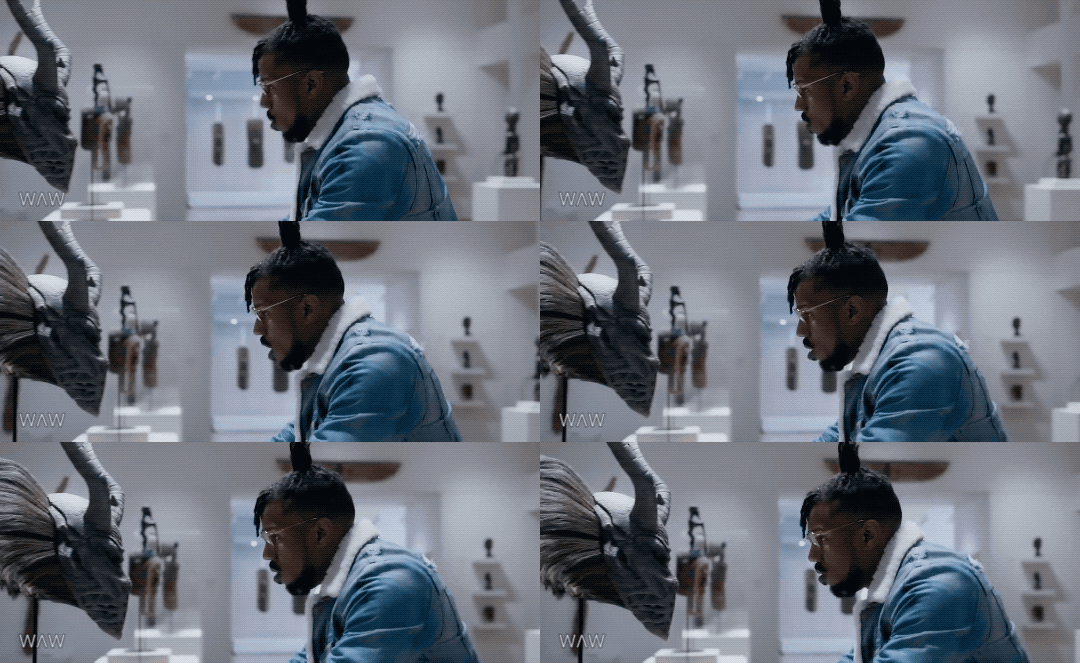
Killmonger: How do you think your ancestors got these? You think they paid a full price for it? Or did they take them like they took everything else?
I work in a museum- an old one- and during this scene I was nudging my brother the whole time. I clapped a little at that line. Museums need to rethink the way we curate things. If we aren’t elevating the heritage of those objects’ creators, if we aren’t telling their story, if we aren’t making those narratives accessible to the descendants and letting them lead, then what is even the point? Decolonize collections. Practice co-curation. Hire scholars of color, and make the collections accessible to visiting scholars. Involve the descendant community and elevate their voices, not the white colonial narrative.
And for goodness’ sakes, don’t run your museum like a jewellery shop. Have context. Honor the objects for their beauty, but remember that no object is as important as the people who created it.
Ummmm,, and like straight up, give things back? Indigenous communities in North America have campaigned for decades to have body parts, ceremonial items and sacred parts of our history returned to their communities.
Ofcourse, Hurd scholars of colour and think critically about your role. But like sometimes, you just have to give things back.
That’s repatriation (what I meant by “decolonize collections”) and it’s actually been federal law in America for almost thirty years. It’s been happening and will continue to happen, but it’s a LOT more complicated than just “give the stuff back.” Obviously you’re totally right- giving the stuff back is absolutely necessary.
But at the same time, giving ALL the old stuff back to Native groups doesn’t really work, either- for us OR for them. What happens to the stuff when it goes back? Do the modern Alaskan Athabascans really want the 1000+ baskets the museum I work at holds? (No, they don’t. We asked them. They definitely do not want those baskets back.) What about Native groups who don’t want remains back- the Navajo, for instance, believe that the remains of the dead are taboo objects, unclean and best left buried. And there are some Native groups who actually WANT their objects in museums. Not every object has a ritual context- sometimes a pot is just a pot. Even some ritual objects aren’t as spiritually important, and we’ve actually had people from different tribes come in and help rewrite language surrounding an object, or give instructions as to how it should be stored. Some groups really want us to display their cultural artifacts, because it reminds people that Native American cultures are alive and real.
One thing that works really well in a lot of cases is co-curation, which is when we commission and work with Native artists, leaders, and scholars to reframe the way we display objects. Like, recently, we asked Chris Pappan, who’s a Kanza artist, to come in and draw on the displays from the ‘30s. The juxtaposition of his art with the colonialist view of Native Americans has had a huge impact in visitor impressions- people go to that gallery now to learn and see what’s ACTUALLY happening today with Native Americans. This I think is how these institutions can use their power for good- elevating creator voices and letting them present their own past and own history. The Field does that a lot- we’ve had exhibitions from Rhonda Holy Bear, Bunky Echo-Hawk, and are continuing to work with Native Americans from many tribes to redesign and reframe the objects on display. We’re not doing this for social justice points- we’re doing this because the Field Museum gets something like 1.5+million visitors a year, and we owe it to the Native tribes we stole from to a.) tell their story b.) how they want it.
If you take all evidence of Native Americans out of the big natural history museums, you’re taking away representation- and education- and a lot of tribes actually don’t want that. What many groups want is the old colonial narratives to go away and be replaced with their own messaging and history. Native Americans are mythologized and what we did to them is sanitized in the US education system. I know that the person who responded is in Canada- and from what I hear, they’re even worse about destroying Native history and sanitizing what the colonists did (and continue to do) to them and their cultures. And this is where I think museums can actually HELP. People only care about things they’re familiar with. If the only image you have of a Native American is a racist football mascot, you’re not going to care about them as a culture- you’re not even going to see them as people. There’s a lot of white people who don’t believe in Native Americans. Like, they legit don’t think that there’s ANY Native groups left, and I know this because I’ve talked to these people at work. It’s baffling, how little Americans know about their own country’s behavior. And it’s totally a global problem- I could go on for days about what the British Museum Needs To Do With Those Fucking Marbles, Give Them Back You Cowards, You Have Enough Money To Ensure Their Care In Greece You’re Just Being Assholes- but I wanted to respond with a Native American context because of the person I’m replying to AND because… well, most Americans don’t know this, and they need to, because knowing about repatriation and why we do it is important.
Repatriation is so very vital, but it’s even more vital to listen to the Native American groups and ask them what they want to happen- as well as treat each tribe individually. We don’t hold onto Tlingit remains because the Navajo don’t want their remains back. Treating all tribes as identical is wrong- not as wrong as withholding their precious cultural traditions, relics, and remains- but if we’re even going to (as a museum industry) attempt to apologize for the atrocities we’ve sanctioned, the first thing we gotta do is ask people what they want.
And the next thing we gotta do is listen.
I’m starting to work in a Museum, and though my museum is about Natural Science something stuck le about all of this. The museum does not only exhibit but also safekeeps collections and in the introductory course we were given three keys to the basis of a museum: preservating, researching and exhibiting.
And one is worthless without the other. Our collections are meaningless if they aren’t available for investigation. It’s totally encouraged for scientists to come and use our collections. Granted, our collection mostly consists of dead animals, plants and fossils. And part of my own museum’s goal is orientated to reclaiming by mostly having our own collections as otherwise some of our best fossils are exhibited in museums in USA.
In our museum, all a scientists has to do is basically send an email to access the collection.
So what strikes me is that you point that one of the things to get better is “make the collections available to visiting scholars”. Is that not the case? Or is it specifically not available to scholars of color?
It REALLY varies from museum to museum! Some museums it’s really easy to get in- but others, it’s SO. MUCH. RED. TAPE. I had mine in mind when I was writing that, because collections access takes absolutely forever.
Anytime something is so precious that a culture wants it back but the museum wants it too, i bet you anything some artist would love the commission to duplicate it.
And sometimes that works out amazing.
The Field used to have this totem pole. There are many such poles in the museum, and others in museums around the world- but not all poles have the same significance- it depends on context. This pole, in particular, was a 26 foot tall pole that had been stolen from an “abandoned” Tlingit village- of course, the village wasn’t abandoned, and the people who lived there never consented to giving up their totem poles, and they rather wanted them back.
Anyways, the Field had one that was taken from the Cape Fox Tlingit back in 1899, and in 2001, we sent it home.
In 2002, the Cape Fox Tlingit gave the museum a log. A big one, a huge cedar log. They didn’t need to, but they did, and what the museum did with it was this:
A father-son team of Tlingit artisans- Nathan and Steven Jackson- were commissioned to design and create a new totem pole for the museum. They worked with the museum to create a totem pole that celebrated Tlingit traditions and the modern Tlingit people- a totem pole that combined ancient designs with modern ideas. It’s a gorgeous piece with an incredibly pertinent meaning- according to the Jacksons, the hybrid design illustrates the “refraction” or bending of traditional Tlingit culture that occurred during a turbulent history of cultural loss and recovery.
Which do you think tells you more about what it means to be Tlingit today?
The importance of “water is wet” studies should not be understated. Because now you have a study to point to when someone who doesn’t already know this asks you for a source, as opposed to relying on anecdotal evidence or “common knowledge”.
They’ve Always Been Watching Us: From COINTELPRO and Martin Luther King, Jr to the NSA’s surveillance program, the US Government has been keeping a close watch on the American Left for a long time.
One of the white participants left the session and went back to her desk, upset at receiving (what appeared to the training team as) sensitive and diplomatic feedback on how some of her statements had impacted several of the people of color in the room. […] [Later] her friends wanted to alert us to the fact that she was in poor health and “might be having a heart attack.” Upon questioning from us, they clarified that they meant this literally. These co-workers were sincere in their fear that the young woman might actually die as a result of the feedback.
All of this is going to feel very familiar to anyone who’s blogged about racism in fandom.
“White fragility functions as a form of bullying: ‘I am going to make it so miserable for you to confront me — no matter how diplomatically you try to do so — that you will simply back off, give up, and never raise the issue again.’ White fragility keeps people of color in line and “in their place.” In this way, it is a powerful form of white racial control. Social power is not fixed; it is constantly challenged and needs to be maintained.”
So, back when Ancillary Justice was essentially sweeping that year’s SF awards, there was some talk from certain quarters about it not really being all that, people only claimed to like it because Politics and SJWs and PC points and Affirmative Action and nobody was really reading the book and if they were they didn’t really enjoy it, they just claimed they did so they could seem cool and woke.
My feelings were so hurt that I wept bitter, miserable tears every time I drove to the bank with my royalty checks. I mean, those people must be right, it’s totally typical for non-fans who don’t actually like a book to write fanfic or draw fan art, totally boringly normal for students to choose to write papers about a book that just isn’t really very good or interesting, and for professors to use that boringly not-very-good book in their courses, and for that book to continue to sell steadily five years after it came out. I totally did not laugh out loud whenever I came across such assertions, because they were absolutely not ridiculous Sour Grape Vineyards tended by folks who, for the most part, hadn’t even read the book.
Now I am sorry–but not surprised–to see some folks making similar assertions about N.K. Jemisin’s historic (and entirely deserved) Hugo Threepeat. Most of them haven’t read the books in question.
But some of them have. Some of them have indeed read the books and not understood why so many people are so excited by them.
Now, Nora doesn’t need me to defend her, and she doesn’t need lessons from me about the best way to dry a tear-soaked award-dusting cloth, or the best brands of chocolate ice cream to fortify yourself for that arduous trip to the bank. Actually, she could probably give me some pointers.
But I have some thoughts about the idea that, because you (generic you) didn’t like a work, that must mean folks who say they did like it are Lying Liars Who Lie to Look Cool.
So, in order to believe this, one has to believe that A) one’s own taste is infallible and objective and thus universally shared and B) people who openly don’t share your taste are characterless sheep who will do anything to seem cool.
But the fact is, one doesn’t like or dislike things without context. We are all of us judging things from our own point of view, not some disembodied perfectly objective nowhere. It’s really easy to assume that our context is The Context–to not even see that there’s a context at all, it’s just How Things Are. But you are always seeing things from the perspective of your experiences, your biases, your expectations of how things work. Those may not match other people’s.
Of course, if you’re in a certain category–if you’re a guy, if you’re White, if you’re straight, if you’re cis–our society is set up to make that invisible, to encourage you in the assumption that the way you see things is objective and right, and not just a product of that very society. Nearly all of the readily available entertainment is catering to you, nearly all of it accepts and reinforces the status quo. If you’ve never questioned that, it can seem utterly baffling that people can claim to enjoy things that you see no value in. You’ll maybe think it makes sense to assume that such people are only pretending to like those things, or only like them for reasons you consider unworthy. It might not ever occur to you that some folks are just reading from a different context–sometimes slightly different, sometimes radically different, but even a small difference can be enough to make a work seem strange or bafflingly flat.
Now, I’m sure that there are people somewhere at some time who have in fact claimed to like a thing they didn’t, just for cool points. People will on occasion do all kinds of ill-advised or bananapants things. But enough of them to show up on every SF award shortlist that year? Enough to vote for a historic, record-breaking three Hugos in a row? Really?
Stop and think about what you’re saying when you say this. Stop and think about who you’re not saying it about.
You might not have the context to see what a writer is doing. When you don’t have the context, so much is invisible. You can only see patterns that match what you already know.*
Of course, you’re not a helpless victim of your context–you can change it, by reading other things and listening to various conversations. Maybe you don’t want to do that work, which, ok? But maybe a lot of other folks have indeed been doing that, and their context, the position they’re reading stories from, has shifted over the last several years. It’s a thing that can happen.
Stop and think–you’ve gotten as far as “everyone must be kind of like me” and stepped over into “therefore they can’t really like what they say they like because I don’t like those things.” Try on “therefore they must really mean it when they say they like something, because I mean it when I say it.” It’s funny, isn’t it, that so many folks step into the one and not the other. Maybe ask yourself why that is.
This also applies to “pretentious” writing. “That writer is only trying to look smart! Readers who say they like it are only trying to look smarter that me, a genuine,honest person, who only likes down-to-earth plain solid storytelling.” Friend, your claims to be a better and more honest person because of your distaste for “pretentious” writing is pretension itself, and says far more about you than the work you criticize this way. You are exactly the sort of snob you decry, and you have just announced this to the world.
Like or don’t like. No worries. It’s not a contest, there’s no moral value attached to liking or not liking a thing. Hell, there are highly-regarded things I dislike, or don’t see the appeal of! There are things I love that lots of other folks don’t like at all. That’s life.
And sure, if you want to, talk about why you do or don’t like a thing. That’s super interesting, and thoughtful criticism is good for art.
But think twice before you sneer at what other folks like, think three times before you declare that no one could really like a thing so it must be political correctness, or pretension, or whatever. Consider the possibility that whatever it is is just not your thing. Consider the possibility that it might be all right if not everything is aimed at you. Consider that you might not actually be the center of the universe, and your opinions and tastes might not be the product of your utterly rational objective view of the world. Consider the possibility that a given work might not have been written just for you, but for a bunch of other people who’ve been waiting for it, maybe for a long time, and that might just possibly be okay.
____
*Kind of like the way some folks insist my Ancillary trilogy is obviously strongly influenced by Iain Banks (who I’d read very little of, and that after AJ was already under way) and very few critics bring up the influence of C.J. Cherryh (definitely there, deliberate, and there are several explicit hat tips to her work in the text). Those folks have read Banks, but they haven’t read Cherryh. They see something that isn’t there, and don’t see what is there, because they don’t have the same reading history I do. It’s interesting to me how many folks assume I must have the same reading history as they do. It’s interesting to me how sure they are of their conclusions.




 i'll apple your turnover