Latin has this word, sic. Or, if we want to be more diacritically accurate, sīc. That shows that the i is long, so it’s pronounced like “seek” and not like “sick.”
You might recognize this word from Latin sayings like “sic semper tyrannis” or “sic transit gloria mundi.” You might recognize it as what you put in parentheses when you want to be pass-agg about someone’s mistakes when you’re quoting them: “Then he texted me, ‘I want to touch you’re (sic) butt.’”
It means, “thus,” which sounds pretty hoity-toity in this modren era, so maybe think of it as meaning “in this way,” or “just like that.” As in, “just like that, to all tyrants, forever,” an allegedly cool thing to say after shooting a President and leaping off a balcony and shattering your leg. “Everyone should do it this way.”
Anyway, Classical Latin somewhat lacked an affirmative particle, though you might see the word ita, a synonym of sic, used in that way. By Medieval Times, however, sic was holding down this role. Which is to say, it came to mean yes.
Ego: Num edisti totam pitam?
Tu, pudendus: Sic.
Me: Did you eat all the pizza?
You, shameful: That’s the way it is./Yes.
This was pretty well established by the time Latin evolved into its various bastard children, the Romance languages, and you can see this by the words for yes in these languages.
In Spanish, Italian, Asturian, Catalan, Corsican, Galician, Friulian, and others, you say si for yes. In Portugese, you say sim. In French, you say si to mean yes when you’re contradicting a negative assertion (”You don’t like donkey sausage like all of us, the inhabitants of France, eat all the time?” “Yes, I do!”). In Romanian, you say da, but that’s because they’re on some Slavic shit. P.S. there are possibly more Romance languages than you’re aware of.
But:
There was still influence in some areas by the conquered Gaulish tribes on the language of their conquerors. We don’t really have anything of Gaulish language left, but we can reverse engineer some things from their descendants. You see, the Celts that we think of now as the people of the British Isles were Gaulish, originally (in the sense that anyone’s originally from anywhere, I guess) from central and western Europe. So we can look at, for example, Old Irish, where they said tó to mean yes, or Welsh, where they say do to mean yes or indeed, and we can see that they derive from the Proto-Indo-European (the big mother language at whose teat very many languages both modern and ancient did suckle) word *tod, meaning “this” or “that.” (The asterisk indicates that this is a reconstructed word and we don’t know exactly what it would have been but we have a pretty damn good idea.)
So if you were fucking Ambiorix or whoever and Quintus Titurius Sabinus was like, “Yo, did you eat all the pizza?” you would do that Drake smile and point thing under your big beefy Gaulish mustache and say, “This.” Then you would have him surrounded and killed.
Apparently Latin(ish) speakers in the area thought this was a very dope way of expressing themselves. “Why should I say ‘in that way’ like those idiots in Italy and Spain when I could say ‘this’ like all these cool mustache boys in Gaul?” So they started copying the expression, but in their own language. (That’s called a calque, by the way. When you borrow an expression from another language but translate it into your own. If you care about that kind of shit.)
The Latin word for “this” is “hoc,” so a bunch of people started saying “hoc” to mean yes. In the southern parts of what was once Gaul, “hoc” makes the relatively minor adjustment to òc, while in the more northerly areas they think, “Hmm, just saying ‘this’ isn’t cool enough. What if we said ‘this that’ to mean ‘yes.’” (This is not exactly what happened but it is basically what happened, please just fucking roll with it, this shit is long enough already.)
So they combined hoc with ille, which means “that” (but also comes to just mean “he”: compare Spanish el, Italian il, French le, and so on) to make o-il, which becomes oïl. This difference between the north and south (i.e. saying oc or oil) comes to be so emblematic of the differences between the two languages/dialects that the languages from the north are called langues d’oil and the ones from the south are called langues d’oc. In fact, the latter language is now officially called “Occitan,” which is a made-up word (to a slightly greater degree than that to which all words are made-up words) that basically means “Oc-ish.” They speak Occitan in southern France and Catalonia and Monaco and some other places.
The oil languages include a pretty beefy number of languages and dialects with some pretty amazing names like Walloon, and also one with a much more basic name: French. Perhaps you’ve heard of it, n’est-ce pas?
Yeah, eventually Francophones drop the -l from oil and start saying it as oui. If you’ve ever wondered why French yes is different from other Romance yeses, well, now you know.
I guess what I’m getting at is that when you reblog a post you like and tag it with “this,” or affirm a thing a friend said by nodding and saying “Yeah, that”: you’re not new
@indigopersei is the french language just always on the verge of getting someone accused of assault or..?
my friend, if only you knew
It’s a very dangerous language to learn
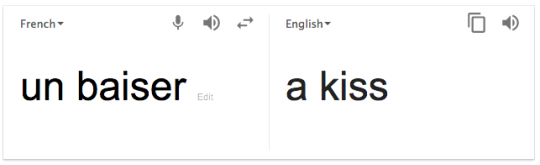
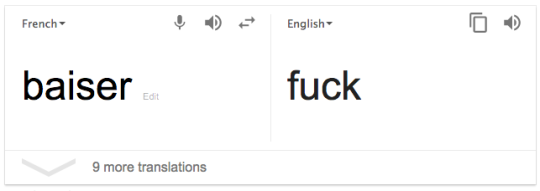
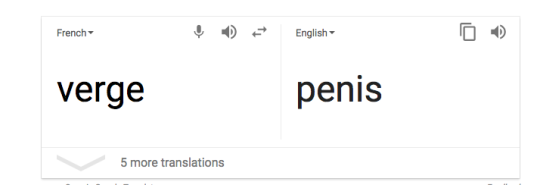
Here’s an interesting thing about French! Everything needs to have an article in front of it. That’s why it’s “la chat” as opposed to just “chat”. So, for instance, you could say la fille for the girl, or jeune fille for young girl, but you can’t just say fille, because that means you are calling her a sex worker in a derogatory way.
The moral of the story is, if you want to make something rude in French, just take out the article in front of it. Yes, this works for nearly. every. word.
Every year. Every year there’s that kid who forgets that you can’t translate “I am excited” to “Je suis excitée”. And every year Monsieur Jordan has to slam the brakes before that kid can finish his sentence and then tactfully ask him not to announce to the class that he is horny.
“is the french language always on the verge” oh buddy, oh pal, i am so happy to break this news to you:
aka the only possible appropriate character for talking about angels
If somebody is curious, this is how multiocular O
looks in the Book of Psalms of 15th century
OwO
this letter is the only pronoun i will accept in reference to me
I was just talking about this the other day! There are a bunch of these. Start here and explore the See Also links. My favorite is the dual monocular O, which looks like the eyes emoji, and is used only to make weak puns with the word “eyes”.
A REAL LIST OF ACTUAL NAMES AND THEIR (approximate) PRONUNCIATIONS: Siobhan — “sheh-VAWN” Aoife – “EE-fa” Aislin – “ASH-linn”
Bláithín – “BLAW-heen”
Caoimhe – “KEE-va”
Eoghan – Owen (sometimes with a slight “y” at the beginning)
Gráinne – “GRAW-nya”
Iarfhlaith – “EER-lah” Méabh – “MAYV” Naomh or Niamh – “NEEV” Oisín – OSH-een or USH-een Órfhlaith – OR-la Odhrán – O-rawn Sinéad – shi-NAYD Tadhg – TIEG (like you’re saying “tie” or “Thai” with a G and the end)
I work with an Aoife and I have been pronouncing it SO WRONG
As someone who is trying and failing to learn Gaelic, I feel like is an accurate portrayal of my pain.
This is the Anglicized spelling of a people who really fucking hate the English.
No, no, this is the orthographic equivalent of installing Windows on Mac.
The Latin alphabet was barely adequate for Latin by the time it got to the British Isles, but it’s what people were writing with, so somebody tried to hack it to make it work for Irish. Except, major problem: Irish has two sets of consonants, “broad” and “slender” (labialized and palatalized) and there’s a non-trivial difference between the two of them. But there weren’t enough letters in the Latin alphabet to assign separate characters to the broad and slender version of similar sounds.
Instead, someone though, let’s just use the surrounding vowels to disambiguate–but there weren’t enough vowel characters to indicate all the vowel sounds they needed to write, so that required some doubling up, and then adding in some silent vowels just to serve as markers of broad vs. slender made eveything worse.
They also had to double up some consonants, because, for example, <v> wasn’t actually a letter at the time–just a variation on <u>–so for the /v/ sound they <bh>. AND THEN ALSO Irish has this weird-ass system where the initial consonant sound in a word changes as a grammatical marker, called “mutation,” so they had to account somehow for mutated sounds vs. non-mutated sounds, which sometimes meant leaving a lot of other silent letters in a word to remind you what word you were looking at.
And then a thousand years of sound change rubbed its dirty little hands all over a system that was kind of pasted together in the first place.
My point is, there is a METHOD to the orthography of Irish besides “fuck the English.” The “fuck the English” part is just a delightful side-effect.
the All Around: speaks, reads, and writes both languages pretty well
the Conversational: one language is stronger than the other; can speak the other language a lot better than they read/write it (a lot of kids of immigrants are this type)
the High Schooler: understands what’s being said to them in the other language, can’t really speak it
don’t have your characters randomly drop words from their other language mid-sentence around people who don’t speak it lol
languages are a mindset thing. like personally if i’m around english-speakers, i’m speaking english and i don’t really switch to my other language (which is portuguese)
so like if you’re writing a bilingual character who speaks spanish and have them say something like “hey chad let’s go to the biblioteca” to an english speaker i’ll probably spend 5 minutes laughing and then close your story lmao
exception: the character is speaking in their weaker language and forgot a word (”where are the…? uh… llaves…. keys! keys, where are they?”)
otherwise really the only time your character should be randomly switching languages mid-sentence is if they’re talking to another bilingual
like i don’t speak spanish but i’ve legit never heard a spanish speaker say “ay dios mio” to gringos lmao
conversations between two bilingual people can take a few different forms:
Pick One: they pick one language and kinda stick with it for the whole conversation (a conversation i might have with my portuguese-speaking mom: ”you okay?” “yeah, i’m good. how’re you?” “i’m fine, but your dad-”)
Back-and-Forth: someone says something in one language, the other person replies in the other (”tudo bem?” “yeah, i’m good. how’re you?” “tou bem, mas o seu pai-”)
Combo: they speak a combo of the two languages, a popular example being spanglish, though basically every bilingual has their own combo language (”tudo bem?” “sim, tou bem. how’re you?” “i’m fine, mas o seu pai-”)
when in doubt: just ask a bilingual to look at your stuff and tell you if anything sounds weird
combo languages can look different depending on the bilingual
me and my cousin (native english speakers) speaking our portuguese/english combo sounds a lot different than my mom and my godmother (native portguese speakers) doing the same thing
the kids of immigrants usually come up with their own unique way of saying things that are different than native speakers
if you’re writing a bilingual family the older kids’ll probably be more bilingual than the younger ones
also, to clarify: bilingual characters might say words in another language on purpose in front of non-speakers
either to fuck with them or just ‘cause the word captures what they’re feeling more (i use “caralho” a lot)– basically the point is that accidental switching is relatively uncommon
i know earlier i said that people will forget words if they’re speaking their weaker language but tbh i do it with my stronger language too so really it works both ways
filler words are weirdly universal
so like while bilingual people don’t usually switch languages around people who aren’t bilingual we’ll throw filler words in
“ele me olhou e, like, eu juro que eu quase deu um soco nele-”
a lot of languages borrow words from english so it’s not too weird to have a random english word in an otherwise non-english conversation (my aunt @ my mom: “lilian você viu meu post no Facebook?”)
also sounds in general are just kind of a language transcending thing
you wanna find out what someone’s first language was?? break one of their bones lol
legit me when i cracked my rib: “AIIIIIII JESUS CHRIST TAKE ME TO THE HOSPITAL”
so if your character gets hurt they might make a sound of pain associated with their native language but will probably still speak in the language of the people they’re surrounded by. probably. it depends on just how much pain they’re in
if two people start speaking another language in public there’s a 40% chance they’re talking shit and a 60% chance they’re having a conversation like: “where’s the bathroom” “i don’t know, ask the waitress she’s right here” “i can’t just ask-”
I started Hebrew, which is why I’ve been dead on this blog, but I don’t think I can ever properly convey to you guys the sheer cultural whiplash of spending years learning Japanese from Japanese teachers and then trying to learn Hebrew from an Israeli
Japanese: you walk into class already apologizing for being alive Hebrew: you walk into class, the teacher insults you and you are expected to insult her back
Japanese: conjugates every single verb based on degree of intended politeness, nevermind keigo and honorifics Hebrew: Someone asked my teacher how to say “excuse me” and she laughed for several seconds before saying we shouldn’t worry about remembering that since we’ll never need to say it
Japanese: if you get one stroke wrong the entire kanji is incomprehensible Hebrew: cursive? script? fuck it do whatever you want, you don’t even have to write the vowels out unless you feel like it
Japanese: the closest thing there is to ‘bastard’ is an excessively direct ‘you’ pronoun Hebrew: ‘bitch’ translates directly
Fun fact: Israel has possibly the lowest power-distance metric of any culture in the world, while Japan has one of the highest. I didn’t realize that the CTO of my company was the CTO until somebody else told me, because everybody called him by his first name and engaged in mutual shit-talking/playful insults with him.
In Japan, even calling your boss by the wrong honorific is liable to get you in trouble.
And apparently there’s some sciencey cooperative venture going on between Israel and Japan in an official diplomatic capacity. I want to be a fly on the wall when Japanese and Israeli scientists work together.




 i'll apple your turnover