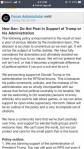
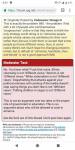
As someone who’s reported alt-right harassment and rhetoric on various
social media sites and been told “there’s nothing here that violates our
TOS,” seeing what RPGnet is doing is a welcome breath of fresh air.Please, more social media sites need to do this.
Tag: internet culture
“Fake news” – fandom edition
In 2k17, a lot of us have pledged to be more cautious about ‘fake news’ posts on Facebook
I propose we extend that concern to fandom
There’s a very low bar on this site (or any site) for people to post whatever tf they want, and a very high incentive to post fake receipts to win arguments
(Or at the least, misleading “receipts” such as “Artist XYZ is a bad person” because they drew a picture of bad things happening to completely fictional characters)
So this year, if you see a callout post:
- Look for signs of bias. I have the sneaking suspicion that “XYZ-is-bad.tumblr.com” is not an objective source.
- Be wary of unsourced accusations. “Person A is a homophobe!” is a statement, not evidence. Look for original sources. Did Person A post “I hate gay people” on their blog? Or did they draw fanart of an unpopular het pairing?
- Look for context. Check out Person A’s blog to see if you have the whole picture. Did Person A pick a fight out of nowhere, or was that viral post made in response to an anon harassing them?
- Ask “what real person was hurt”. Writing a fanfic is not the same as committing a crime in real life. If Person B claims that Person A is a real-life “abuser” because they shipped two (100% fictional!) characters, Person B is out of line.
- Consider ulterior motives. Did Person A recently open a Patreon and receive a slew of hateful messages about ‘selling out’? Did Person B have an argument about characterization with their co-author and then suddenly “reveal” a list of unsourced accusations? Who stands to gain if someone else is driven out of fandom by angry anons?
Long story short, I don’t believe everyone in fandom is evil – nor that every accusation is unfounded. I do believe that unfortunately, in this modern ‘post-truth’ world, we are all going to have to get much better at fact checking and source validity…both in fandom and in real life.
I love this.
One little thing I find helps with this is to remember:
A thing that makes you feel bad, is not necessarily a thing that is bad.
So, you know, people shipping your NOTP, or having headcanons that contradict yours or writing fic on topics that make you frightened or uncomfortable is actually upsetting. And you can totally be upset about it.
But it doesn’t actually follow, necessarily, that the person upsetting you, is actually doing something wrong. They might be. Its possible. But its more likely you need to add some tags to your blacklist and put it from your mind.
Bless this post forever and ever Amen.
I think I said it the first time this post went around, but I just want to repeat it:
The very first thing to ask yourself when assessing a callout post, IMO, is “what are readers supposed to do with this information?”
If the answer is “go give this asshole a piece of your mind” or “unfollow/block this person, tell all your friends to do the same, and send ‘helpful’ anon messages to anyone who hasn’t gotten the shunning memo yet,” I don’t give a fuck how solid the proof is, you’re being enlisted as a foot soldier in someone else’s grudge wank.
If the answer is “be cautious about trusting this person with your money, personal details, or intimate friendship” or “think twice before giving the benefit of the doubt to any accusations this person makes about others,” it’s time to start looking at whether the receipts hold up. It doesn’t automatically make it credible–in the second case, especially, you’ll have to evaluate accusations and counter-accusations on the merits, because pre-emptively smearing the whistleblower is a time-honored technique of assholes everywhere. But at least the thing you are being asked to do is a valid purpose of the “callout post” format.
FWIW, I think most callout posts–as in, standalone posts addressed to the community at large and meant to discredit the target, as opposed to something said in the course of an argument/discussion or addressed to the target themselves–are grudgewanky bullshit. If the members of Person X’s newest fandom don’t know they’re an asshole with unsavory opinions, believe me, 99 times out of 100 it will become obvious soon enough. But, since it’s impossible to build a community whose trust can never be abused, there are situations where announcements meant to discredit someone in the eyes of the community are warranted. Namely, when someone is abusing fandom’s trust in them to defraud/control/destroy other people, especially if the trust was gained under false pretenses.
Fandom’s not immune to scam artists, charismatic abusers nurturing cults of personality, or assholes who use strings of false identities to fly under the radar long enough to hurt people before their reputation catches up to them. The purpose of a legit callout post should be to build a case for revoking the community’s presumption of trust, thus removing what allows such people to operate. The offenders still get to exist, chat with their friends, make art, write fic, bang out entertaining shitposts that rack up 50,000 notes, whatever–the point isn’t to stop them from doing that. It’s to warn everyone else not to buy them stuff based on a sob story, register for their “convention,” get enamored of their oh-so-true badass exploits, or uncritically believe the smack they talk about people who’ve gotten on their bad side. In the less noxious cases where someone has simply “earned” a reputation as an authority which they’ve been using to shut down others’ opinions, and it turns out their reputation is based on total bullshit, the goal of a legit callout should be to take the argument-from-authority crutch away from them and make them back up their points like the rest of us peons. It’s not that they can’t be right, or that the former scam artist will never deliver on something they accepted money for. It’s that they should have to to disprove a presumption of shenanigans instead of being taken at their word.
Callout posts began to warn newcomers to fandoms about known abusers and predators. Someone shipping your NOTP is not the equivalent to someone who preys on underage fans online or sexually harasses people at conventions.
If someone shipping your NOTP tags, block the tag. If they don’t tag, politely ask them to tag, or block their blog.
Why do you think it’s ok to use queer as a blanket term? As a bi trans person I find it incredibly hurtful and offensive
Do you really want to know my answer? Like seriously, are you actually open to listening to what my answer may be and absorbing any new information I may offer on the topic?
Because from here it doesn’t seem like you are.
Let’s be honest with each other, you started out with the phrase “why do you think it’s ok” which is aggressive language, and then you justified your disagreement with your identity. Which I always found to be an interesting tactic, because when this clarification exists in an argument it assumes that by having this particular set of identities you are somehow more qualified to discuss this problem than someone else, while at the same time personalizing you so it is harder for anyone to disagree with you.
You then use the words hurtful, and then offensive. Both button words that illicit a certain type of response, hurtful in how inarguable it is. That is your feeling and I would never argue what a stranger is feeling to them. Then there is offensive, which is a word that is very well used in the LGBT+ community to discuss important issues surrounding our dehumanization.
I don’t think that this message was a carefully crafted masterpiece of debate and trickery that you spent hour figuring out the direct phrasing of obviously, but I do think you had an intent when you wrote this message and the words you chose make that intent clear.
You don’t want to talk to me. Hell I doubt you even follow me. I have anonymous turned off on my ask box, but I am almost 100% sure that if I didn’t you would be sending this under the little sunglasses wearing icon.
Also if you checked my FAQ you would have found a helpful little link explaining to you my views on the queer discourse. You may have noticed that I have my own reasons why I decide to use that word, and my own history with it. You probably also would have seen my post saying that I don’t mind people disagreeing with me. Or you could have seen that I have a link set up that blocks the word from all my content so no one has to see it if they don’t want to, and they can still have access to the history that I give insight into.
But you didn’t care about that did you? Because you aren’t actually interested in what I have to say, if you were you would have already seen all of this and you would have seen my request for people to stop asking me to drag out my arguments for why I use the word again and again. You probably would have realized that either A) it is a lost cause so why bother B) that I have nothing left to say on the matter that I haven’t already said and you may have respected my professional boundaries enough to leave it alone.
But here we are, you uninformed and angry, and me annoyed and tired. We aren’t going to have a good dialogue, and I am near certain you wouldn’t have accepted one if I offered it. You are not here to change my mind, because I have to assume that you at least did a basic check to see that my entire project has the word queer in it and it is pretty clear that isn’t changing. And you are also not here to have your mind changed.
And to be honest I have no desire to change your mind. I don’t mind people disagreeing with me on this. It actually isn’t that big of a deal to me if someone doesn’t agree with my viewpoints all the time.
I have read a lot of arguments in favour of removing the word from our lexicon completely. I disagree, but I understand them. As I have said before, this isn’t a huge dividing point for me.
I have given people access to my work without the word queer in it, and that is the extent of what I am going to do here.
So why are you sending this in? Nothing is going to change from it, and honestly it is a pretty boring message so I can’t believe you thought something would.
I think the sole reason you sent this was performative.
You wanted to show that you tried to convince that big mean queer person without actually trying to convince them. Maybe this was a performance; for your followers, maybe you will screenshot my response and share them in a group chat. Or it is also possible this is a performance for yourself, maybe you want to convince yourself that you are doing something.
Maybe you feel ineffective or like you need to make a difference so you are sending this message to me to feel proud of yourself for trying to change something that you don’t like.
But you aren’t doing this to actually do the hard work of changing something.
And it is fine if you aren’t able to do that work for any reason, but leave other people out of your sense of inadequacy. I am not here to be your punching bag that you hit so you can feel big and strong.
I am tired, and I am bored of people sending me this performative garbage.
Which of course lends itself to the question, why am I answering this publicly?
I will admit there is a little bit of performance from my side as well, I want people to see how right I am and how much this behavior sucks. I want people to see me destroying this ask, and I am not going to lie I am totally going to send screenshots to the group chat.
What makes us different, is that I didn’t seek this performance out. I clearly did not send this to myself, and I haven’t made a post about the queer discourse in months. Which means, this person had to search for me so that they could get mad at me. Whereas I just had to check my inbox this morning and respond to what was there.
But outside of the performance of it all, I want my answer to sit with you for a couple of days. I don’t care if I change your mind about the queer discourse because honestly I do not care about the queer discourse. But I do want to change something. I want you to stop sending asks like these, because this doesn’t seem like it is your first.
And if you were just sending them to me I would be fine with it. I can delete asks, and they roll off my back if I decide to let them. But not everyone is like that.
I could now give a rant about the little baby queers I am protecting, but it is not just about them. It is about all of the people you send this kind of thing to (who almost certainly don’t deserve hate mail), whether they are affected deeply by it or not it doesn’t make what you are doing any better.
And if me writing this long message publicly makes it less likely for you to send something like this again, then it is worth the five minutes I have spent crafting it. Because if you are a little more self conscious about doing something like this again, then hopefully I will have spared a couple of people the annoyance of having to deal with this kind of garbage message.
This is also a very educational response because it takes apart the question in a very useful way. A good exercise for those of you who are interested in rhetoric and logic in discourse.
It’s also a good insight into the motivations and psychology of people when they send this type of messages. It’s couched as a personal attack on you (and it is!) but behind that is a person who is working through stuff badly, and trying to assign the blame for that to a different person (you). By studying that, you can understand more about the Discourse and the motivations behind it. It can also help to heal you (and others) from attacks of this type. When I read the initial ask, it made my body flinch: I felt that I myself was being publicly attacked by a strange and hurtful person, and that I had to defend myself, flooded with instinctive responses. Seeing the blogger’s thoughtful response calmed me.
This is kind of a self-indulgent question, but how do you deal with people who VERY BADLY want to be your internet friend, and they’d be Crushed if you stopped talking to them, but you just don’t have the energy for it/are beginning to resent them for it? (And for other reasons you can’t bring up because whiffs of criticism squeeze their “I’m a terrible person” reflex)
Oh, gosh. As someone who has been on BOTH sides of this experience, this speaks to me right where I live.
If you’re at all like me, this stuff is difficult from several angles:
Firstly, I like people to be happy and not unhappy. If I can do things to make people happy, I tend to want to do them. Other people’s (un)happiness often feels like it weighs more strongly than my own (un)happiness.
Secondly, I am extremely rejection-sensitive myself, so this ups my perception of the harm to the other person. It also makes the whole topic feel extremely charged, b/c if *I* secretly don’t like this person for no reason they can control then maybe other people secretly don’t like me for reasons I can’t control. Maybe all my friends secretly hate me! (They don’t. I’ve checked.)
Thirdly, if I’m honest, I would like to be able to reject someone in a way that somehow causes zero change in their opinion of me, see previous All People Must Like Me At All Times Or I’ve Failed As A Human Being. (Also not true. I’ve checked on that one, too.)
Soooo yeah. This is one of those easier-as-a-bystander things, but here’s some things that have helped me.
-Untangle what you do control from what you don’t
You are in charge of your feelings and your actions. You CAN’T control (or even 100% predict) how the other person will react to them, so stop assigning yourself the task of being feelings!forecaster and emotions!wrangler.
Sometimes things in life (like you not manifesting the correct feelings) will make people feel bad in ways you can’t actually prevent or control. Give yourself permission to not try. Break ups hurt, and the idea that there is a Magical Correct Perfect way that will cause no hard feelings is, sadly, not a real thing. Pull off the band-aid fast or slow or however the heck you prefer. It’s gonna come off.
-Try not to project
Worth emphasizing: If they haven’t said it out loud, you don’t actually know what they’re thinking or feeling. Mind reading is a cognitive distortion, so try to spot when you’re falling into it. Ditto for fortune-telling (you don’t know how they’re going to react) or catastrophizing.
-Practice enthusiastic consent in relationships
Seriously. Do this *today.* Every time you find yourself in a position where you need decide to skype/message/reply/hang out with/otherwise spend emotional energy on this person" check in on your consent. Do you enthusiastically want to?
If not: don’t.
It is amazing how often this idea feels revolutionary. But you don’t owe strangers (or your friends) make-outs or sex just because it would make them happy, and similarly you don’t owe them a deep, emotional feelings jam. Or even a relationship. Neutrality towards someone is not harm.
Guilt is a toxic as fuck relationship dynamic, Do Not Do.
-Sometimes people don’t click
It’s not a referendum on someone’s character if you just don’t feel it the same way. You don’t need to be someone’s friend because they are nice. You don’t need to be someone’s friend just because you don’t have a compelling reason not to be. You don’t actually need a reason to not want to be someone’s friend. There are several billion perfectly nice people in the world you will not have time to be in either a platonic or romantic relationship with.
Also, having incompatible relationship needs doesn’t necessarily mean EITHER of you need to change as a person. It just means you have incompatible needs.
If you feel bad for not being able to be the Nice Thing in this person’s life, go leave a comment on someone’s fanwork. There, you’ve brightened someone’s day.
-It’s not rude to not answer someone on the internet
This one’s hard for me! But seriously. Especially the less well you know someone, the less you owe them dropping everything to craft a response of any flavor on demand. Try not to frame it as “ignoring someone speaking to your face” and look at it more as “ignoring someone shouting vaguely in your direction across a crowded room.” I’m bad at small talk, so my rule of thumb is if I don’t have anything in particular to add to a conversation, I just…. don’t. “I liked ur post” does not mandate any particular response.
-Therapists get paid
Therapy is hard, emotionally-draining work aand that is why therapists get paid to do it, and why they only do it in a very specific, limited context. When you engage in therapy as a friend, it should be as part of mutually beneficial relationship. Does this mean that 2 friends always get the same benefits out of a relationship or that 2 friends will always have the same amount of spoons to spend on a relationship at any given time? No. But over the span of years it should probably feel like it evens out.
In my personal experience, starting as someone’s free therapist doesn’t usually work out well in terms of friendship. It feels nice to be helpful, but it’s a weird power imbalance, and best case scenario you’re both eventually going to have to work out new ways to relate to each other. Worst case scenario, one or both people’s spoons drastically change and suddenly you CAN’T continue the current dynamic and nobody’s got a safety net interaction-style to fall back on.
-You can understand and empathize with a reaction without having to prioritize it
You mentioned a “terrible person reflex”. And god, I feel that. But this is one of those areas where both of you have GOT to be aware of who is in charge of handling that reflex. (Hint: it is not you). It’s very similar to struggles with jealousy or any other cognitive distortion– they are real, painful emotions, but as distortions they are not based in reality. People outside your own brain can find some ways to provide reassurance, but they cannot manage them for you. Is there a way you can work out a ritualized shorthand for the long set of reassurances or nimble tap-dancing that it sounds like ensues from this reflex triggering? (Something like: “are we still friends?” “yep!”)
In particular, if you find that expressing a need/feeling leads to you setting that conversation aside for prolonged discussion of the other person’s needs or feelings THIS IS NOT A HEALTHY OR SUSTAINABLE PATTERN.
-Listen to your brain when it wants you to stop doing something that hurts
When you’re experiencing emotional overload, distress, or damage, a healthy brain is gonna take steps to protect you. That resentment? That is your brain giving you armor. That is emotional coping.
If you’re like me, and not always very tuned in to your own needs (I *can* so obviously I *should*). Sometimes your brain will just scale up the shouting (”Seriously, Stop Doing the Thing”) until you have to acknowledge it. One example is the “bitch eating crackers” phenomenon, where your brain escalates resentment of a person to the point where even the way they eat crackers starts to bother you. “Look at that bitch sitting there eating crackers.” This is not a good place to be in in a relationship. Repression is not a sustainable interaction style in a relationship.
-People that love you want you to be happy
If you are unhappy, that is important. If your happiness requires you taking a step back, *even in a way that hurts the other person*, most of your friends will want you to take that step. Plus side: this means that sharing a relationship problem will trigger good friends’ protective problem-solving rather than defensiveness. Or at the very least you know what they would want for you if they were in a better place.
The corollary to this is, of course, people that don’t value your happiness are not worth pouring your emotional energy into.
-If you’re waiting for the Thing That Will Give You Permission to Leave, “I want to” is sufficient reason
I have to include this because it is so damn important. Seriously. If you want out of a relationship, this is your sign. Go.
-Be aware that “do this or I’ll hurt myself” is also abuse
Also so damn important. Threats of physical violence to coerce behavior are Not Good. Run run run.
-You aren’t required to invest work in fixing a relationship, but if you DO want to put it in, here are some quick thoughts:
- Switch to only engaging in ways, frequencies, and topics that you find rewarding. (ENTHUSIASTIC CONSENT. DESIST FROM EMOTIONAL SUPPRESSION.)
- State your needs without feeling the required to offer detailed explanation or justification. (“I’m really stressed lately, so I need to only talk about casual things”)
- Resist the urge to get drawn into guilt spirals. (”I’m not mad” + restate need).
- Resist engaging with stuff that violates boundaries you’ve communicated–just ignore and switch the topic. Redirect any too-heavy stuff to other channels. (“Sounds like you need a therapist to talk to”; “Ugh, that sounds stressful, hope you find someone that can help you through that”; “Sounds like something you two will need to work out together”; + TOPIC CHANGE).
- Shift some of the relationship work to the other person, such as strategizing ways to balance conflicting needs.
Frankly what I’m hearing from you is “I want to stop” so…. yeah, you can stop. Official Stranger On the Internet permission given.
ps, check out Captain Awkward’s tag on The African Violet of Broken Friendship, highly recommend.
It’s sad that toxic game culture is so prevalent cuz like. As someone who has ended up in random matches with kids before, I can attest to how fucking easy it is to reverse and un-teach shitty attitudes in kids.
Example: I downloaded Friday the 13th because it’s free on psn. I dunno how to play, so I just enter quick play and I’m matched with 3-4 kids on mic. Immediately on mic they’re shitty and disparaging to each other. They laugh at each others deaths, they actively work against team mates and self sabotage, they call each other “fags”, etc. From the sounds of the voices they cannot be older than 13-14.
I put on my mic and just decide I ain’t havin it. I am nice. I thank them for barricading doors or leaving me items. When they break free from Jason’s grasp I say “good job!” or I try to help them. One kid survived for most of the match by himself. When he dies, I tell him he did a fantastic job.
The mood shift is practically INSTANT. These kids almost immediately stop being dick heads. They start encouraging each other and being kind. After the match all of them try to friend request me. Which should tell you a couple of things:
A) kids want to be kind, and they want to have a nice time playing games. But encounters with adults like me or so rare that they’ve trained themselves to instantly put on a toxic, shitty, defensive veneer when encountering any new person online. It’s literally just THAT EASY to not groom a horrible gaming community, it’s just that NO ONE does it.
B) the speed of which they all tried to friend me was cute, but paints for me such a sad picture? Like these kids are SO desperate to find people to play with who aren’t crappy jerks. They played with me for 10 minutes TOPS and all instantly tried to reach out to me.
tl;dr: The kids are alright. Adults are shit heads.
I cant agree with this post more
Am I the only one whose internet addiction started with my parents not letting me fucking go anywhere
This but I also had no friends so I wouldn’t have anywhere to go if I was allowed
this is a thing! danah boyd is a researcher who has been studying social media for over a decade and in her 2014 book it’s complicated she argues that teenage social media “addiction” (which she also contends is like…..not actually a thing) is a result of the fact that “today’s teenagers have less freedom to wander than any previous generation” because “parents argue that these restrictions are necessary in an increasingly dangerous society, even though the data suggest that contemporary youth face fewer dangers than they did twenty years ago.”
as a result, teenagers are reclaiming these lost social spaces (which their parents and grandparents had in the form of mall hangouts, drive-in theaters, after school parking lots, etc) by using social media, where they can continue to “engage in crucial aspects of maturation: self-presentation, managing social relationships, and developing an understanding of the world around them,” aka stuff that teens are Supposed to be doing
“Social media isn’t evil. There are neuroscientists in some of these companies, but for the most part I don’t think it was done maliciously. But advertising is the business model. And if advertising is the business model, our attention becomes the product. Two variables matter to the bottom line: the amount of users and the amount of time they spend on platform. And what gets measured gets optimized. So our phones have become slot machines. We scroll and scroll and scroll, and eventually we hit something that gives us a dopamine reward. It’s by design. Because slot machines make more money in the US than theme parks, baseball, and movies combined. Both Vegas and Silicon Valley know that our brains can be manipulated if presented with a certain set of choices. Obviously addictiveness isn’t the only feature of these platforms. They’ve empowered so many voices. I’d just love to live in a world where our most influential technology didn’t measure its success by the time it took from us.”
ill-be-over-here-with-the-cat:
https://mobile.twitter.com/andreuswolf/status/948145964019343360
This is why I do not take ANYONE who uses “SJW” unironically seriously…
@an-average-sized-person, @aridara, @luchagcaileag, @iron-sunrise, @rationalsjdiscussions
This is such an interesting take on anti-sjws and sjws in general.
Tl,dr: SJW is an overly broad term and is purposefully so. This allows conservatives to continuously move the dial on what “reasonable” is and to label anyone they deem “overly emotional/invested” as someone not worth listening to. Many “ SJWs” are just marginalized folks trying to speak out and their inability or refusal to fit in to the status quo is what conservatives mock ehen calling people SJWs
Mod C
After retweeting the thread on Twitter, the author contacted me to let me know it was put up as a blog post on their WordPress. It’s also easier to digest, too.
listen i also hate those dumbass political cartoons about kids and their phones but at the same time you’re a fool if you flat out deny there are negative aspects to the way we communicate in the social media age
facebook and instagram strategically time your notifications after you post something to make you waste time scrolling. those two platforms also come to mind as being particularly performative (“look at this beautiful picture-ready thing i’m doing today”) although any social media encourages that. snapchat’s streak feature, as well as those stupid emojis next to people’s names, exist solely to suck you into using the app every day. twitter and instagram display your follower count, and facebook displays how many friends you have. tumblr cultivates a culture of oversharing, and although you can have one-on-one conversations on here, most “communication” takes the form of shouting from a soapbox. all of these things are related to the problem of privacy online, which many of us simply assume doesn’t exist and should therefore be tossed aside so that we can dissect and manufacture every detail of our selves and desires online. you can’t honestly tell me these things are of no concern for the way we understand ourselves and others, and our relationships to the world.
I love this post. Also note that social media (the Internet truly), in a way that TV hasn’t been able to achieve, allows advertisers to be more intimate and targeted than they’ve ever been before. Through platforms like Instagram and Facebook, we basically declare to them the things we desire, interact with most often, the places we go, etc…
All that information is scraped from us and used for all sorts of stuff. To get us to buy things, to get us to watch things, to sway our opinions on so many things.
#remember when nobody put pictures of themselves on the internet?#i remember vividly the switch when younger fans would use real names and selfies and being extremely disturbed by it#it changed something fundamental in how we relate to each other and i’m not sure it’s all the way good (jonnyjacqobis)
I found these tags on that post asking adults to list their age. This is one of many who seem to agree with OP’s sentiment.
I think kids on the internet these days–and by “kids” I mean anyone under 18 honestly–need to be re-taught about internet safety and keeping your personal life away from your internet life, for safety reasons. I’ve been noticing this a lot lately, but I’ve found that the younger generations just never learned about Internet safety and keeping your personal information… well, personal.
Listen. I am a 90s kid in my late 20s. Yes, I do list my age on my description, because I feel comfortable doing so. But lately, there’s been an alarming trend where you, the younger generations, expect us to cater to all of your needs and keep you safe. And more, even.
The internet is a big, scary place. People my age and older, and some a little younger, grew up with the internet. We grew up with the dial-up noise and “get off the internet so I can use the phone!” and being limited in the way we interacted with the internet because it was expensive and strange and modems were not a thing. We also grew up with massive internet safety campaigns and worried parents scared of the unknown. Scared of the predator on the other side of the screen. It was normal for parents to be worried and assume predator until proven otherwise.
As such, everyone in my generation and older grew up with a massive internet safety awareness. Don’t give out your personal information, don’t tell them where you live, your name, your age, where you study or what. Say nothing. Share nothing. Most of us have created for ourselves internet personas, much in the way that I am Saku on the internet but someone else in real life.
Yes, the line has blurred somewhat, and over time people have lost the alarm and concern that the internet caused in them. But most of us still remember what it was like back then. Most of us remember the safety rules, remember the techniques and tactics to tell if someone was or wasn’t telling the truth, remember the golden rule about not sharing personal information on the internet.
Because the internet back then was a big, scary place. And the internet now? It still is a big, scary place. It’s just more…. normal. More a part of our everyday lives that we all just sort of take for granted.
What you kids are missing now is that we, as the older generations on the internet, the generations that grew up with the internet, still remember what it was like back then. And we still abide by our internet safety rules.
You all may think that sharing your age on the internet is not a big deal, but it is. Whatever you post on the internet can be used against you, regardless of how “safe” you feel. And one way or another, we are not responsible for you or your internet experiences. We protected ourselves back then, we policed and monitored our own internet content and use, and so should you.
The internet is not yours, it’s all of ours. And we got here first, way before you were even born, in some cases. I’ve been on the internet since I was 9, and that’s well over a decade and a half ago. If anything, fandom spaces are made up primarily of adults. Who do you think writes the good content that you consume? Who do you think produces the best art and the best fics? Who do you think writes the well-written, hot, sexy smut you shouldn’t be reading at 3 in the morning?
When we got here, we all assumed that everyone was older than us on the internet. For some reason that’s changed, and now people assume that everyone’s younger, or their age. But we’re all still here. We’ve been here for the past 15, 20 years. Even longer.
There is nothing wrong with us. We don’t owe you anything. You make your own safety on the internet, and you are the one responsible for making sure you’re safe. That’s not on us, it’s on you.
If you’re uncomfortable talking to an adult on the internet, then you’re more than welcome to unfollow, or block, or whatever. But it’s not our responsibility that you do so. If you want to know something, ask.
Most importantly, we’re not all predators. Don’t shame or fault us for existing on the Internet. We were here before you, and we enjoy things just as you do. They aren’t yours, you don’t own them any more than we do. And we have a right to be here too, without having to bend over backwards for you just for existing.
I find it so weird that people post so much personal information nowadays.
When I first joined the internet in the late 90s, i was in my mid-teens. The big thing was ‘never tell anyone your name’ so I used my nickname. 20 years later… i still don’t use my real name online, and I’m used to being called Cassie that I get confused when someone uses my real name!
Shitty people lie, you kids know that, right? Like how many times have we heard the “He said he was a senior in high school dating a sophomore, but he was actually 28 years old,” story? Why would you possibly believe if someone has their age on their profile? And if it’s just as likely to be a lie as the truth, why does it matter if it’s there at all? I honestly don’t understand this.
This is actually so important, because I’m 16, and I haven’t seen internet safety campaigns since I was in lower primary (like reception, year 1, year 2) which was a decade ago, and it makes me wonder if they teach kids about internet safety anymore. We would get shown videos in ICT about people pretending to be young, and about cyber bullying, and I never hear about them anymore, but I don’t think my younger sister does either, and there seems to be an assumption that kids just know this because they’re given internet access from such a young age, but they’re still impressionable, and so are teenagers, and we get taught about revenge porn but not internet harassment and it can lead to young people being stalked or worse because they dont have it drilled into them that they shouldn’t trust strangers
While I definitely want to and will try to do everything I can to protect the experiences of kids online, it does worry me that the public internet safety campaigns of yore aren’t common anymore… hell, I wasn’t allowed to access the internet in my own room alone until I was 18 and while I definitely didn’t follow that rule (sorry parents) it made me wary of the waters I was wading into.
Also like one of the commenters mentioned, kids, just because someone listed their age and says all the right things doesn’t mean they’re not a predator. Often predators are really fucking good at looking like unproblematic harmless people.
Curate your own experience. Watch yourself. Don’t put everything online. Don’t trust someone just because they seem to have all their information upfront. If you sense something is off, get out, log off, and don’t be afraid to talk to a trusted adult if you need help. This is BASIC internet awareness.