The underground homes, often a
century old, are topped with gardens exploding with lush dune
grass, diamondleaf willows, and yellow wildflowers—a flash of color in
an otherwise gray landscape.
“They’re bright green and everything around them is just brown,” says Brian Person, a wildlife biologist for the North Slope Borough in Barrow, Alaska. “It pops”…
I can die happy now that I know this fact.
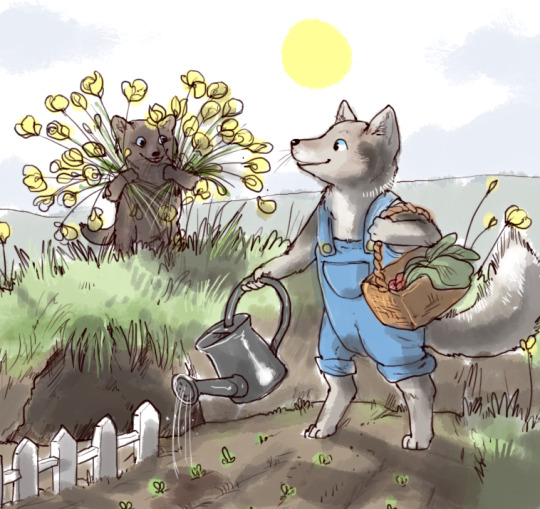
I am now picturing soft little foxes with watering cans and spades planting and tending to their Fox Gardens
Reading the article, I love that they don’t stay there; they migrate around the arctic and many different unrelated families of foxes might rotate through the dens as they migrate, timeshare style. Some dens are literally hundreds of years old, rotating residents the whole time. So the little foxes aren’t just planting a garden for themselves, they’re planting for all the future foxes that might make that den their temporary home.
A friendly fox in Pripyat, Chernobyl exclusion zone
*happy cheerful music as fox plays in deserted nuclear radiation land*
This is the aesthetic
Fun facts about the Chernobyl Exclusion Zone:
1) Most of it is pretty safe, even for long periods of time. In fact about 200 native people still live there, but no new settlement is allowed, so that number has declined from about 1200 after the zone was created in 1986.
2)The zone has become an unintentional animal reserve. Its ~1000 square miles of uninhabited forest. Poaching happens, but not to the degree one might expect due to the fear of radiation. Also as a consequence there are lots of human friendly animals like this fox. Most of the humans they do see are tourists that regularly feed them.
3) Its one big science experiment on post human occupation, environmental contamination, and radioactive degradation. Weve actually learned a hell of a lot about what would happen to a city after everyone leaves and how nature takes back over thanks to the city of Pripyat. And how the environment adapts to sudden changes and evolves. A fungus was desvovered in and around the Chernobyl Disaster Site that creates chemical energy out gamma radiation emitted from the melted down core. Something biologists had only theorized as even possible a few years ago, and heres this fungus feeding on it. Its crazy man!










 i'll apple your turnover