If you don’t like AO3′s core, founding mission–a fan-run archive where you can host your fanwork without having to worry whether it will get yanked when someone decides it’s objectionable–or if you’re upset that they aren’t interested in budging from that mission even when it comes into conflict with values that you, personally, hold dear…
All the code is on Github. You want an archive with all the fandom-tailored bells and whistles that AO3 has, but with a moderation policy for content you find objectionable/offensive/injurious to public morality/in unforgivably poor taste? Nothing’s preventing you from copying the software that runs AO3 and setting up your own archive with it. Well, nothing but the resources and technical skills required to host, deploy, and maintain a complex Rails app. Which isn’t anything to sneeze at, but if having a space free of the shit you’re objecting to is important enough to mobilize like-minded folks for vigilante enforcement via assorted charming forms of social coercion–shaming, harassment, ostracism, smear campaigns, doxxing, suicide-baiting, etc–surely it’s important enough to mobilize like-minded folks to contribute money, volunteer hours, and technical skills towards building the kind of space you actually want to see. The kind of space where you don’t need to resort to the vilest depths of social coercion to enforce a content policy in line with your values, because it can be enforced quietly and civilly by the mods with a few mouse clicks.
And if that’s too high a barrier–if your fandom is awash in stuff you find intolerable and you need a moderated fanwork archive now now now but the technical side might as well be sorcery–five bucks a month and an afternoon of point-and-click setup will get you a WordPress install on shared hosting. WordPress ain’t AO3, but it can be bent into almost any shape you want via plugins, and even a bare-bones default install comes with categories, tags, user accounts, comments, and moderation options. That’s all you need for a basic archive. WordPress.com will even host a small one for you for free. If it fills a need, and people put a fraction of the energy and social capital into promoting it as they currently put into witch-hunting transgressors into submission, it won’t take long for it to hit critical mass within a fandom.
You want a strictly-moderated safe space? The bad news is, AO3 is never going to be that space. You don’t get to demand that the people who sink a bunch of time, skill, and effort into providing it to you (for free–actual free, not “selling your most sensitive data to advertisers” free) throw the entire carefully-considered purpose of their work under the bus whenever that purpose can’t be fully reconciled with the values you think deserve precedence. You want an archive with a different ultimate purpose and a different set of values that override competing considerations, you’ll have to contribute your own time and effort to building it.
But the time and effort required is by no means prohibitive. Fandom has been DIYing shit since forever, and right now the tools are more powerful and accessible than they’ve ever been. So the good news is, if AO3 isn’t doing it for you… it takes less heavy lifting than ever to build an archive of your own.
Censors, fandom police, purity culture diehards… put your money where your mouth is.
But, but … that involves doing actual work besides yelling at people!
In fairness, it would involve a lot of work. I kind of blew it off in the original post as “nothing’s preventing you… well, nothing but the resources and technical skills required to host, deploy, and maintain a complex Rails app.” But from what I understand, the actual infrastructure side of installing and deploying the Archive app doesn’t lend itself to easy replication. There certainly aren’t a bunch of AO3 forks and clones running around out there like there were for LiveJournal.
However! Most of the anti-AO3 grumblers’ use cases don’t require anything near the scale of the Archive. If what you want is an archive for one fandom (or even a handful of related fandoms) where you don’t have to worry about stuff you find objectionable, it is really and truly possible to build that with WordPress on shared hosting for less than $10 a month. Point-and-click, no coding required. Install WordPress, from the WordPress admin panel install Writeshare and a security plugin like Shield, be sure to enable auto-updates, and you’re done.
Hell, let me make an offer: I know I’m a filthy degenerate who’s written and–even worse!–defended all sorts of depraved fic, but I’m also of the opinion that if antis want an archive they can moderate to their standards, they deserve one. Having control over the spaces they frequent instead of having to duke it out over the community standards of a general-purpose, lightly-moderated platform like Tumblr or AO3 might ease some of the pressure driving these conflicts. So. If you want a fic archive for your fandom that’s free of problematic ships, underage, noncon, abuse, etc, I will build and pay for it. I will shell out up to $10/month for shared hosting. I will handle as much of the technical end as you trust me to handle: server, database, domain name, WordPress install and plugins, security. All I ask is that you and/or your friends run the site yourselves and not involve me in any of the moderation decisions (which you wouldn’t want me involved in anyway), and that you crowdfund anything above $10/month if the site gets huge. That’s it. You can even lock me out of the WordPress admin panel if you’re comfortable maintaining and updating WP yourselves.
Fine print: The offer to pay for hosting is only for one site. Anyone after that gets the technical setup offer but not the $10/month. No real-life identity or contact info will be exchanged: I don’t want yours, and I definitely don’t want to share mine. I will do my best to trick out your WordPress install however you like it, but no guarantees that all the features you want will be possible. If either of us wants out after the site is up, I will hand you a full backup of the database/filesystem so that you can install it elsewhere, plus a static HTML archive of the site that you can put up on a free webhost.
Go ahead and reblog this if you want to. I’m curious to see if anyone will bite and be serious enough to get a site up. I know I’m dead serious. I may be a degenerate with terrible opinions, but I’m a professional techie who’s hosted/run/modded a lot of sites in my time and never pulled untrustworthy shit with admin access. I will lock myself out of whatever you want me locked out of. Just let me put my money where your mouth is, because I figure it’s in everyone’s best interests if those who want a safe alternative to AO3 can build one.
FWIW, if you want a safe space following whatever rules you want, you can do that INSIDE the AO3 with zero coding work or hosting cost whatsoever. You don’t even have to convince anyone to cross-post to your site.
1. Recruit people and figure out your moderation standards. (You DO need people who are willing to review stories that might NOT meet those standards to make sure they fit, but you need that no matter where you do it.)
2. Make an AO3 collection and make your recruited people mods (Optionally: make a subcollection for each fandom you have someone to mod.)
3. Each mod looks over whichever new stories you want to review, and then bookmarks the safe ones (Optionally: with whatever tags or description you want), putting the bookmark in the appropriate collection.
4. People who only want to read works that match your moderation standards can just browse that one collection.
This is part of the purpose of bookmarks and why they have tags and notes, so people could follow specific bookmarkers who curate and/or provide the level of information they want to know about stories even if not all authors provide the level of info they want.
i’m still laughing about that last reblog tho seriously because like
when i was a lil 15-16 yo fanfic writer i have a vivid recollection of reading this one kagsessh pregnancy fic that was just so realistic and the author was talking about her own pregnancy experience relating to the fic and i remember being like, “thank god for adults writing fanfiction, nothing by ppl my age is quite the same” and being REALLY JAZZED to be an ADULT someday so i could write better fanfic
yeah i remember being really frustrated by my lack of experience when i was a younger writer and wanted to write adults! like i could synthesize what i’d already read, and use my imagination, but i wasn’t really ever sure i was getting it right. now i’ve actually done a bunch of stuff i wanted to know about, like sex and swordfighting, and it is super useful to be able to draw on my own store of personal knowledge when i’m writing. and it’s wonderful to see the work of other adults whose lives have been really different from mine, and can hold forth at length about rock climbing, or forensic accounting, or building a sailboat, or whatever.
kids writing fanfic is great! good for them! but god bless grownups and the extremely interesting skillsets they bring to their stories.
Alright so since some people seem to need help with these things, I’m gonna do a PSA on common fanfic turns of phrase and what they’re actually driving at:
‘Humming’, as in, when a character ‘hums in agreement’ or ‘hums happily’, isn’t them suddenly breaking out a tune. It’s referring to an inarticulate sound, usually with the lips closed. ‘Mmhmm’ for example is a hum. ‘Hummed a question’ is less common, but generally means something along the lines of ‘hmm?’
If someone ‘moans in appreciation’ of something, like food or a good massage, that is usually indicating a lower ‘mmm’ noise than ‘humming’, with the tone being defined by the context of the situation. At some point actually writing out ‘yum’ or ‘oooh’ or similar became unpopular in fic, so describing the noise took prominence. The ‘mmm’ sound is fairly indistinct, and is technically a moan. It’s not actually an inherently sexual term, even though it’s used overwhelmingly in sexual contexts. (In older stories characters would even moan in pain, though that’s less common now).
Toeing off your shoes refers to taking off your shoes without bending down and using your hands in any way. You’re using your toes instead. It’s actually more common with slippers (which are designed for this) but can apply to any footwear that doesn’t need untying or unbuckling or something in order to come loose. Related to ‘kicking off your shoes’ but less dramatic in terms of the implied action involved.
Carding your fingers through something (i.e. hair, feathers) comes from a process (carding) for disentangling cloth or wool fibers (usually a special type of card-shaped tool was used for this, hence the term). It’s got nothing to do with playing cards or shuffling, and here’s the wikipedia article on the process, just for the skeptics. It basically means ‘gently disentangle’ in the fanfic context.
Thus concludes the PSA.
I do know all of this… but the constant repetition can still make things sound silly.
This is true! But it’s also probably worth considering two points on that front.
One is that if you like fanfic, you’re probably going to read way more fic than published novels. So common turns of phrase or idioms that show up in fanfiction writing communities will seem even more repetitive. Because you are reading a ton of it. I mean, you could read nothing but fanfiction until you die and never run out of it, even if everyone stopped writing it today, and it’s all free and readily available so long as you have internet access. People binge reading fics and then getting sick of seeing the tropes or phrases most common to them is a bit like gorging on ice cream and then going ‘ugh sugar disgusts me now for some mysterious reason, why do people put so much of it in food???’
The other point is that, of course, fanfic writers are often amateurs. Repetition within a single story is gonna happen more often when the author is new to writing. It’s something writers just have to learn how to not do. Usually by building up broader vocabularies and learning how to pace things better, which takes practice.
After all, while fanfiction serves many purposes, one of them is a practice ground for people who are still learning.
So the two biggest reasons for perfectly serviceable and innocuous phrases to be ‘over used’ in fics are, themselves, pretty much just unavoidable and minor downsides caused by the unique status of fanfiction itself.
And if somebody just really dislikes a certain turn of phrase ‘just because’, and is not actually unfamiliar with it and picturing something totally bizarre, that’s understandable too. But really the best recourse to that is to just come up with alternatives and fling them out into the community. Writers are ALWAYS looking for new, concise ways to describe things and help fill out their prose. It’s one of the reasons why, when a useful turn of phrase comes along, it will catch on and start showing up in other fics. Trust me, when you’re trying to make thousands upon thousands of words flow, it’s way better to get more options than to feel like you have to avoid certain common turns of phrase.
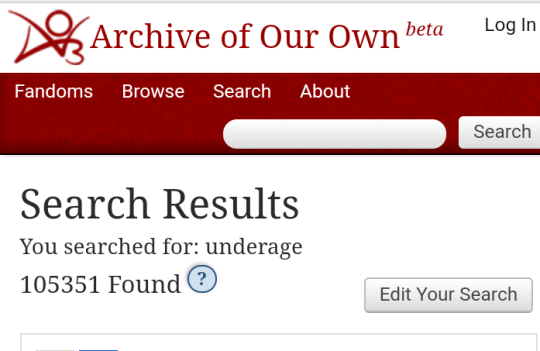
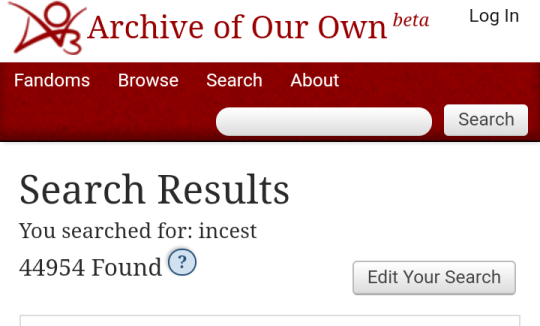
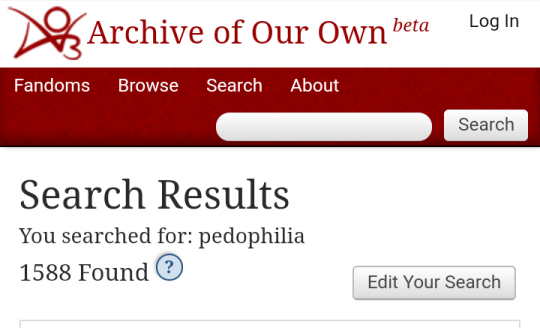
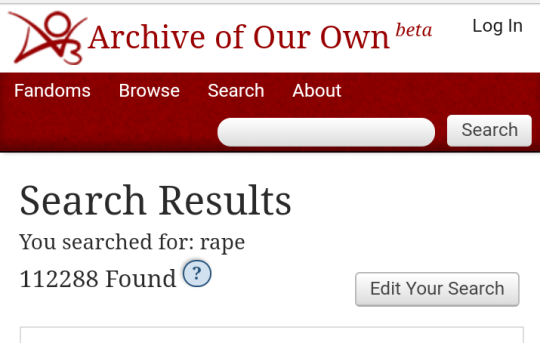
You… do realise that people tag works as containing rape/paedophilia/incest when the stories are explicitly about those things being bad, and not just because they’re writing dark themes for reasons that you personally disapprove of, right? That tags merely state the presence of a thing without explaining how it’s dealt with in the narrative, and that stories do not have to be morally instructional and perfect and pure in order to be allowed to exist?
Like. You might as well walk into a bookshop and stamp BLOCKED FOR BADWRONG CONTENT on every book in the Song of Ice and Fire series, half of Shakespeare, every YA novel about rape recovery, every adult novel about rape recovery, every biography of someone who has suffered from rape, incest or paedophilia and been brave enough to write about it, every book of Greek, Egyptian and Norse myths, the fucking Bible – just a truly massive percentage of the entire global literary canon,because there is literally no way to remove each and every reference to these themes otherwise.
Do you know why schools and libraries are pressured to ban books like I Know Why the Caged Bird Sings, To Kill a Mockingbird and Laurie Halse Andersen’s Speak? Because dumbass, scaremongering adults think that letting teens read about rape or racism or sexual violence or queerness or half a dozen other topics they think are Bad Things will lead to them down a path of Vice.
What happens to characters in stories, no matter how graphic or awful, is not the same as that act occurring to a real human person in real life, nor does reading or writing such works indicate endorsement of those acts. This is why a story which features paedophilia, regardless of whether it’s written as overtly sexual content or as a damning condemnation of the act, is not the same as child pornography by any legal definition: because no actual children are harmed. Are you personally still allowed to be angry and disgusted about the public availability of the former type of stories, even in instances where the writers are themselves victims of child abuse trying to process their trauma? Yes! You’re under no moral obligation to like any kind of content! But are you correct in asserting that the creation of such stories is illegal and hurting somebody in exactly the same way that a real abuser hurting a real child would be? No! Because fictional characters are not real people, and whatever our motives for creating or engaging with a particular thing, monkey see = monkey approve is not how it fucking works.
Have you ever watched an episode of CSI? Congratulations! By your own logic, you’re pro rape and murder. Ever watched an episode of Hannibal? Congratulations! By your own logic, you endorse cannibalism, Stockholm Syndrome and serial killing. Ever watched a historical drama where a young girl gets married to a much older man? Congratulations! By your own logic, you endorse child brides. And on, and on, and on.
I say again: you are allowed to be critical of particular works and/or the recurrence of certain themes across a particular medium. But arguing that an entire literary platform needs to end because some stories there contain Bad Things makes as much sense as banning the works of Octavia Butler or Sherman Alexie from school libraries because of their content. Which is – spoiler alert – a really bad idea.
One of my huge problems with a blanket condemnation of “people who write non-con” or “people who write underage sex,” is the assumption that there’s only one reason that a sexually explicit scene could possibly exist in a piece of fiction: to arouse the reader and uncomplicatedly celebrate whatever sexual activity is taking place. At best, when this mentality does acknowledge the existence of other types of sex scenes, it assumes that the categories “sex scenes that celebrate and arouse” and “sex scenes that problematize and dissect” are mutually exclusive, and that the line between them is clear, easy to draw, and easy to agree upon.
Say for a moment, that we as a group are going to prohibit the writing and reading of sexually explicit scenes involving rape or underage sexuality. Does the prohibition extend to writing and reading fiction that depicts rape and underage sexuality in order to condemn them or detail trauma around them? If that’s allowed, does it apply to writing and reading fiction that deals with those themes in order to explore the complexities of individual responses to them? What if those responses are themselves morally dubious? If that’s allowed, does the prohibition kick in if any of the characters experiences arousal? If the reader does? Or does it just kick in when the reader perceives that a character is aroused at a point when, according to the reader, they shouldn’t be? Or when the reader senses, through a hundred intangible narrative cues, that the writer’s attitude toward the events in the story aren’t the same as the reader’s?
If you feel that the location of this line is obvious, are you sure that your boundary is the objectively correct one?
Because historically, there is a VERY STRONG PRECEDENT that once censorship/taboos around these issues gain a toehold, people will disagree about the location of that line; that they will in fact challenge and attempt to ban any book which includes the issues in question, regardless of whether it does so to glorify them, condemn them, or something more complicated. If you would take issue with any of the following calls to ban or remove books from libraries, perhaps the line is not so clear-cut as you believed (also, more commentary under the cut):
lol ur acting as if that’s why the people we complain about write those scenes tho. it’s blatantly obvious when it’s for a good cause, the ones we condemn write that shit bc they think it’s “kinky” and “edgy.”
The entire point of this post is that both I and history strongly disagree that it’s “blatantly obvious” when controversial content is artistically justified. Historically that has been anything but obvious to society at large, which I why I cited all those examples of books that most reasonable people would consider artistically and politically unimpeachable, but which plenty of folks still want to ban. The power of censorship isn’t a cat you can put back in its bag once it’s clawed your particular enemy.
Also, the metric for critique really should not be authorial intent. Who cares what the author thought when they were writing something, or whether they wrote the thing “for a good cause”? Fandom discourse is far too fixated on scrutinizing the traumas and guessing at the intentions of writers in an effort to determine whether they’re allowed to write a given thing. Forget about the author. The metric should be whether the created object, in its context and totality, reinforces oppression. And it should be a metric for two-way CRITIQUE, not blanket censorship, for heaven’s sake!
From my previous examples: for my money, Ralph Ellison’s Invisible Man is misogynist in both its treatment of rape and its essentializing of its female characters. This may or may not have been an intentional or socially-minded decision on Ellison’s part, but regardless, I would argue that it does not serve the narrative as a whole, and that that aspect of the book perpetrates gender-based oppression. Other aspects of the book combat race-based oppression, and do so extremely eloquently and effectively. It’s also just a corker of an absorbing read. None of these things negates the others. We should neither ban the book, nor remain silent about its misogyny because of its seminal anti-racism work and its powerhouse prose. We should critique the ways in which it fails while also acknowledging the many ways in which it succeeds. We should read it and have a conversation about it!
Or, another example: I think Ayn Rand’s The Fountainhead is rapey, politically poisonous, and poorly written. It perpetrates gender-based oppression and class-based oppression, and generally inhibits empathy. But its philosophy apparently resonates with a huge group of people. I think we as a society need to take a compassionate and non-shaming look at why that might be—and as a tool in that discussion, we need the book. Banning it would only drive Rand sympathizers underground, inhibit discussion since nobody is supposed to be reading it, make The Fountainhead more desirable for its forbidden status, and frankly accord it more social importance than it deserves.
From a 2006 decision by Sonia Sotomayor, now a Supreme Court justice:
For purposes of evaluating artistic or cultural merit, the term “pornography” is notoriously elusive. In that context, determining whether material deserves the label of pornography is a subjective, standardless process, heavily influenced by the individual, social,and cultural experience of the person making the determination.
The same holds true for any sub-set of written pornography that might be deemed beyond the pale. The discussion itself can be useful, but not if it deteriorates into two polarized sides screaming threats at each other over the contents of a blanket checklist of fictional no-nos.
2) IMO this discussion could be more productive if we as fans openly critiqued the political dimensions of one another’s work, so that the conversation could move from “writing about non-con is wrong” to “here are specific issues with the way that this story in particular depicts non-con.” I doubt this is ever going to happen, however.
the thing is, fandom used to do that! I call back again to LJ days, but back then, there were various fanfic crit communities. Sure there were plenty that were used purely for malicious sporking, but there were also others that spoke of specific, legitimate issues that certain fics had, or prevalent tropes – for example, “asylum” fics are typically done very poorly and using extremely ableist tropes, or how Barret Wallace is often portrayed as homophobic in many FFVII slash fics is racist. There were also fic critiques where they talked about anything from how the anus is not self lubricating (yes, fandom youngins, we used to do this) to how recovery really looks like for rape survivors from rape survivors and people who worked with them as part of their jobs. And so on and so forth.
What we’re seeing now? a MAJOR step backwards. And fandom needs to realize this sooner rather than later. Lest we see what’s already happening in TFA and Voltron fandoms spread like a virus.
“So archontic literature and women’s writing, at least in the English language, have been linked for at least four hundred years, and from the first, the act of women entering the archives of male-authored texts and adding their own entries to those archives has generated conflict. Wroth, who was Sidney’s niece, received sharp criticism for writing the Urania from fellow noble Sir Edward Denny, who lambasted her for producing a romance, a type of work unseemly for a woman – the only appropriate genres for women writers being, according to Denny, translations of scripture and other devotional material. Wroth responded to Denny by parodying a poem that Denny had written to censure her. She adopted his rhyme scheme, including the exact rhyming words, and defended herself archly, demonstrating that a female writer could freely enter and add to any male-authored archive she wished, and that such archontic activity could be a successful technique for critiquing the style or message of the male writer’s writing.”
—
Derecho, A. (2006). Archontic literature: A definition, a history, and several theories of fan fiction. Fan fiction and fan communities in the age of the internet, 61-78.
In this paper, Derecho is interested in fanfiction as an art form rather than simply a social phenomenon, which was the predominant approach in fan studies at the time. Theorising how fanfiction works, she coins the term “archontic literature”. This is partly an attempt to move away from value-laden words such as “derivative” or “appropriative”. “Archontic” refers to the idea of an archive, which is ever-expanding, and where the addition of any new work alters the entire archive. Derecho also uses “originary” (rather than “original” or “source”) for a work which may serve as inspiration for fanfiction. Conceptualising fanfiction in this way allows for a less hierarchical view of the relationship between fanfiction and the works it is based on. Derecho argues that fanfiction is part of a wider genre of archontic literature – works based and building on other existing works. She traces a history of archontic writing, showing how it has often been used as a tool of social and cultural critique by minority and marginalised groups. She gives a number of examples including women’s writing from the 17th century, and more recently postcolonial and ethnic American literature such as Alice Randall’s The Wind Done Gone.
I just wanna let y’all know that you do fanfic tropes all of the time, we just don’t describe them like beginning writers do. You:
Push your shoes off with your toes or with the tip of your shoe, most likely. Props for drama if you yank your converse or your vans or your boots off like a soldier in a scyfi drama, but otherwise, you’re “toeing your shoes off”
Humans are much better at dissecting scents than we give ourselves credit for. If you sit there long enough, you could dissect how your friend smells. I smell like “old, beat up cars, the sour citrus he isn’t supposed to have, and something musty and natural and unique to him that clings to all of his clothes.” In order that’s old flannel, three day old hair mousse, and fish tank water. Smells like cigarettes and oils cling to your clothes, stuff like fishtanks and the food in your kitchen seeps into your belongings. Don’t feel bad about describing scents, people carry our houses with us everywhere.
Have you ever pet someone else’s hair? That’s “carding your fingers through.” That’s it. It’s the same thing.
Ever walked around barefoot? Its three am and you’re trying to make Dark Lunch? You’ve padded around. You signal to other people nonverbally whether its coughing or sighing that you’re there so that you don’t scare them.
Smirking is a thing most of us do with our face. Grinning, looking cheeky, and raising our eyebrows are also all things your face does. Sorry
You might not get this if you’re a straight girl whose never had sex, but sometimes that little strip of skin between ya shirt and ya hips? The mouth can go there. That’s an intimate place to touch and its a vulnerable place to be exposed. Overused maybe, but a valid way to show a shift in the situation.
We all sigh!! Are some of y’all really saying that sighing isn’t a thing you do ten thousand times a week?? You don’t sigh when someone says something stupid as shit?? You don’t sigh when you gotta get up??
SAID IS A VALID WORD
Everything on your face casts shadows, I’m sorry you have weak eyelashes, or that somehow your brows are flat with your eyeballs
People laugh silently! I’m sorry you’ve never laughed that hard!! People giggle! People snort! People double over and move and flail! Have you ever fucking laughed?
For that matter how do y’all not blush and can you teach me
I’d also like to say sorry if: your heart has never skipped a beat reading something terrible, or when you saw someone you liked even platonically, or if you’ve never been so surprised all you could do was blink, that you never looked at someone like you loved them, and that you somehow never fucking show any emotion in your voice or your posture at all
Tl;Dr: Some of y’all are dragging people for shit you don’t know how to describe and damn if you ain’t still reading things and then telling beginning writers that they’re describing impossible things and writing weirdly when y’all don’t even write shit, its obnoxious as hell. To y’all that do write and are aggressively against this post, I bet you sure as hell use EPITHETS INAPPROPRIATELY ANYWAY, DON’T YA?




 i'll apple your turnover