Hey. I don’t give a shit about what anyone likes in fiction or roleplay. I care about how they treat people in real life, especially when they could get away with things with no consequences.
On that note? Some of the nicest, most considerate, most conscientious people I know are the ones who like super dark fiction. They’re aware, from a combination of reading and personal experience, just what horrors people are capable of, and that’s why they treat other people with respect, because they don’t want reality to turn into that any more than it has to.
Meanwhile, the ones who think that fictional taste is equivalent to real morality and that thinking about or imagining a thing is equivalent to reality are the meanest, most abusive, most vitriolic, dangerous people I’ve ever had the misfortune to meet. But it only matters if you read the approved things and shun the problematic ones, right?
It’s a lot easier to enforce a canon of good and bad literature than it is to do right by your fellow human beings. One cannot be allowed to become a substitute for the other. Be kind to people. Life is too short to waste time being pointlessly mean.
The biggest argument I’ve seen on here against two consenting adults* in a relationship is that said relationship is unhealthy, and therefore should not have a place in fandom. This has been applied to a lot of different pairings for different reasons – villain characters, mental illness, incest – but I think the one that gets the most attention is age differences.
The logic goes like this: age differences are always unhealthy and are therefore also immoral, and we cannot “normalize” this bad behavior lest the children (think of the children!) think that age differences are okay in real life.
If this is you, I have some news that’s gonna rock your world: age differences ARE okay in real life. People marry people older than themselves every day! Right now there are millions of people all over the world in relationships with 3+ years difference between partners and that’s okay. Your personal values – that everyone should be in a relationship with someone close to their own age – are not everyone’s personal values. And, your personal values are inherently subjective yardsticks with no real inherent meaning other than that which you ascribe to them.
“But age differences are abusive!”
Nope. Nu uh, no way. You can have a relationship with 2 people born on the same goddamn day that’s a dumpster fire and you can have a healthy and loving relationship between people with 10 or 20 years between them. Saying otherwise is the worst kind of conservative republican pearl clutching, and if that statement surprises you then you need to take a step back and look at what you’re advocating.
My sister and her husband are six years apart. My parents, 12. I have a friend whose parents have a 26 year age difference. Do you find that personally gross? Maybe – who cares! It’s not your life, and no one else is telling you that you have to marry someone you find old and gross. But it is every person’s individual right to be with the person that they want to (provided that that person is also a consenting adult), and saying “but I don’t think they should be allowed to be together because I personally find it icky,” is literally the far-right’s justification against the LGBT community.
“But what if one of the people is really young and the other is really old!”
Is the younger person a legal adult? Yes? Then it’s not your problem! Is it unhealthy? Maybe! Power dynamics can be complicated, but complicated ≠ immoral. Half the fun of fandom is taking two people that don’t automatically fit together and figuring out how to make that work.
Do large age differences have the potential for abuse? Sure! Is that abuse pedophilia? That depends – did you answer “yes” to the question about being a legal adult? Then no! It’s not pedophilia! If neither character is a minor, then it’s not pedophilia! Period! End of story!
I made a post talking about a 40 year old dating a 50 year old, and got this comment:
“it’s creepy to normalize such large age differences, yes, and such relationships can have their roots in pedophilia, but they’re not always such”
Pedophilia has GOT to stop being everyone’s go-to word for “things that I personally dislike” because there is literally no way in which a 40 year old dating a 50 year old can be pedophilia. The power dynamics between someone that’s 20 versus 30 can be complicated. But 40 and 50? The difference in power and shared life experiences are negligible.
Your personal feelings of disgust ≠ objective morality.
If you don’t like it, don’t read it.
*two consenting adults, two consenting adults, two consenting adults – everything written here is about two consenting adults. I better not get people on here saying that I’m advocating for children in relationships with adults, I s2g.
the responsibility of adults in fandom is to not hurt children. that i agree with. but what that means is that we don’t attack children and we don’t act like pedophiles. that’s all it means.
if you’re a teenager and you read my fics that are dark or violent or sexually explicit even after i tag them for dark and violent and explicit content, that does not mean i have made fandom unsafe for you. it means you did not heed the warnings. you ignoring warnings, ratings, and tags means only one of us is at fault for that and buddy, it ain’t me.
i’m not your dad or your baby sitter. i’m here to provide content to other adults. when i write that’s who i have in mind. i have almost no control over teenagers who wander onto my blog or ao3. but the teenager who ends up there does have control. i don’t owe an explanation or an apology for my fandom content and y’all can take the puritanical “protect the children from fictional violence” bs elsewhere.
i didn’t mean to go on a rant lol i’m just real sick of the bullshit rn
It’s not up to creators to police teens who come to the site and ignore warnings. That job is up to parents.
i didnt realise ao3 was started in response to lj deleting account relating to p//edophi|ia and they explicitly support the posting of such works yikes
it wasn’t, like, ~~~we luv pedophilia, it was way more complicated than that!
although it’s true AO3 does allow all fannish content provided it’s properly warned for, there’s a long history there – of spaces being used by fans until the host decided whatever we were doing was too weird and distasteful and either kicking us off, banning certain content, or changing the nature of the site until it was no longer viable as a host.
you’re referring to the LJ Strikethrough of 2007, which, being an ancient crone, I lived through, and since I was hanging out in the last vestiges of SGA and in bandom, I saw some of the fallout. this was before LJ was sold to the Russians (which is a whole ‘nother story), when it was still owned by Six Apart; in an effort to clean up LJ’s act, Six Apart decided to delete all accounts using tags like underage, incest, rape, etc.
this was supposed to get rid of actual child porn on the site, and I hope it did, but it also targeted fan communities. this was a problem for a couple reasons; for one thing, not every story tagged with these words is in favor of them; for another, these things happen to real people and these personal posts were also potentially in danger of being attacked; for the last one, look, I ain’t into this kind of fic but people write about what people write about, and if it’s fictional and not explicitly banned in the TOS (correct me if I’m wrong; I don’t think written content about this stuff was banned?) then it’s not cool for a content host to just start deleting communities without warning.
but that’s what happened! these deletions were also primarily targeting slash communities, which smacked of some serious homophobia since things were deleted that had nothing to do with any of this kind of content.
eventually someone found out it was this super conservative religious group who’d sent a list of journal names to Six Apart, and who if I remember correctly targeted slash fic on purpose, even after it became clear that the fic was, well, totally fictional. after a while, Six Apart admitted they’d made a mistake and started to reinstate journals, but all of fandom was pretty shaken up.
THEN Boldthrough happened, which was essentially the same debacle several months later, at which point fandom began its long slow migration from LJ to GJ, IJ, and eventually AO3, Twitter, and tumblr.
AO3 was opened in 2008 in response to several incidents, of which Strikethrough was a really intense one. remember, also, that back in 2008 the stigma surrounding fandom was significantly greater and more shameful than it is today, so finding hosts willing to archive fic was difficult unless someone had the dough to pay for server space – often not an option. this was also back when fanfic.net’s HTML restrictions were so great that users couldn’t use any special characters or bold or italicize anything, and it didn’t allow R-rated content, so it was clearly not ideal. in addition, although cease & desist letters were much less common than they were in the early 2000s and before, DMCA takedowns were still a phantom on the horizon.
LONG STORY SHORT, even though pedophilia is reprehensible and I personally cannot stomach fanfic that involves that kind of content, AO3 was founded specially as a safe space for fandom communities that could not find homes elsewhere. it requires warnings precisely for that reason, and if you find a story that is not properly warned, you can alert the admins and get the story labeled appropriately.
IDK, maybe it’s just because I am, again, ancient, but I was in and around fandom before homosexuality was legal in all 50 states. so were most of the people who started AO3. for most of my formative life, being gay was associated with pedophilia, and so was writing about gay characters. just – it’s a lot more complicated than you might expect, and there’s a reason many older fans who have been involved in several generations of fandom were so grateful to have AO3 as an option.
I don’t read, for example, Hydra Trash Party fics. They squick me, and I generally feel they are pretty gross. But writing noncon body-horror is not the same as saying “yeah, I totally want to go out and rape and torture people for years while brainwashing them!” or even “yeah, I wouldn’t do it myself, but it would be totally okay if someone did!” Nobody is hurt by it, and nobody is going to be hurt by it. So should I have the right to go, that is gross, you don’t get to write or read that? No.
In the same way, writing about underage teens getting it on–sometimes with each other, sometimes with adults, sometimes consensually, sometimes not–is not the same as child pornography, nor does reading a fic about Hermione and Snape getting it on while she was his student mean someone thinks that would be a good and/or healthy thing in real life.
Fiction affects reality, but fiction is not reality. And writing about something does not mean you want to do it in real life, or believe that anyone should.
Let’s take a closer look at that “Ao3 supports pedophilia!” shall we?
1) The only fics I have ever come across that had actual pedophilia (i.e. someone having sex with a child), it was clearly and explicitly abuse. It was not meant to titillate or arouse. It was meant to horrify. It was seldom explicit.
2) There’s a lot more incest, but it is usually portrayed either as explicitly mutually consensual (i.e. Sam/Dean) or as abusive.
3) I’ve been in fandom for a decade and a half. When people start getting upset at “omg pedophilia, think of the children!” the fics they are usually objecting to aren’t actually pedophilia. Usually, it is teenagers having sex, especially queer sex. And people don’t like that, and use pedophilia as an excuse to shame people for writing/reading sex they don’t like.
Let’s look closer at Strikethrough, shall we? I hope that, if there were any communities of actual pedophiles on LJ, they got taken down, too. But here are some of the communities that got taken down that were not in any way supporting pedophilia and/or rape and/or incest that got taken down:
1) at least one support community for survivors of sexual abuse.
2) a literary book discussion group that was reading Lolita.
3) lots of slash fanfic communities, for things like Draco/Harry fic set in their fourth year (when both boys would have been 15).
Basically, this very conservative “family values” group hated porn, and they hated queer stuff even more, and used “but think of the children, it’s pedophilia!” to pressure LJ to get rid of huge swathes of things they didn’t like. And one time taking down the worst of it wasn’t good enough for them. No, this was step one on a moral crusade. If you acceded to their demands, all that did was whet their appetite, and soon they would be back with a new list of demands. This is why the 2007 strikethrough was not an isolated event, but rather one of a series of events, nor was LJ the only website thus targeted. It starts with anything that can get labelled “pedophilia” or “incest” because that’s low-hanging fruit. But they use that to go after anything relating to queer teen sexuality. Then anything with teen sexuality. Then once the community is already divided and diminished, they go after anything with non-con. Then whatever is next on their list. It doesn’t stop until they’ve won the point and nothing but suitably “family-friendly” fics that match their purity test are allowed.
Which is why AO3 has no morality content in their terms of service. You can’t break copyright beyond fair use (and AO3 has an expansive view of “fair use” and a team of lawyers on call). You can’t use AO3 for commercial advertising. And you can’t post ACTUAL child pornography, i.e. the things that are legally prohibited, i.e. actual photographs or videos of actual children (not teens) in sexually explicit positions–you know, the stuff that actually hurts kids. Other than that? It’s fair game. You can post anything you want, and the archive will not judge. There is no handle for the Moral Majority Family-Friendly Thought Police to latch onto, no cracks they can exploit to divide and conquer.
We’ve been down that road. It doesn’t lead anywhere good.
Reblogging this for the excellent explanation of what exactly the moral crusaders did last time. They had an explicit agenda of anti-queerness, and they specifically targeted slash and femslash communities in particular, such that many ship communities became (or started as) deliberately members-only. You had to apply, and your personal blog had to look like a real person and a fan. You were vetted, a la 1990s private servers.
During this period, Dreamwidth was also targeted by attacking its payment processor. They had to get a new one. These “Warriors” (literally called themselves that!) were totally on board with destroying fandom as a side effect of destroying the parts of fandom they didn’t like.
If you’re carrying out harassment of people right now because they’re posting works with sexual elements you don’t agree with? (And it’s always sex, never non-sexual violence, how strange….) If you’re doing that, you’re also totally on board with destroying fandom as a side effect of destroying the parts of fandom you don’t like. Because your tactics are fandom-destroying, and so is your agenda.
reblogging because this is important: strikethru and boldthru and all the various “purges” that fandom went thru about 10 years ago: this had to do with OUTSIDERS deciding that fandom in general and fanfiction in specific were evil and needed to be destroyed; unless we were writing and shipping good vanilla M/F married people. These were outsiders, going after fictional writing about fictional characters.
AO3 and OTW are HUGE, because now we have an organization, with very smart women and a lot of lawyers, that have our back. Fannish history is important, people! It has not always been this way.
This is so, so important: there’s that other post about AO3 and fanfiction floating around, about our history. People decry violent video games but no one is trying to force companies out of business. But people can and do attack fanfiction: an activity primarily written by women for women, about fictional characters. And often about sex. We have to constantly defend ourselves, protect ourselves, support each other against charges like “paeodophilia”.
^^^rebageling again for excellent commentary
Throwing this in because I was also present: This was during the American Government’s attempts to pass censorship laws on the internet. As MOST of those domains had their serves in America, they were beholden to those censorship laws. A great deal of fanfiction.net was removed because they happened to lose a goddamn courtcase. I’ve been on the site since 2002. They may not have ‘officially’ allowed NC-17 rated content (what it used to be listed as in the filters), it never did a damn thing to remove it. Ever. They had it listed as a rating option during ‘New Story’ uploading after all. It was i nthe search filters. After they lost the courtcase however, they legally had to start doing things about the mature content reports they got. The admins and mods were not actively looking for fic to remove, they were just responding to reports they had already received.
tl;dr – I know tumblr is all about black and white “you’re either all right or all wrong” thinking, but it’s important to understand what actually happened before going “ew ao3 was made to give pedophiles a safe place to post” because that is 110% not what happened.
This is why so, so many of the comparatively older fannish folks on tumblr like me are so vehemently against stuff like the anti movement and “all ships are valid UNLESS”. It smacks of censorship and content policing – and we’ve been there. We got our shit deleted and our accounts banned because someone else thought what we were reading or writing or talking about needed to just… not exist. No warning. Literally overnight. We just woke up and stuff was gone.
And yeah, the group was legit called Warriors for Innocence (or maybe of). I knew several people that were members of survivor/support groups that lost their groups – and their main support network – when Strikethrough happened (ten years ago holy shit).
You antis need to listen when us older fans tell you that the censorship you’re advocating for, when put into practice, is NOT a positive thing; it’s an extremely scary thing!
I can guarantee that you would be very, very upset if another event like LJ Strikethrough were to happen today because *you* are just as vulnerable as the rest of us! If you support the rights of marginalized groups of people, if you’re a slash or fem slash shipper, if you support gender identities that aren’t defined by biological sex, if you care about representation, if you support women, if you have any kind of kink, if you care about fandom in any capacity beyond its eradication, YOU DO NOT ACTUALLY WANT THE SORT OF CENSORSHIP YOU’RE ADVOCATING!!
People were terrified during Strikethrough. I was there. Communities were being shut down, individual users were being shut down. People were losing access to their own fics, their feedback, their comments – a LOT went on in comments on LJ. Think more coherent reblogs, much more personal, very widespread. Comments were also very important, and in terms of networking/communicating, were absolutely critical.
LJ was, for many people, central.
It was a fundamental part of the infrastructure of fandom at the time.
Having it attacked, having parts of your fandom’s territory just deleted like that, was very very scary. People didn’t know who was next. Every day, the list of stricken journals grew. And not all of them came back, not all of them recovered their content. Some people even voluntarily deleted their content as a form of protest. It was a bad time.
You do not have to interact with fic that grosses you out or makes you uncomfortable. Tagging is a thing. And even outside of tags, you are responsible for curating your own fandom experience. It is not right to expect it to be curated for you. And it is not right to lash out when someone refuses to do so and expects you to walk away from things that do not concern you.
I was gonna say “things that don’t harm anyone” but I realize you can argue that. If you get triggered, that’s upsetting. That could be considered harm. And I have sympathy for that. I do.
I have run across fic that triggered me. I have pretty specific triggers, and people don’t always think to warn for them because they aren’t that big a deal for a lot of people. Or it’s sort of bundled into kink and is presumed, that if you’re okay with certain kinds of kink, you’re okay with this. So I’ve been blindsided by it before. And it sucks for a couple of days while I get over it.
That was not the fault of the authors! You could argue that tagging should have been used, and maybe it should, but ultimately that’s not an ironclad obligation. It’s a tool people provide out of courtesy.
That was not the fault of the site! The site is there to give authors a way to make fiction available, not to judge each work and interrogate its validity and make sure everything is tagged so that nobody has to see anything bad, ever.
That was not even my fault! It was my responsibility to try to curate my experience, and I tried, but it wasn’t my fault because I didn’t deliberately set out to trigger myself.
When I get triggered, unless it is by a deliberate act, it is actually the fault of the people who hurt me in the first place! And I refuse to let them off the hook and blame perfectly innocent people who just wanna write their fanfiction! I may hate that fanfiction, but that is irrelevant to the question of whether or not people should be allowed to post whatever they want.
Also, some people cope by writing about fucked-up shit. My best friend in the whole wide world has shared her fic with me, and HOO BOY it is messed up. She wrote it during a time in her life when she was in and just coming out of a horrifically abusive relationship. I mean, it was exactly the kind of relationship all of us here on Tumblr love to hate. She was married to a shitty, abusive man who preyed on someone younger than he was and used his influence over her to treat her in a way that would be right at home in that Lundy Bancroft book Why Does He Do That? He was a real rapist, a verified grade-A bad fuckin’ guy. (She was lucky to escape. I have immense respect for her.) And she wrote some fucked up fic to deal with it, and she shared it, and people were invested in it. And because this was early 2000′s, she had to host it on a foreign server and cover her tracks, because at that time no-place was safe to post it.
“Yeah, but if she’s writing it for therapy, she doesn’t have to post it where other people might have to see it!” I hear you say.
But like … what the hell??? “Shut up, don’t talk about it, it’s bad to talk about these things, because these things are bad!” is something used against folks with trauma.
“This isn’t good for me, I can’t talk about this, I can’t be your audience for this,” that’s fine, those are boundaries that people with trauma use to defend themselves. You should learn to say those things! It will help you!
But expecting other people to never create and share art about trauma is just so thunderously oppressive I lack the ability to fully articulate it.
And nobody should have to disclose their history of trauma to prove their motives are pure or virtuous enough for their speech to be protected. I’ve only really been able to openly say “I was assaulted, it was traumatic, I am a little fucked up from it” for the past couple of years, tops. I couldn’t talk about it before that. Couldn’t! And it was over 20 years ago!
I also believe, very firmly, that you don’t need a history of abuse to find writing really messed-up shit satisfying, or to find reading it cathartic. I believe 100% in the freedom of creative expression, and the freedom to read whatever fucked up shit you want to read.
All y’all fandom youngsters can spit nails all you want over gross rape fic, incest fic, whatever.
Fine, I don’t like it either!
But that fucked up shit? That fucked up shit helped carve out the spaces we have today. You don’t have to like it, but campaigning to get it deleted, harassing content creators, calling people rapists and pedophiles who have never done and would never ever do such a thing, that is not the way to improve the world, it doesn’t keep actual kids or teens or assault/rape victims safe. It wouldn’t have made me feel safe when I was 16 and did’t want what was going on. It doesn’t make me feel safe now. I can say with the perspective of someone 24 years away from that event, it doesn’t make the world safer for people like I was. It actually makes it worse.
Learn to steer clear of the messed-up stuff you don’t like. It’s a skill, you get better with practice. Have someone else vet stuff for you if you need help doing it now.
Everything that is sketchy and gross is not criminal, and writing about a thing is not morally the same as doing it. Please stop acting like writing about an adult and a teenager having really questionable, gross sex is as bad as the actual registered sex offender they caught hanging around an actual elementary school two neighborhoods over from mine, just trying to talk to the kids. The former is, at most, in poor taste, and potentially triggering to abuse victims. The second makes me want to vomit because even though he was just talking, that guy was gearing up to try something and create another abuse victim. A g a i n.
The first can be avoided because it is imaginary and you, an adult, have power over your back button so that you don’t have to witness harm to imaginary people. The second, those very real kids had to rely on real adults and real law enforcement to keep them safe from very real assault.
(It worked! The neighborhood rallied! He was arrested for violating parole!)
Pretty sure Sleazebag McDongface didn’t read some gross NC-17 Draco/Lucius fic before deciding to harm an actual human being. Pretty sure not having read it didn’t keep him from doing it. ‘Cause he fuckin’ did it. And he would have done worse. But actual people stopped him.
I get wanting to protect victims when so many of us are victims ourselves, but man, going after fiction is not the way to do it.
An author is not a perpetrator. Stop trying to make those things synonymous in the minds of other fans, and in the minds of other recovering victims.
I’m a crone who also lived through strikethrough, and all y’all young fans need to read this and understand it if you don’t want history to repeat itself someday.
Here’s the thing, also: it doesn’t stop with fic about objectionable stuff.
If you have a website with TOS that includes any kind of “objectionable content” rules, there will be parties who will use those rules to try to silence other people whom they want silenced.
Let’s look at the alt-right and MRA movements today, or GamerGate a few years ago. What is one of their primary weapons? They report black or feminist or really any leftist YouTube channels (or Twitter accounts, or whatever) whose message they don’t like and claim those channels are are violating TOS by posting hate speech or incitations to violence or whatever bullshit they can come up with, in an attempt to silence those channels.
When Anita Sarkeesian of Feminist Frequence came under fire for starting a crowdfunding endeavor to fund the production of her Tropes vs. Women in Video Games series of videos, male gamers tried to get her KickStarter and various social media accounts shut down by reporting her for for hate speech and promoting terrorism.
Luckily, that became a big enough story that the dudes failed and their efforts backfired. But a lot of times, these tactics work.
How do I know this? Because it happened to me. Not over major shit like the examples above, but over something completely petty.
Back in the mid-to-late 90s, before LiveJournal really became the place for fandom, before FF.net was really a thing, you had to create your own personal website on whatever free webhost you could find (GeoCities was popular, but there were others) if you wanted to host your fic somewhere.
And back then, TV studios and book authors were still sending their lawyers after people who wrote fanfic, issuing cease and desist letters to not only the authors, but also to their webhosts.
At the time, I was writing perfectly het Mulder/Scully fanfic. No rape, no pedophilia, no slash. Maybe a little BDSM. But largely it was unobjectionable.
Then the 8th season of X-Files started, David Duchovny decided he only wanted to be involved part-time, and the show decided to bring in another male character. The fandom lost their shit–as fandoms do–over the idea of “replacing” Mulder blah blah blah.
One of the most popular fanfic mailing lists–one that had previously had no restrictions on what characters or pairings could be posted–decided that if you wrote fanfic involving this character, you were no longer welcome. Well, this was the mailing list with all the readers. Sure, authors could go to other mailing lists, but they wouldn’t have exposure to the sort of readership this other list boasted.
I spoke out, saying that this change was unfair to fic authors and that the moderator of this list was behaving in a pretty vile way. The moderator and her friends took aim at me and began a campaign of harassment, and a few days later, suddenly my website with my XF fanfic was TOSed because someone had reported it. So was the next site I tried to create to host my fic, and the one after that.
Thanks to the way AO3s TOS are constructed, that sort of shit doesn’t happen now. I can speak up if I need to, and while I may receive harassment on my various social media accounts, there’s no chance they can have my fic taken down just because they have an agenda and don’t like me for reasons not relating to my fic.
So yeah, AO3′s rules protect fic a lot of us might find objectionable. But they also protect fic that is in no way objectionable from being targeted by unrelated harassment campaigns. And since any of us could find ourselves in the sights of those sort of campaigns at any time, we need to thank our lucky stars for that.
I like this last addition.
When I helped write the ToS for AO3, I wasn’t primarily thinking about strikethrough. I was primarily thinking of FFN, where so many people post things that are technically against the ToS but that the community tolerates. Any time someone gets pissed off, they can go on a grudge-reporting spree and target their enemy’s work. Often, that means guys targeting slash or Twilight fic because it’s “for girls” and thus sucks. Sometimes, it’s one ship vs. another. I was also thinking of Miss Scribe and all of that other Harry Potter fandom drama. (And if you think fans are above destroying an entire archive just to strike at one enemy, think again!)
We can’t force people to like each other. We can’t force people to be nice to each other. But we could take away fandom bullies’ favorite tools.
So we did.
Watching young (ostensibly liberal) bloggers and fans take up the deeply conservative rhetoric and moral crusading of the right wing and evangelical groups from the 90s has been both fascinating from an anthropological perspective, and fucking horrifying for someone who lived through this time period and the death of LJ.
This thread keeps getting better.
It galls me to think that those of us who went through all this shit might have to go through it again because people who were still in primary school at the time don’t see anything wrong with harassing us over
Like, I hate to pull this argument, but we are your fandom elders, we did what we did to preserve fandom for y’all, so y’all would have space to safely explore the sane things we did and still do. And in doing so we rightly realized that if we wanted to protect the comfortable, cuddly parts, we also needed to protect the dark parts.
You can hate non-con fic all you want, and I will always advocate for adequate tagging/warning (especially with franchises that are aimed at younger audiences, e.g. MLP:FIM and SU) so that you don’t have to see it because I sympathize, but I will never support people who want to make sure that it isn’t even there to be seen. I’ve been through that once. It didn’t help anyone. It didn’t fix anything.
Please, learn to curate your own online experience. You are responsible for not clicking, or clicking away. Don’t try to force others to do it for you. That’s not cool. You aren’t protecting children. You are asking fandom to treat everyone like a child. There is a massive difference.
Also… maybe parents should do their job in monitoring kids’ content? When my parents found out I was looking at age inappropriate things when I was a minor, like they intervened.
Strikethrough 07 was such a well-conducted operation that communities dedicated to survivors of sexual abuse and fans of Lolita fashion were suspended, but the journal of the baby rapist, ohbutyouwillpet, stayed up. And it’s still up to this day, though it hasn’t been updated it over a decade as its owner is still in prison.
Whooo, I guess it’s my turn to take a shot at this.
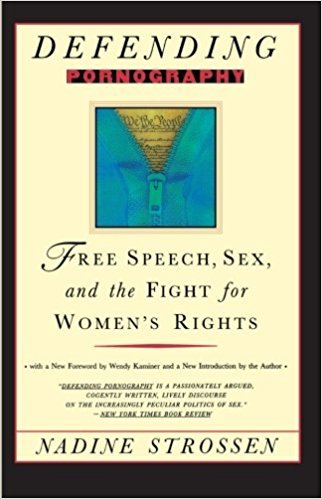
I’m a nold. I’m in my 40s. When I came out as queer, in the early 90s, it was in the middle of what were called the “feminist sex wars”. If you want a really good book to read about that period, which has a LOT of resonance with Strikethrought and with the current Tumblr discourse, I cannot recommend this highly enough:
A preview is available on Google Books, or it should be readily available secondhand, or in academic libraries (though it’s not a very heavy academic read). I recommend Booko for finding cheap secondhand copies. Support independent bookstores!
I haven’t read “Defending Pornography” for a while – I actually last re-read it about a decade ago because of the impact that Warriors for Innocence were having on Dreamwidth’s payment providers at the time, subsequent to Strikethrough itself – but here’s a quick summary, as I remember it.
1. In the late 80s and early 90s there was a vocal group of radical feminists who believed that pornography inherently harms women, not just in its production but also in its consumption (i.e. watching/reading pornography caused people to develop attitudes that were harmful to women). All explicit content was considered to be harmful, from eg. girlie magazines to hardcore XXX videos to a book like “The Joy of Gay Sex”, no matter who made it, its purpose, its intended audience, or its context. (Yup, even m/m content was considered to be degrading to women for reasons that didn’t make a lot of sense tbh.)
2. These anti-pornography feminists teamed up with the religious right and managed to get anti-porn laws passed. In particular, a law was passed in Canada preventing the importation of “obscene” material. Canada, of course, imports a lot of material from the US. Stuff started getting seized at the border.
3. Guess what was seized first? “The Joy of Gay Sex” and the like. Guess what businesses started finding all their shipments seized or delayed – sexually explicit or not – to the point where they were being put out of business? Gay bookstores. Guess what wasn’t seized at all? Mainstream porn made for straight men.
Around this time, Little Sisters bookstore in Vancouver (a gay bookstore) found that huge amounts of merchandise was being seized at the border, regardless of the actual content. They were being discriminatorily targeted on the basis of their sexuality. The queerness of the material they were importing was seen as inherently obscene.
Remember that this is before there was much information available online for LGBTQ+ people, so if you were a young person maybe just coming out and trying to understand things, or wanting to learn about safe sex (and yes it was at the height of the AIDS crisis, too) you’d go to a bookstore like this. Which now had empty shelves. I remember endless fundraising and activism in the LGBTQ+ community to try and keep Little Sisters open. In the end they spent half a million dollars on court cases. Read more about their struggles.
(You know what businesses weren’t impacted and didn’t have to basically ask their friends and community for help to stay open or spend a decade in the courts to defend their right to run their businesses? The powerful companies making porn by and for straight men.)
The book goes into a large number of analogous situations. Time and time again, anti-pornography laws intended to protect women are disproportionately used against women themselves, against LGBTQ+ people, and against basically any marginalised or minority group, rather than against the mainstream male-oriented porn that would seem to be its primary target.
Here’s the key point: Strossen is a legal scholar who’s looked at a lot of attempts at censorship, and you know what she found happened every time? When you try to censor pornography, even in the interests of protecting vulnerable people, that censorship will be applied first, and hardest, against the people who are most vulnerable.They won’t come for actual abusers, they’ll come for the abused, and prevent them from accessing resources, education, talking to each other, creating art to express themselves, or organising against those who are actually causing harm.
Read the book. The stories it tells are from the early 90s but they perfectly mirror what happened a decade ago with Strikethrough and what’s happening now with all this Tumblr discourse.
This is old, old business, we’ve seen it more than once before, and it never goes the way the antis think it will. Censorship is a tool that gives power to abusers and lets them inflict more harm on those who are abused, vulnerable and discriminated against. Don’t fall for it.
History they should have known: The Comstock laws in New York were this one dude (Comstock) who managed to get a mail regulation re-written to categorize anything related to contraceptives as pornography, which was already illegal to mail.
(Which is one reason for the pornographic playing cards etc, because the 19th century was almost as big on mail-order goods as the 21st, because getting to shops in person was hard for a huge subsection of Americans.)
Comstock built a non-profit with the support of the YMCA and oh shoot, some millionaire whose brand is still going strong, to enforce this law because the postal system didn’t have the personnel. They were granted the right to do so.
He and his posse of honorary mail inspectors with police powers (I kid you not) spent years engaging in endless skullduggery to prosecute people for selling contraceptives by mail. Which was how everyone got them in the 19th century, you couldn’t walk into a shop for a pack of condoms but mail-order packages were nicely anonymous. They dragged Margaret Sanger into court repeatedly. There was a huge cottage industry of contraceptives in NYC at the time, most of the manufacturers being female, Jewish, immigrants, or some combination of the above.
There was one woman whose name escapes me they kept trying to prosecute for selling contraceptive devices and the juries kept nullifying it because the average New Yorker in the 1890s were like ‘yeah no condoms are not a crime,’ but not everybody had her stage presence and resources.
You know who they never even tried to touch? The big rubber companies were were getting into mass production of condoms. Their big funder owned the company that produced Vaseline, and was claiming in ads at the time that it worked as a spermicide.
Only the poor and vulnerable felt the impact of the Honorary Postal Inspectors of righteousness.
It’s been touched on a little before but really it’s hard to explain just how confusing and scary the crackdowns were. I was only a reader on FanFiction when the crackdown came but it felt like I was standing in a coal mine full of canaries. Canaries that were either silent or /screaming/.
Every where you looked, authors where posting warnings about how x stories were getting deleted. All of the warnings feeling rushing, panicked, most of them including notes about how they didn’t know how long they had before their warnings were taken down or they were deleted. It felt a bit like all the stars going out, everything just dying around you. Like a stampede of people had fled from some oncoming unnamed horror leaving silence in their wake. Finding AO3 later on was like finding a safe haven in a world gone mad.
Also FanFiction doesn’t really encourage socialisation aside from authors notes to readers on their chapters or homepage. Meanwhile all the warnings of the crackdown were really rushed and vague. So, as a not very sociable reader, I really didn’t have a clue what was going on at the time of the crack down and the confusion and uncertainty was almost the scariest part of the whole thing. (Not knowing if the authors should come back and if fanfics were gone for good was scarier.) It’s only years later, reading fanfic history posts that I’ve started to piece together what happened.
Also an interesting point was that during the crack down all I ever heard about was /gay/ stories being deleted. Perhaps this was just because I was reading gay stories but I didn’t even realise it was mature stories in general that was supposedly the aim of the crack down until much later.
Hot damn, this post just keeps going!
I very much second the rec about the feminist sex wars. Understand those, and you’ll understand why those of us over about 30 are so opposed to tumblr’s purity crusade.
If you haven’t been TOSsed you really don’t get it, imo.
If you haven’t spent your time wondering if the thing that will get your content deleted is the dark stuff or the nipples, you really don’t get it, imo.
Hell, way way back in the day, I had moderator types private message me going “I really like your writing, but you need to be less obvious about it, or I will have no choice but to tos you.”
A long reblog, but a worthy read. So much history and experience recounted here. If we don’t remember our past, remember why AO3 and many fandom spaces work the way they do now, we will be condemned to repeat it.
Please do not let us return to the dark ages of fear, censorship, and oppression in fandom.
saw a comment someone made on a post saying “it’s not possible to read dark fiction and not have that affect your morals, you can’t train your brain NOT to normalize those things!” and i completely agree
as a life-long crime fiction and horror fan, i am an immoral monster. i’ve watched all 456 episodes of law and order and committed a murder after each one. i ate my neighbors after watching hannibal. i started a meth lab after breaking bad. i ruined my high school prom because i watched carrie the night before. in middle school i read stephen king’s it, went down to the sewers with some friends and
I think we, as a general community, need to start taking this little moment more seriously.
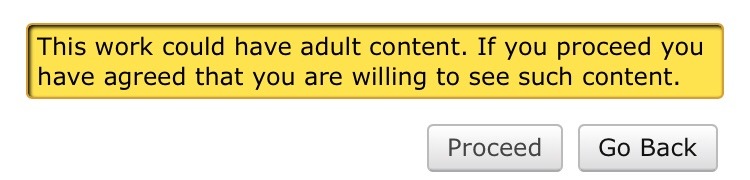
This, right here? This is asking for consent. It’s a legal necessity, yes, but it is also you, the reader, actively consenting to see adult content; and in doing so, saying that you are of an age to see it, and that you’re emotionally capable of handling it.
You find the content you find behind this warning disgusting, horrifying, upsetting, triggering? You consented. You said you could handle it, and you were able to back out at any time. You take responsibility for yourself when you click through this, and so long as the creator used warnings and tags correctly, you bear full responsibility for its impact on you.
“Children are going to lie about their age” is probably true, but that’s the problem of them and the people who are responsible for them, not the people that they lie to.
If you’re not prepared to see adult content, created by and for adults, don’t fucking click through this. And if you do, for all that’s holy, don’t blame anyone else for it.
In 2k17, a lot of us have pledged to be more cautious about ‘fake news’ posts on Facebook
I propose we extend that concern to fandom
There’s a very low bar on this site (or any site) for people to post whatever tf they want, and a very high incentive to post fake receipts to win arguments
(Or at the least, misleading “receipts” such as “Artist XYZ is a bad person” because they drew a picture of bad things happening to completely fictional characters)
So this year, if you see a callout post:
Look for signs of bias. I have the sneaking suspicion that “XYZ-is-bad.tumblr.com” is not an objective source.
Be wary of unsourced accusations. “Person A is a homophobe!” is a statement, not evidence. Look for original sources. Did Person A post “I hate gay people” on their blog? Or did they draw fanart of an unpopular het pairing?
Look for context. Check out Person A’s blog to see if you have the whole picture. Did Person A pick a fight out of nowhere, or was that viral post made in response to an anon harassing them?
Ask “what real person was hurt”. Writing a fanfic is not the same as committing a crime in real life. If Person B claims that Person A is a real-life “abuser” because they shipped two (100% fictional!) characters, Person B is out of line.
Consider ulterior motives. Did Person A recently open a Patreon and receive a slew of hateful messages about ‘selling out’? Did Person B have an argument about characterization with their co-author and then suddenly “reveal” a list of unsourced accusations? Who stands to gain if someone else is driven out of fandom by angry anons?
Long story short, I don’t believe everyone in fandom is evil – nor that every accusation is unfounded. I do believe that unfortunately, in this modern ‘post-truth’ world, we are all going to have to get much better at fact checking and source validity…both in fandom and in real life.
I love this.
One little thing I find helps with this is to remember:
A thing that makes you feel bad, is not necessarily a thing that is bad.
So, you know, people shipping your NOTP, or having headcanons that contradict yours or writing fic on topics that make you frightened or uncomfortable is actually upsetting. And you can totally be upset about it.
But it doesn’t actually follow, necessarily, that the person upsetting you, is actually doing something wrong. They might be. Its possible. But its more likely you need to add some tags to your blacklist and put it from your mind.
The very first thing to ask yourself when assessing a callout post, IMO, is “what are readers supposed to do with this information?”
If the answer is “go give this asshole a piece of your mind” or “unfollow/block this person, tell all your friends to do the same, and send ‘helpful’ anon messages to anyone who hasn’t gotten the shunning memo yet,” I don’t give a fuck how solid the proof is, you’re being enlisted as a foot soldier in someone else’s grudge wank.
If the answer is “be cautious about trusting this person with your money, personal details, or intimate friendship” or “think twice before giving the benefit of the doubt to any accusations this person makes about others,” it’s time to start looking at whether the receipts hold up. It doesn’t automatically make it credible–in the second case, especially, you’ll have to evaluate accusations and counter-accusations on the merits, because pre-emptively smearing the whistleblower is a time-honored technique of assholes everywhere. But at least the thing you are being asked to do is a valid purpose of the “callout post” format.
FWIW, I think most callout posts–as in, standalone posts addressed to the community at large and meant to discredit the target, as opposed to something said in the course of an argument/discussion or addressed to the target themselves–are grudgewanky bullshit. If the members of Person X’s newest fandom don’t know they’re an asshole with unsavory opinions, believe me, 99 times out of 100 it will become obvious soon enough. But, since it’s impossible to build a community whose trust can never be abused, there are situations where announcements meant to discredit someone in the eyes of the community are warranted. Namely, when someone is abusing fandom’s trust in them to defraud/control/destroy other people, especially if the trust was gained under false pretenses.
Fandom’s not immune to scam artists, charismatic abusers nurturing cults of personality, or assholes who use strings of false identities to fly under the radar long enough to hurt people before their reputation catches up to them. The purpose of a legit callout post should be to build a case for revoking the community’s presumption of trust, thus removing what allows such people to operate. The offenders still get to exist, chat with their friends, make art, write fic, bang out entertaining shitposts that rack up 50,000 notes, whatever–the point isn’t to stop them from doing that. It’s to warn everyone else not to buy them stuff based on a sob story, register for their “convention,” get enamored of their oh-so-true badass exploits, or uncritically believe the smack they talk about people who’ve gotten on their bad side. In the less noxious cases where someone has simply “earned” a reputation as an authority which they’ve been using to shut down others’ opinions, and it turns out their reputation is based on total bullshit, the goal of a legit callout should be to take the argument-from-authority crutch away from them and make them back up their points like the rest of us peons. It’s not that they can’t be right, or that the former scam artist will never deliver on something they accepted money for. It’s that they should have to to disprove a presumption of shenanigans instead of being taken at their word.
Callout posts began to warn newcomers to fandoms about known abusers and predators. Someone shipping your NOTP is not the equivalent to someone who preys on underage fans online or sexually harasses people at conventions.
If someone shipping your NOTP tags, block the tag. If they don’t tag, politely ask them to tag, or block their blog.
not to tell people what to do but as someone who’s been in fandom since i was like twelve, i promise that the only good fandom experience involves limiting your friend circle to, like, seven people. when you’re in a city, you don’t make friends with every douchebag on the street. stringently vet the people who are allowed to influence you. in an age of people and companies constantly demanding your attention and energy, your happiness will grow best like flowers in a greenhouse in a terrible city; a contained, curated space allows happiness to flourish. keep it small and don’t be sorry to tell people to stay the fuck out of your greenhouse.
like, u know there is a degree of moderation there, right? someone has to order the books to stock in the library. a library that lets any old creep stash their hastily scribbled shota pwp in between the shelves is a library that’s going to be shut down p quick. by the police. for providing ppl with child porn. (and yes if a picture of a tree or a description of a tree can make someone experience a tree, then the same can be said about a picture or description of a child in a sexual situation ffs)
I mean there’s like a million other logistical differences, and idk who checks erotica out of a library, but hey ppl can be wild abt these things
Hooboy. Well, as a librarian who has worked in many varieties of libraries, let me… try to… respond to this from a library and librarian perspective.
1) It is true that libraries have a process to go through for accepting materials, and that there is a degree of selectivity involved–this is because libraries have limited budgets, limited physical space, and limited staff to process and manage materials.
So, yes, any random junk written and left in the library would be thrown out. Not because the library would be concerned about its liability if anyone should see it; because we like to keep the library clean and organized, and leaving stuff on the shelf is not how we add things to the collection (how would they get CATALOGUED and LABELED???) And, of course, any adult attempting to show pornography (or, say, themselves) to actual children would be Removed From The Library because this would involve actual children being harmed by an actual adult in direct contact with them. Police do not shut down the libraries where this happens. They arrest the people harming the children.
Meanwhile, libraries spend VAST SUMS OF MONEY and ENDLESS STAFF HOURS to keep copies of Fifty Shades of Gray on the shelves where children actually can find them quite readily (and have them checked out on their library cards if mom’s has too many fines). Same with Last Tango in Paris and Flowers in the Attic and Year’s Best Erotica collections. (And Bibles, which get stolen at a ridiculous pace. I don’t know why, we were just forever having to order more of them.)
In an online space, which has effectively unlimited space, where adding new material costs nothing, and where the process of organizing that material and making it available is fully automated and what labor is involved is taken on by the contributing author, literally none of those constraints apply, so more content is more content! It’s catalogued and labeled as soon as it’s posted! It cannot be misshelved. Perfect!
2) This is not to say that no physical library has handwritten erotica in its collection somewhere. Many, many libraries collect rare local works such as self-published zines, and unique items like the personal papers of notable people (San Jose State University, for instance, holds the papers of the Kensington Ladies’ Erotica Society; The University of Iowa Zine Collection includes fanfic zines with erotic content; UCLA has the personal papers of Anais Nin), and doubtless some of these zines and personal papers include erotica. Because this handwritten material would be unique and its value would be presumed to lie mainly in the fact of its authorship, it would be properly collected, not in a library, but in an archive or special collection, where some archivist would dutifully folder it and make a note of what it was so future visitors to the collection could readily access it.
The main goal there would be to protect the material, not the person who might potentially view the material.
I worked in a public library which had an extensive collection of Playboy on microfilm, for instance. We kept it behind a desk where it had to be requested and checked out with a library card before it could be viewed. This was partly to prevent children viewing material inappropriate for their age–just as, say, the AO3 clearly marks adult material as such–but mainly to prevent vandalism of the material by people who disapproved of it. Several of the images on the film had been damaged by people trying to scratch them out; for the safety of the microfilm, we restricted access to it. This is also why the AO3 doesn’t allow people who dislike a fic to force it to be taken down.
This is also why most libraries celebrate Banned Books Week by eagerly higlighting works which people have ATTEMPTED to force to be removed from libraries–including work like Lolita, which is read by many as a titillating pedophile love affair. Librarians are not celebrating Lolita. They are celebrating the principle that they will not be stopped from collecting materials of interest and making them available to readers.
3) From your description of a library where children can freely access anything on the shelves, you seem to have only one conception of a library–a public library with open stacks, or perhaps a school library. There are, in fact, many kinds of libraries, with academic libraries being the most obvious foil to your description.
In an academic or university library, all authorized users of the library are adults who take adult responsibility for what they find in the library, much like when adult internet users indicate on a website that they are choosing to view adult content.
When I worked in a university library, I asked one of the librarians what do when a guy was sitting at a computer very obviously watching porn while a young woman, sitting next to him doing something text-based, seemed like she might be uncomfortable. I was told in no uncertain terms that the library’s policy was to relocate the person who was uncomfortable. The library was a repository of information and a place to access information: any kind of information, including the erotic. Under no circumstances would we curtail a library user’s access to that information.
(Unless he got his own actual dick out where people could see it, then we could call the campus police. Because, again: actual humans directly involved.)
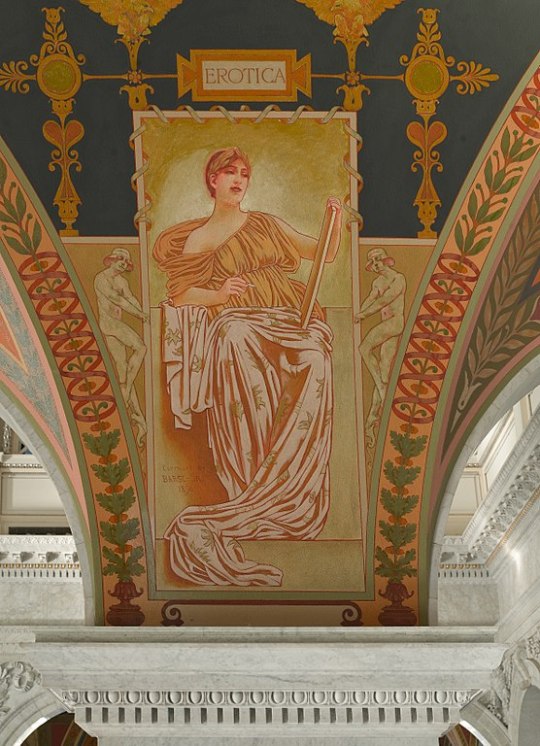
Duke University Library Erotica Collection, 1940s-1960s (”An archive of original illustrations, sketchbooks, and erotic stories, depicting transgressive sex acts including (but not limited to) lesbian and heterosexual sex, incest, pedophilia, sadomassochistic behavior, and copulation with objects as varied as sex toys, produce, and household appliances. The stories and illustrations appear to be the work of a single individual, with nearly all narrative told from a female’s point of view. Also includes some amateur pornographic photography and magazine clippings.”)


 i'll apple your turnover